
You've got a yard that looks fine from the street until you step closer and see the mess up front. The mulch keeps thinning out, a low spot holds water after a hard rain, and the bed near the driveway never quite looks finished no matter how often you touch it. That's usually when homeowners start searching for rock installation near me, because they want something that looks cleaner, holds up longer, and doesn't need constant rework.
Professional rock installation solves more than curb appeal. Done right, it can tame erosion, simplify maintenance, and help water move away from the house instead of sitting where it shouldn't. Done wrong, it turns into sunk stone, weed growth, and expensive cleanup that should've been avoided on day one.
Why Homeowners Choose Professional Landscape Rock Installation
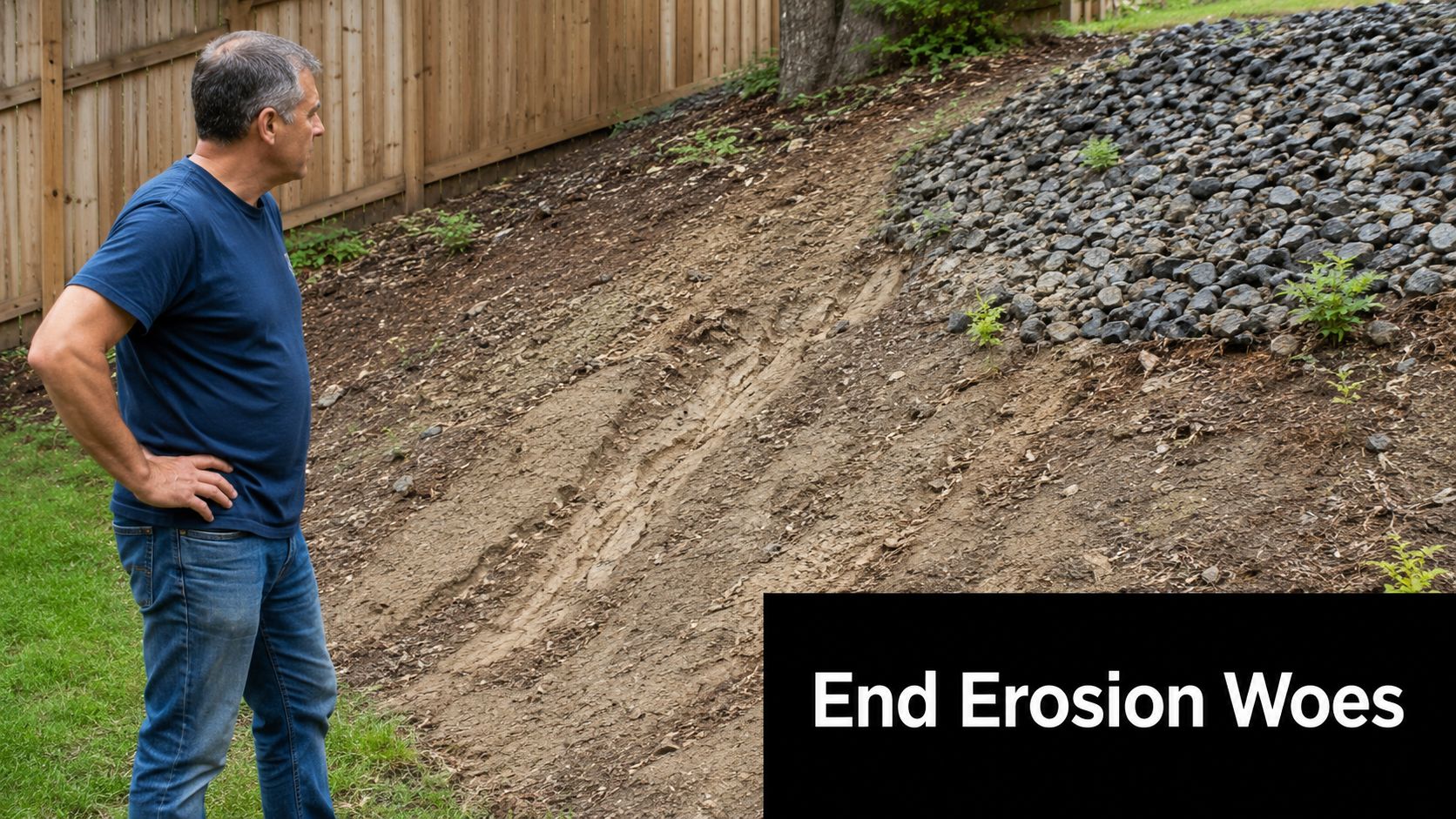
A lot of people call after one too many weekends spent re-mulching the same beds. Others are dealing with a slope that keeps washing out after Tennessee rain, or they're tired of a front yard that looks unfinished even though they've already spent money trying to keep it up. In West Tennessee, that usually means the problem isn't just appearance, it's drainage and soil behavior under the surface.
Why rock gets chosen first
Rock appeals to homeowners who want a more permanent finish. Unlike mulch, it doesn't need annual replacement, and it gives beds, borders, and drainage areas a more intentional look. That's why rock tends to make sense in places where the goal is to stabilize the terrain, not feed it.
The catch is that the installation has to match the site. A bed that needs drainage can't be treated like a simple decorative strip, and a slope can't be covered the same way as flat ground. Professionals look at grade, soil, water paths, and stone depth before any rock goes down.
Practical rule: if water is already misbehaving in a yard, the rock choice matters, but the prep work matters more.
Homeowners often see the finished stone and assume the whole job was just dumping material and raking it smooth. In reality, the lasting result comes from subgrade work, depth control, and knowing how the stone will behave in local clay soil. That's the difference between a bed that stays crisp and one that starts sinking and sprouting weeds within a season.
Comparing Popular Rock Types and Their Best Uses
Rock choice changes the whole job. Some materials look soft and natural, some lock together and stay put, and some work better as accents than as full ground cover. If you're planning a project, a helpful starting point is planning a rock garden with Richmond Tree, because it shows how design goals and material choice need to match instead of being treated as separate decisions.
The trade-off is function versus cleanup. A drainage-heavy spot usually needs stone that lets water move without trapping soil, while a path needs material that stays stable under foot. Decorative beds can use looser stone, but only if the edge restraint and base prep are done right.
| Rock Type | Best Use | Drainage | Cost Range | Maintenance Level |
|---|---|---|---|---|
| River Rock | Beds, dry creek beds, drainage swales | Good | $700 average for installation (Angi) is a useful reference point for a typical river-rock job, with a broader range of $300 to $1,600 depending on scope | Low |
| Crushed Stone | Driveways, paths, utility zones | Good | Varies by source and job scope | Low to moderate |
| Decorative Gravel | Accent beds, light-use areas | Good | Varies by source and job scope | Low |
| Pea Gravel | Walkable paths, patios, casual seating areas | Good | Varies by source and job scope | Moderate |
| Boulders | Focal points, borders, structural accents | Depends on placement | Usually priced as individual pieces | Low |
Match the stone to the job
Rounded stone like river rock looks natural and works well in drainage swales, dry creek beds, and foundation borders. In West Tennessee, where heavy rain can hit clay soil hard, that rounded shape helps water move without the stone packing down as tightly as angular material. Crushed stone behaves differently because the pieces interlock, so it stays put better on paths and drive areas.
Pea gravel feels softer underfoot, but it shifts more unless the edging is strong and the base is prepared carefully. That makes it a better fit for light-use spaces than for areas that get steady foot traffic. Decorative gravel sits in the same general category, useful when the goal is a clean bed cover without a lot of maintenance.
Boulders are a different category altogether. They are structural accents, not ground cover, and they can anchor a bed or create a focal point without replacing proper grading beneath them.
Sizing matters too. Smaller stone can look neat and feel comfortable, while larger stone is usually a better choice where runoff or erosion is the bigger concern. That is why the material should follow the function of the area, not just the color sample.
For river-rock drainage work, the river rock for French drain considerations guide is worth a look because it connects stone size to water movement in practical terms.
The Professional Rock Installation Process Explained
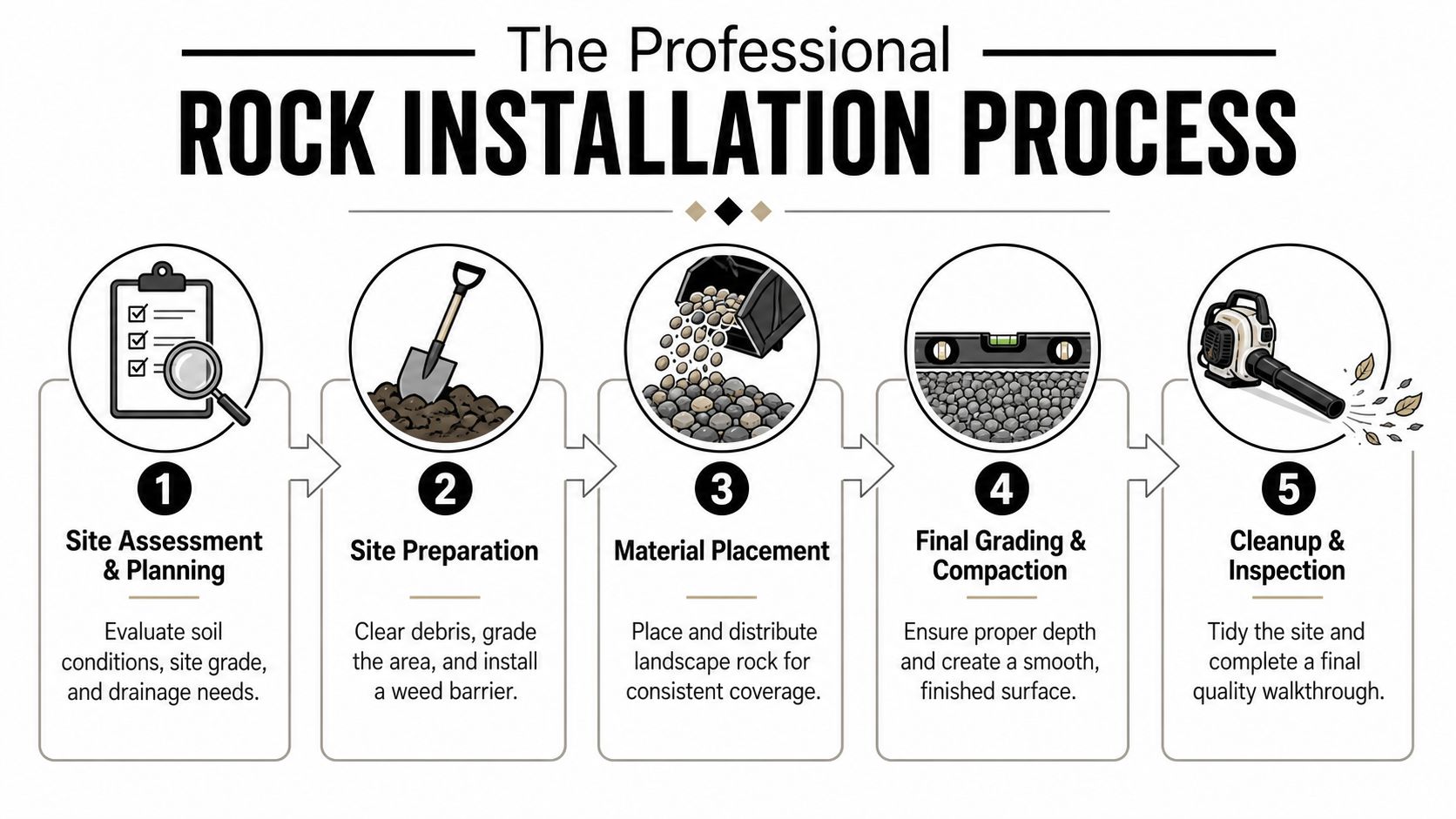
A solid installation starts before a single load of stone gets dumped. The crew walks the site, checks low spots, and decides where water needs to move instead of where it already collects. Skip that work, and the bed may look finished while trouble stays buried underneath.
What a quality crew does before spreading stone
The first job is clearing vegetation, roots, and loose debris. Leftover growth leaves humps in the finished bed, creates soft spots, and gives weeds an easier path later. Then the subgrade gets shaped so runoff moves away from the house, not toward it. Industry guidance recommends a minimum 2% slope away from buildings (Devonian Landscape), and around West Tennessee that detail matters because clay soil holds water and can send it back toward foundations if the grade is lazy.
After grading comes separation and containment. Woven fabric helps keep stone from sinking into the soil, and edging keeps material from wandering into turf or washout areas. A weak edge turns into extra maintenance fast, because the rock starts shifting, thinning out, and spilling where it does not belong.
The part homeowners usually do not see is the subgrade correction. That is the stage where installers deal with compacted clay, old mulch pockets, low spots, and any bare areas that will settle after the first hard rain. In this region, a bed that is only skimmed over can trap water and leave soft patches under the stone, especially after the kind of rain that hits heavy and then sits in the yard. Good crews spend the time to firm up the base, shape drainage, and make sure the finished rock layer is resting on something stable instead of on mixed-up soil and debris. That prep takes longer, but it is the difference between a bed that holds its form and one that starts sagging after a season or two.
Professionals also set the depth based on the stone itself. A 2- to 3-inch finished depth is the common benchmark for smaller stone, while 3 to 4 inches makes more sense for larger rock that does not lock together as tightly (OF Wolfinbarger Decorative Rock Guide). Installers also bring in 5% to 10% extra material to cover settling and uneven grade, because real yards rarely give a crew a perfectly flat canvas.
What to ask before the truck arrives
A homeowner should ask whether the quote includes grading, fabric, edging, cleanup, or only the stone itself. The gap between a clean-looking top layer and a lasting installation is usually in the prep, and a clear conversation up front keeps the price from changing once work begins. If you want a better sense of how barrier work fits into that prep, the landscape fabric installation guide is a useful companion.
The last thing I tell homeowners is simple. Do not buy stone by the pile and assume the rest will work itself out. The value is in the grading, drainage, and base work that keeps the rock in place and the yard dry.
Rock Installation Costs and Pricing Factors
Homeowners usually want the number up front, and that makes sense. Rock installation is still a manageable exterior project, but the price shifts because material, delivery, prep, and labor do not break down the same way from yard to yard.
A fair benchmark is the average river-rock installation cost of $700, with a broader typical range of $300 to $1,600 for materials, delivery, and installation. Larger or more complex jobs can reach $2,400. In many bids, pricing is also discussed in area terms, usually around $3 to $6 per square foot for rock landscaping, while labor often runs $50 to $150 per hour or about $25 to $100 per ton depending on the scope (Angi).
What changes the quote
The biggest cost driver is usually not the stone color. Area, depth, and access shape the final number. A narrow side yard with weak truck access costs more to install than an open bed because crews have to move stone by hand and spend extra time shaping the grade.
Delivery distance matters too, especially on rural properties or lots near the edge of town. Hauling off old mulch, rock, or debris adds labor, and so does cleaning up a bed that was never prepared properly. Edging, fabric, and subgrade correction all add time before the first stone is spread.
A quote also changes when the yard needs drainage corrections. In West Tennessee soil, a rock bed over soft or poorly sloped ground can become a holding area for water instead of a fix. I see the same problem on clay-heavy sites in other regions too, which is why a project like this should be compared with a proper drainage plan, not just a material price. For a related look at how yard upkeep affects long-term costs, the lawn maintenance service cost guide is a useful reference.
A rough estimate starts with size. A 500-square-foot area laid 3 inches thick is estimated at about $700 on average, which shows how quickly coverage depth turns into real money (Angi).
If two bids look far apart, compare what each one includes before comparing the total. Grading, edging, fabric, cleanup, and drainage work are often where the real difference sits. For homeowners in heavier soils, Utah clay soil drainage issues is a useful reminder of how stubborn clay can be when water has nowhere to go.
Drainage and Maintenance Considerations for West Tennessee Yards
Rock isn't maintenance-free, and in West Tennessee that matters more than some service pages admit. Leaves settle between stones, weed seeds land in dust and decomposed debris, and over time the bed slowly gains a thin layer of soil on top. That's why a stone bed can look pristine for a while and then start looking busy again if nobody blows it off.
The bigger issue here is water behavior in clay-heavy ground. West Tennessee yards can hold moisture longer than homeowners expect, so poor grading turns a rock bed into a runoff trap instead of a drainage aid. The why landscaping and drainage go hand in hand in Tennessee perspective is especially relevant because rock near a foundation only works when water has a clear path away from the structure.
The trade-offs nobody likes talking about
Rock can help with surface water management and reduce routine mulching, but it also has heat trade-offs. In hot, sunny spots, darker stone can raise soil temperatures and stress nearby plants. That's one reason rock works better in low-plant zones, drainage strips, and foundation borders than in every planting bed on the property.
A compacted, permeable base and a clear slope are the insurance policy. If runoff gets trapped, the soil stays saturated, erosion gets worse, and the stone stops looking intentional. That's why a good install near the house isn't just about appearance, it's about keeping water out of places it doesn't belong.
For people dealing with clay soil drainage headaches in another region, the Utah clay soil drainage issues guide offers a useful parallel because clay behaves stubbornly in a lot of the same ways, even though the climate is different.
What maintenance usually looks like
Rock beds still need periodic cleanup. A blower clears leaves before they turn into muck, and an early weed pull keeps small problems from becoming established. If the depth was done right, the bed won't need constant top dressing, but some settling is normal over time.
How to Vet and Choose a Local Landscape Rock Contractor
The fastest way to waste money is hiring someone who talks only about stone color and not about drainage. A rock installer should be able to explain how the site slopes, what happens to runoff, and how the base will be built before they ever mention decorative options. If they can't talk through those basics, they're probably treating your yard like a delivery drop, not a project.
One smart way to judge a contractor is to ask what gets included in the estimate. At minimum, you want to know whether they handle grading, fabric, edging, haul-off, and cleanup. The Jackson landscaping contractor guide is useful for the broader vetting process because the same habits that signal reliability in landscaping show up in rock work too.
Questions worth asking during the estimate
- Who handles the prep? Ask whether the crew removes old material, regrades the base, and checks drainage before spreading stone.
- What materials are included? Find out whether fabric, edging, and haul-off are separate line items.
- How do they measure depth? A contractor should be able to explain how they calculate coverage, not just estimate by eye.
- What does cleanup look like? Rock work should end with a tidy property, not leftover piles and scattered debris.
- Can they show similar jobs? Local references matter because soil and drainage problems are regional, not generic.
A contractor who gives a transparent, itemized quote is usually easier to work with than one who throws out a single number and hopes you won't ask questions. Licensing and insurance matter too, because rock installation still involves equipment, heavy material, and the risk of property damage if the work goes sideways.
The cheapest bid often leaves out the part that actually makes the project last.
Lawn & Leaf Solutions is one local option for homeowners who want rock installation tied to drainage-aware outdoor work, not just surface coverage. That matters when the yard has a water problem hiding under the cosmetics.
Request Your Free Rock Estimate in Jackson and West Tennessee
If you're weighing rock against mulch, the decision comes down to three things, the right material for the job, honest pricing, and whether the contractor understands drainage. A polished rock bed is easy to admire from the curb, but the work underneath decides whether it stays attractive through Tennessee weather or turns into a headache.
Homeowners who want a second estimate sometimes compare it against other exterior projects first, and the AlliedFenceAndGate.com free estimate is a good example of how a clear quote process helps people make better decisions. That same clarity matters in a rock installation quote, especially when site prep and water management are part of the job.
In Jackson and across West Tennessee, the hidden costs usually show up before the first stone is dumped. Old mulch has to come out, low spots may need to be corrected, edging can add labor, and soft ground after rain can slow the crew down. If a yard holds water, the quote should account for that work up front instead of treating drainage as an afterthought.
Lawn & Leaf Solutions brings over 18 years of hands-on experience, license # TNPL23317, and a customer-centered approach to outdoor work in Jackson and West Tennessee. The team handles installation alongside drainage solutions, so the project can address curb appeal and water issues at the same time instead of treating them like separate problems.
A good estimate should also spell out the trade-offs. Decorative stone lasts longer than mulch, but it costs more to install correctly. Heavier material stays put better in our weather, yet it can be harder to move, and finer rock may shift if the base is not prepared well. Around here, the difference between a clean finish and a recurring problem is usually in the prep, not the stone itself.
If you're tired of re-mulching every year or watching runoff tear up your beds, schedule a fast, free estimate and get a plan that fits your yard. The work should protect the property, reduce maintenance, and look like it was meant to be there from the start.