
Most professional lawn dethatching service jobs in the U.S. land between $100 and $300 for a medium lawn, with national averages around $180. That's the cost band most homeowners should expect before they decide whether dethatching is even the right fix.
In West Tennessee, the question usually shows up after a yard starts feeling soft underfoot, looks thinner than it used to, and still won't perk up even after watering. That's where a lot of homeowners get misled, because the problem can be thatch, compaction, drainage, or all three. A good dethatching visit starts with diagnosis, not with a machine.
What Lawn Dethatching Actually Solves
A homeowner steps off the back porch in Jackson, and the yard gives slightly under each step. The grass looks tired, the color is uneven, and the middle of the lawn seems to hold on to water after a rain. That is the moment dethatching becomes a real question, not a routine chore.
A lawn dethatching service targets the dense mat of dead stems and roots sitting above the soil line. When that mat gets thick enough, roots struggle to reach water, air, and nutrients in the soil below, and the lawn starts to look thin instead of healthy. For a medium yard, the market usually puts that service in the $100 to $300 range, with a national average around $180 (HomeAdvisor cost guide).
Corrective work, not calendar work
That price matters because it tells you something about the service itself. Dethatching has become a standard, quoteable job, not a rare specialty task, but it still isn't something most lawns need on a fixed schedule. Homeowner adoption data shows the service is selective, with 44.3% dethatching only when needed, 29.3% doing it once a year, and just 3.1% doing it twice a year or more (homeowner survey summary).
Practical rule: if the lawn doesn't have a meaningful thatch layer, dethatching can do more harm than good. You're paying to remove a barrier, not to make grass look busy for a weekend.
That's why the first question is never, “Can I dethatch this weekend?” It's, “Is thatch the problem?” In West Tennessee, clay-heavy soil and poor runoff can make a bad-looking lawn seem like a thatch issue when the fix is drainage or aeration. The right service starts with that distinction.
How Thatch Builds Up Between Soil and Grass
Think of the lawn as a layered cake. Soil sits on the bottom, a tangled layer of dead stems, roots, and runners builds in the middle, and living grass grows on top. That middle layer is thatch, and a little bit of it is normal.
The trouble starts when that layer keeps building until it blocks movement between the grass and the soil. A commonly used threshold is about 1/2 inch, and once that line gets crossed, water and nutrients don't move the way they should (LawnStarter guidance). In practical terms, the lawn can look watered and fertilized while still acting stressed underneath.
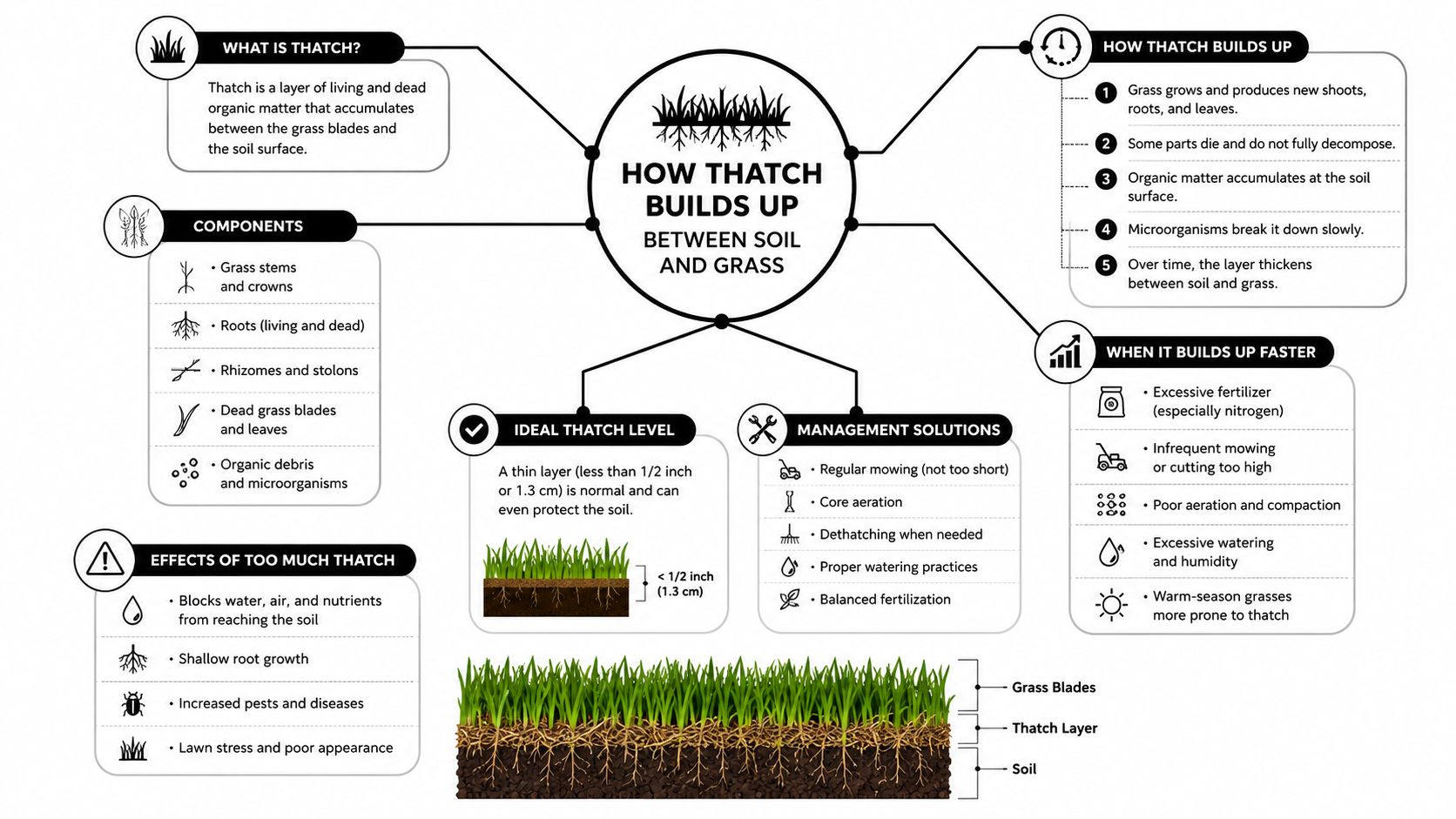
Clay-heavy West Tennessee yards make that worse because moisture tends to hang around instead of moving freely through the profile. When the soil stays damp under a thick thatch mat, roots don't get the air exchange they need, and the surface can feel soft or spongy even when the ground below is tight. That's one reason a lawn can appear lush from a distance but still decline year after year.
What thatch is not
A lot of homeowners confuse thatch with grass clippings. Clippings are short and break down fast when they're left at a normal mowing height. Thatch is different, because it's a woven layer of plant material that resists decomposition and sits between the crown of the grass and the soil itself.
If you want a deeper look at how soil health changes lawn performance, this soil guide fits the picture well. The important part is simple, though. Dethatching only makes sense when the layer is thick enough to interfere with the lawn's normal function, not just because the grass looks rough after a hot spell or a wet week.
Signs Your Lawn Is Ready for Dethatching
The clearest clue is the spongy-foot test. If you walk across the lawn and it feels cushioned instead of firm, you may be standing on an overbuilt thatch layer. That feeling is different from muddy softness after a storm, and it's one of the easiest ways to start separating a true thatch problem from general soil trouble.
The checks that matter most
A second check is to cut a small wedge from the turf and measure what's between the green growth and the soil. If that middle layer is approaching 1/2 inch, the lawn is getting into dethatching territory (LawnStarter guidance). Brown patches that don't respond well to watering, thin areas that keep spreading, and turf that seems more vulnerable to disease pressure can also point in that direction.
Good diagnosis beats a fast sale. If the lawn's real problem is compacted clay or poor drainage, dethatching alone won't fix it.
That distinction matters in West Tennessee. A yard with standing water after rain, hard soil under the turf, or runoff from a slope may need aeration or drainage work before any dethatching makes sense. Grub damage can also mimic drought stress or thinning, and a homeowner who skips the diagnosis can end up paying for the wrong service.
A simple homeowner filter
- If the lawn feels springy and looks matted, thatch may be part of the problem.
- If the soil is hard and sealed, compaction may be the bigger issue.
- If water lingers after storms, drainage needs a look before you cut into the turf.
- If dead patches spread irregularly, pests or disease may be involved instead of thatch.
The safest takeaway is this. Dethatching is a targeted fix for a specific layer problem, not a default response to every tired lawn. Once you know what you're dealing with, the next step is a lot less expensive and a lot more effective.
What a Professional Dethatching Visit Looks Like
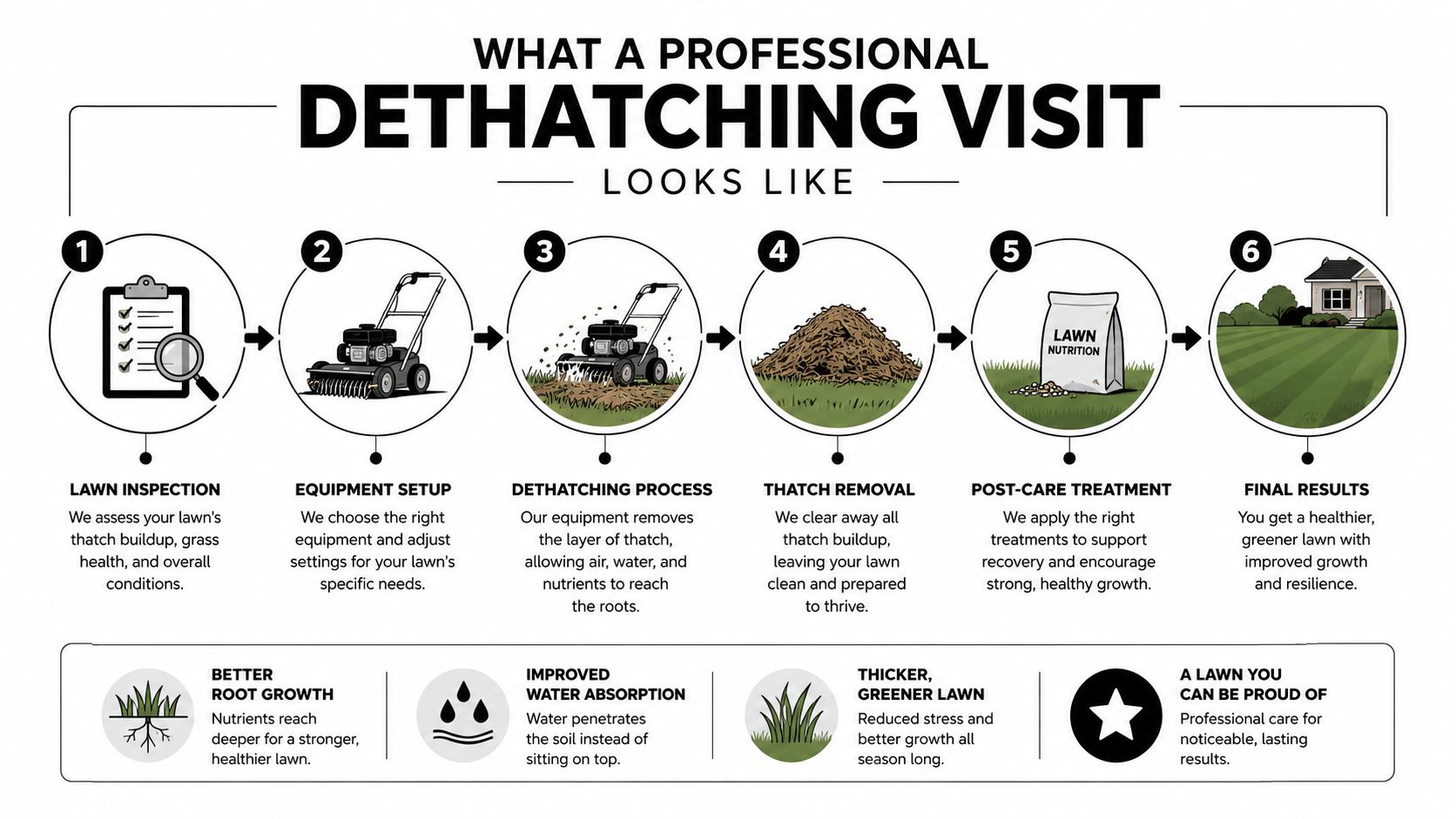
A good crew starts with inspection, not with the machine running. They check the turf type, the thickness of the thatch layer, sprinkler heads, slopes, and places where soil stays wet. That matters because the setup on the machine changes whether the service restores the lawn or tears it up.
How the machine is set
Consumer and professional dethatchers commonly advertise 30 mm to 40 mm of adjustable cutting depth, 18-inch to 22-inch working widths, and 2 to 3 inch overlap on straight passes to avoid missed strips (equipment specs). The rule that matters on the ground is depth. On standard turf, blades should stay shallow enough to avoid cutting deeper than about 0.5 inch into the soil, because deeper settings can injure the crown and slow recovery.
Some machines use flail-style tines, while others use vertical blades. Bigger units may run with 15 to 32 tines or blades, Honda GX160 to GX200 class engines, and throughput around 15,000 sq ft/hour on larger jobs (equipment specs). That kind of capacity is why a commercial crew can finish a residential yard quickly when conditions are right.
What happens after the passes
The work is messy by design. A lawn that was hiding a thick layer of dead material will look ragged right after the service, and that's normal. Crews rake or bag the debris, then clean up the lawn so the soil surface can breathe again.
For homeowners who are preparing to install new sod later, this sod care guide is a useful reference because the recovery mindset is similar. Dethatching is not a beauty treatment on day one. It's a reset that gives the grass a chance to thicken back up over the next couple of weeks.
How Much Dethatching Costs and What Drives the Price
A Jackson homeowner usually gets the cleanest read on pricing by looking at lawn size, access, and how much debris the machine will pull up. A medium yard often falls in the $100 to $300 range, and bigger or heavier jobs can move past $600 when the lawn is thick, awkward to reach, or packed with material that has to come out (HomeAdvisor cost guide).
| Typical Lawn Dethatching Service Price Bands | |
|---|---|
| Lawn Size | Flat-Fee Range |
| Medium residential lawn | about $100 to $300 |
| Larger or thicker thatch job | can reach $600+ |
| Typical Lawn Dethatching Service Price Bands | |
|---|---|
| Per 1,000 sq ft | $10 to $30 |
| Hourly Range | $50 to $85 |
Why quotes spread out
The biggest swing comes from labor, not just square footage. A crew can price a yard one way and still end up spending more time on a smaller property if the thatch is dense, the slope is awkward, the gate is tight, or the cleanup around beds and hard edges slows everything down. An open lawn with light buildup is a different job from a yard that has been holding dead material for years.
Some companies prefer hourly pricing because the time is easier to match to the work. A professional may charge $50 to $85 per hour, while others price at $10 to $30 per 1,000 square feet. Both can be fair, but only if the quote matches the actual condition of the turf and not just the lawn on paper.
What should change the quote
- More thatch depth means more passes and more debris.
- Poor access slows machine movement and cleanup.
- Hauling debris away adds handling time.
- Bundled overseeding changes the total, because the lawn is already open and ready for seed.
In West Tennessee, the better quote is the one that spells out lawn size, turf condition, and cleanup details before work starts. Clay soil and drainage issues can make a yard feel worse than the thatch alone, so a good contractor should be honest about whether the lawn needs dethatching, aeration, or both. If you are weighing seed work too, this guide on when to aerate and overseed a lawn helps show how those services fit together.
A low quote is only useful if it includes the part that matters most, hauling off the material the machine brings up and leaving the lawn ready for the next step.
Dethatching vs Aeration and Other Lawn Fixes
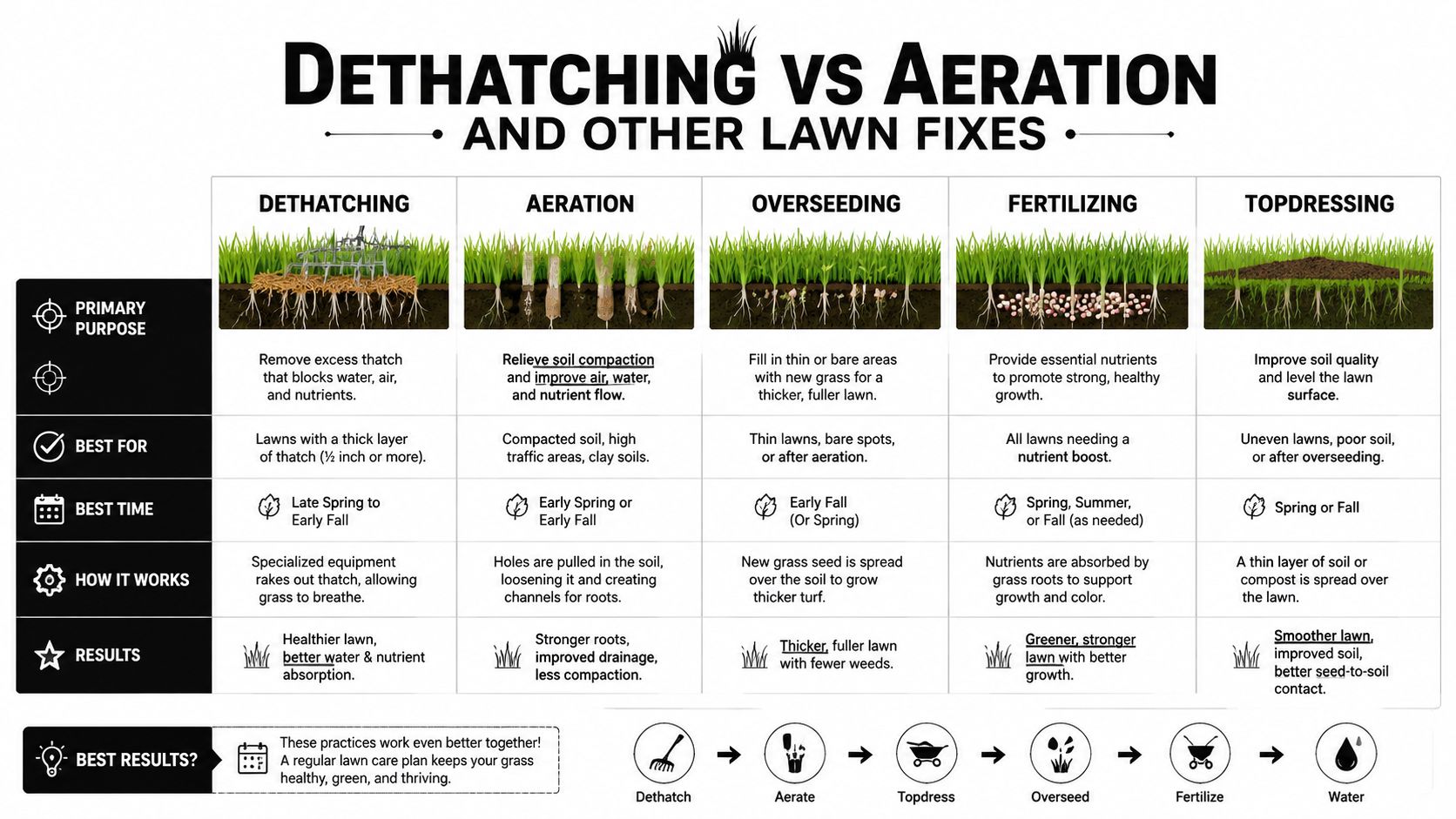
Dethatching and aeration solve different problems, even though homeowners mix them up all the time. Dethatching pulls out the mat of plant residue sitting above the soil. Aeration pulls cores from the soil itself to relieve compaction. They can work together, but they're not the same job.
Choosing the right fix
In clay soil, aeration is often the more valuable repair because it opens tight ground that holds water and resists root growth. Dethatching becomes the better move when the surface layer is the main barrier. If both problems are present, the lawn usually needs dethatching first, then aeration, then follow-up improvement work.
West Tennessee rule of thumb: if the yard stays wet, feels tight, and sheds water poorly, don't assume thatch is the only issue.
Overseeding often fits into that same conversation. A lawn that's been opened up by dethatching can accept seed more easily, which helps thicken weak areas if the timing is right. Drainage correction belongs in the mix when the yard has standing water, runoff paths, or low spots that stay soft after every storm.
A local contractor can sometimes handle more than one layer of the problem, and this aeration and overseeding guide gives a good frame for that decision. The key is to match the service to the symptom. Don't remove thatch just because the lawn looks tired if the issue is buried deeper.
Frequency, Seasonal Timing, and Aftercare
A lawn tells you when it needs dethatching. Some yards build a soft layer fast, others go years without needing it, and the right call depends on what the grass is doing at the roots and on the surface. In West Tennessee, clay soil and drainage problems can make a lawn look thatchy when the actual issue is trapped water or compacted ground, so the first job is sorting out the symptom before touching the machine.
Timing by grass type
Grass recovery matters more than the calendar. Cool-season lawns do best when dethatching happens during active growth in spring or fall, and Kentucky bluegrass is commonly handled in those windows. Bermudagrass responds better in early to mid-summer, when it can rebound quickly after the surface layer is pulled up (Nationallawncareauthority guidance). Around Jackson, fescue lawns usually recover best in early fall, when the turf has enough growing time left to repair itself before winter stress starts.
That recovery window is where timing makes or breaks the service. A lawn that gets dethatched at the wrong point in the season can stay thin longer than it should, especially if the yard already struggles with clay-heavy soil or poor drainage. A freshly dethatched lawn often looks rough for a while because the machine has removed the mat that was hiding weak spots and holding back new growth. Done at the right time, the grass gets a chance to fill back in while the weather still supports recovery.
What to do after the service
- Water thoroughly and steadily. The soil needs moisture after the surface layer is disturbed, but flooding the yard only adds stress.
- Feed lightly if needed. A modest fertilization plan can help recovery, and this guide to lawn fertilizing timing is useful when you want the feeding schedule to match the work that was just done.
- Overseed thin spots. Dethatching opens the canopy, so seed has a better chance of reaching the soil and filling bare areas.
- Limit foot traffic. The lawn needs a quiet stretch to knit back together, not repeated pressure while it is trying to recover.
Recovery should be the goal, not speed. If the lawn is watered correctly and the thin spots are seeded at the right time, the yard may look ragged for a short stretch, then start rebuilding from the bottom up. Skip that follow-up, and the same lawn can stay patchy even after the thatch is gone.
Putting It All Together for a Healthier Lawn
A spongy, thinning yard is frustrating, but it doesn't automatically mean the answer is to cut it up. The best lawn dethatching service starts with a diagnosis, checks the 1/2 inch thatch threshold, and asks whether the problem is surface buildup, soil compaction, poor drainage, or some mix of all three. That matters in West Tennessee because clay soil can make the symptoms overlap.
The strongest next step is a walk-through with a local pro who can tell you what the lawn needs, not just what's easiest to sell. Ask whether they'll inspect drainage, explain whether aeration belongs in the plan, and tell you what overseeding would look like after the surface is opened up. If they can't answer those questions clearly, keep looking.
For homeowners who want a broader yard-health plan, this healthy lawn guide is a useful place to connect the dots between mowing, feeding, drainage, and seasonal care. Dethatching is one tool in that system, not the whole system.
If your lawn feels spongy, stays wet, or keeps thinning out, Lawn & Leaf Solutions can help you sort out whether dethatching, aeration, drainage work, or reseeding is the right fix. Visit Lawn & Leaf Solutions to schedule a free estimate and get a real on-site opinion before you spend money on the wrong treatment.