
Written by Ross Forsyth, owner of Lawn & Leaf Solutions. Licensed & Insured — License # TNPL23317.
If your yard stays soggy after rain, the first mistake is assuming every wet spot needs a French drain system for yard. Some yards need grading correction, some need downspout extensions, and some need a subsurface drain only in one stubborn strip near the house. The wrong fix costs time, money, and another round of digging.
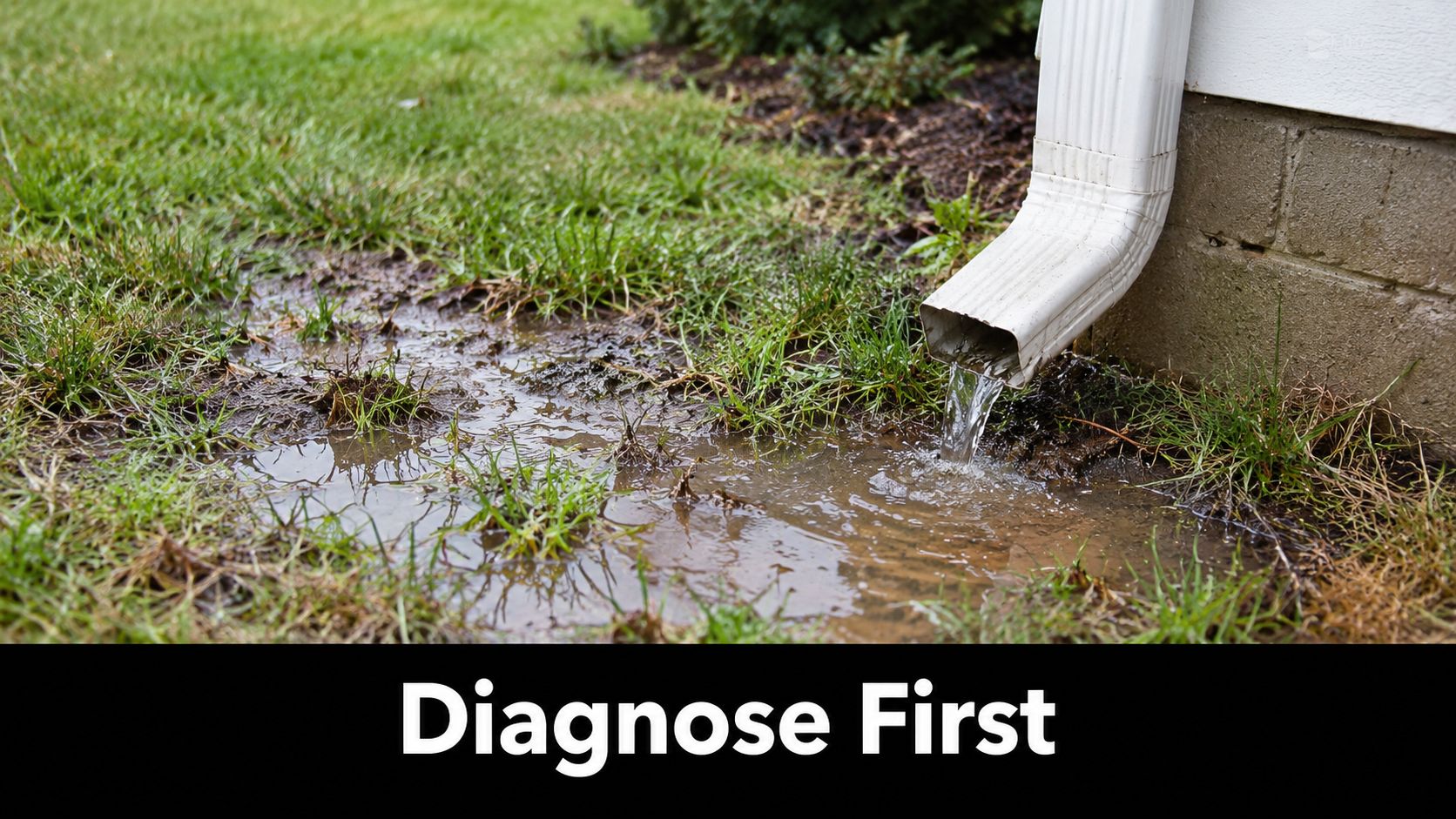
Diagnosing Your Yard Drainage Problem
A French drain only makes sense when water is entering the soil where you need it intercepted. If the problem is a roof downspout dumping water beside the foundation, the drain may be treating the symptom instead of the cause. That's why the first job is to watch how water moves during and after a heavy rain, not just stare at the wet spot the next day.
Surface runoff or subsurface saturation
Surface runoff usually leaves a visible path. You'll see water flowing across hard ground, collecting at a low point, or cutting through mulch beds. Subsurface saturation feels different. The yard may look fine on top while the soil stays spongy, the grass squishes underfoot, and the area takes forever to dry.
Practical rule: If water arrives from the roof, fix the roof water first. If water keeps coming up through the soil or staying trapped in the grade, a French drain becomes a stronger candidate.
West Tennessee yards often deal with compacted, fine-textured soils that hold water longer than homeowners expect. The simple weekend test is to mark the edges of the wet area, then check again after the next rain and again after a dry day. If the water pattern keeps returning to the same strip, you've got a drainage path problem, not just a lawn problem.
For a quick cross-check, compare what you're seeing with spot signs of drain failure and the homeowner-focused guide on signs you need French drain installation in your yard. Those two resources help separate a shallow yard issue from a deeper perimeter drain problem.
Red flags that point away from DIY
If water is entering a crawl space, pushing against a foundation, or pooling in more than one low area, the project needs a closer look. That's also true if you can't tell where the water is coming from, because blind trenching solves the wrong problem just as often as it solves the right one. A French drain works best when the source, flow path, and discharge point are all clear before the shovel hits the ground.
If your diagnosis points to trapped subsurface water, see how our French drain installation service plans and installs drains for West Tennessee yards.
Planning and Sizing Your French Drain System
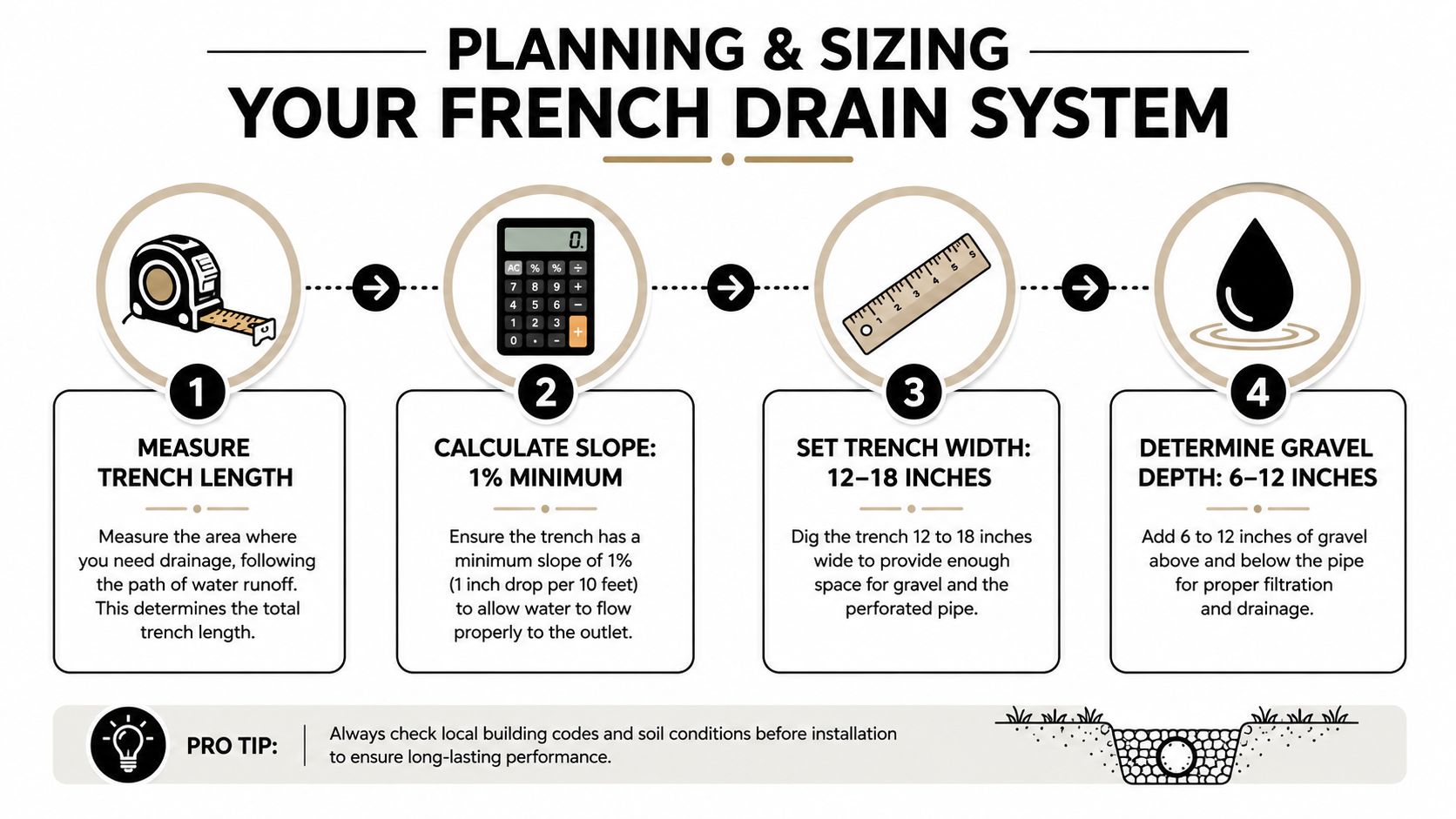
Once you know the problem is trapped subsurface water or repeated saturation, the next step is measuring the job correctly. A French drain for a yard is simple in concept, but the trench has to be sized for the amount of water you need to move. In most residential installs, that means a trench about 12 to 18 inches wide and 18 to 24 inches deep, with a 4-inch perforated pipe set in washed gravel and wrapped in geotextile fabric, a layout that matches common installation practice and standard drainage guidance.
Get the slope right before you buy materials
Slope decides whether the system drains or just holds water underground. Installation guidance usually calls for a minimum grade of about 1%, which consumer instructions often describe as roughly 1 inch of drop over 10 feet (Home Depot). If the trench is flat or pitched the wrong way, water stays in the pipe and the yard keeps the same problem.
Good installers mark the outlet first, then work back toward the wet area. A level, laser level, or string line lets you confirm the fall before you dig the full run. I've seen plenty of DIY drains fail because the trench looked close enough to the eye.
West Tennessee clay makes that check even more important. The soil holds water longer, so a trench that is only slightly off on grade can perform badly once the ground gets saturated. If you want a clearer sense of how heavy soil changes the drainage plan, this guide on how to improve clay soil drainage gives a useful reference point before you start buying pipe and gravel.
Plan the outlet before the trench
A drain without a legal discharge point is just an underground storage ditch. The outlet has to carry water somewhere safe, away from structures and away from places where it can flow right back into the same problem area. If that point is unclear, bring in a professional before you order materials.
This is also where local yard conditions matter. Clay-heavy soil slows how quickly water leaves the trench and makes the surrounding ground resist infiltration, so the route has to be planned with less margin for error. In practical terms, that means measuring carefully, checking the fall twice, and being honest about whether the line can drain to daylight or to another approved discharge point.
Planning tip: Buy materials after you've measured the route and confirmed the outlet. Rework costs more than one more trip to the supply yard.
Installing Your French Drain Step by Step
Once the layout is right, the build is mostly about discipline. The trench has to hold grade, the stone has to stay clean, and the outlet has to be in the right place from the start. For a small run, a clean installation is often a one-day or two-day job, but West Tennessee clay can slow everything down. Wet, sticky soil takes longer to dig, and cleanup usually stretches farther than homeowners expect.
Mark, dig, and hold the line
Start by staking or painting the trench route. Dig from the outlet back toward the wet area so you can keep the fall under control as the trench opens up. A sharp shovel, trenching shovel, mattock, wheelbarrow, tape measure, and line level will handle most residential jobs.
Keep the trench width steady. If it widens in one spot and pinches in another, the gravel settles unevenly and the pipe loses support. Clean trench walls help too, because ragged cuts cave in more easily when the soil is damp. In clay-heavy yards, I check the trench often while digging because the sides can soften fast once water gets into the cut.
Lay fabric, stone, and pipe in the right order
Line the trench with geotextile fabric so soil stays out of the stone bed. Add a base layer of washed gravel, set the 4-inch perforated pipe, and keep the perforations facing down so the line captures subsurface water without loading the pipe with sediment. That detail lines up with basic guidance from LSU AgCenter.
After the pipe is in place, wrap the gravel and pipe assembly with the fabric, then cover it with more gravel before topsoil or sod. The stone matters more than people think. If the wrong material goes in, fines fill the voids and the trench stops behaving like a drain. A good reference on best materials to construct French drain that lasts helps narrow down what is worth buying before you load the truck.
Don't bury a drain until it has been tested. Run water through the line and confirm that it exits where you planned.
Test before you finish
The last check is a real water test, either with a hose at the inlet end or after the first heavy rain. If water backs up, the slope, outlet, or pipe layout needs to be corrected before the trench is covered. That is the cheapest time to find a problem, and the easiest time to fix it.
The hard part for many homeowners is not the pipe. It is the digging, hauling stone, and managing the outlet so the water does not create a new wet spot downhill. In clay soil, that trade-off gets harder because the ground drains slowly and the margin for error is small.
Common Installation Mistakes That Cause Failure
A French drain usually fails because of one bad decision, then a few small ones stacked on top of it. The most common pattern I see is simple. A homeowner gets the trench in the ground, but the system isn't really designed to move water, so it clogs, sags, or discharges too weakly to matter.
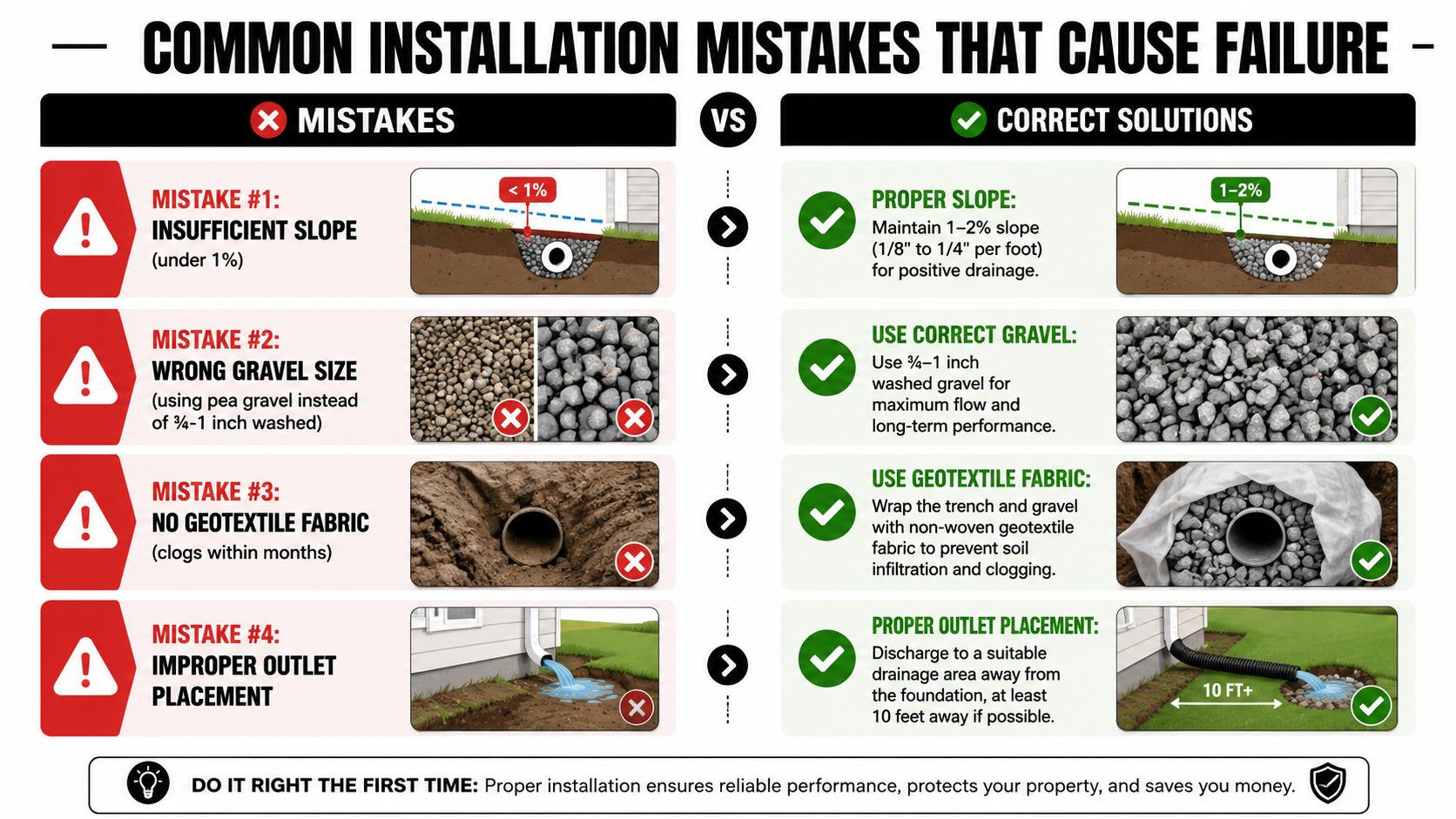
What breaks first
Insufficient slope shows up as standing water in the pipe run or a trench that never seems to empty. Wrong gravel size creates poor void space and faster clogging. No geotextile fabric lets soil wash straight into the stone bed, which shortens the life of the drain dramatically. Pipe holes facing up can slow capture and invite sediment where it doesn't belong.
Improper outlet placement is another quiet killer. If the discharge point sits in a low area or empties where water can flow back toward the yard, the drain keeps recycling the same moisture. Poor trench compaction around the edges causes settling, which can warp the finished grade and create new puddles.
How to spot a failure early
If a drain seems to work for a while and then slows down, clogging is usually the issue. If it never works well, the slope or outlet is probably wrong. If the yard gets saturated again after one wet season, the system may be fighting seasonal groundwater instead of moving rainwater.
For a homeowner's checklist of what to avoid, the guide on build a French drain without common mistakes what to avoid is a solid companion to the field notes here. The useful habit is checking each layer before you cover it, not after the grass is back.
Field truth: A drain that looks perfect on top can still fail if the outlet is weak or the grade is wrong underneath.
If the site has changing groundwater pressure, heavy clay, or foundation water concerns, the problem may be beyond a basic DIY repair. At that point, the correct fix is usually a redesign, not another layer of gravel.
When to Hire Professional Drainage Contractors
Some yards are clean DIY work. Others turn into a puzzle of clay, roots, slope breaks, and buried utilities. If the trench is short, the grade is simple, and you already know where the water needs to go, a homeowner can often handle it with basic tools. If the drain has to cross a longer run, work near utilities, or protect a foundation, hiring a contractor is the safer move.
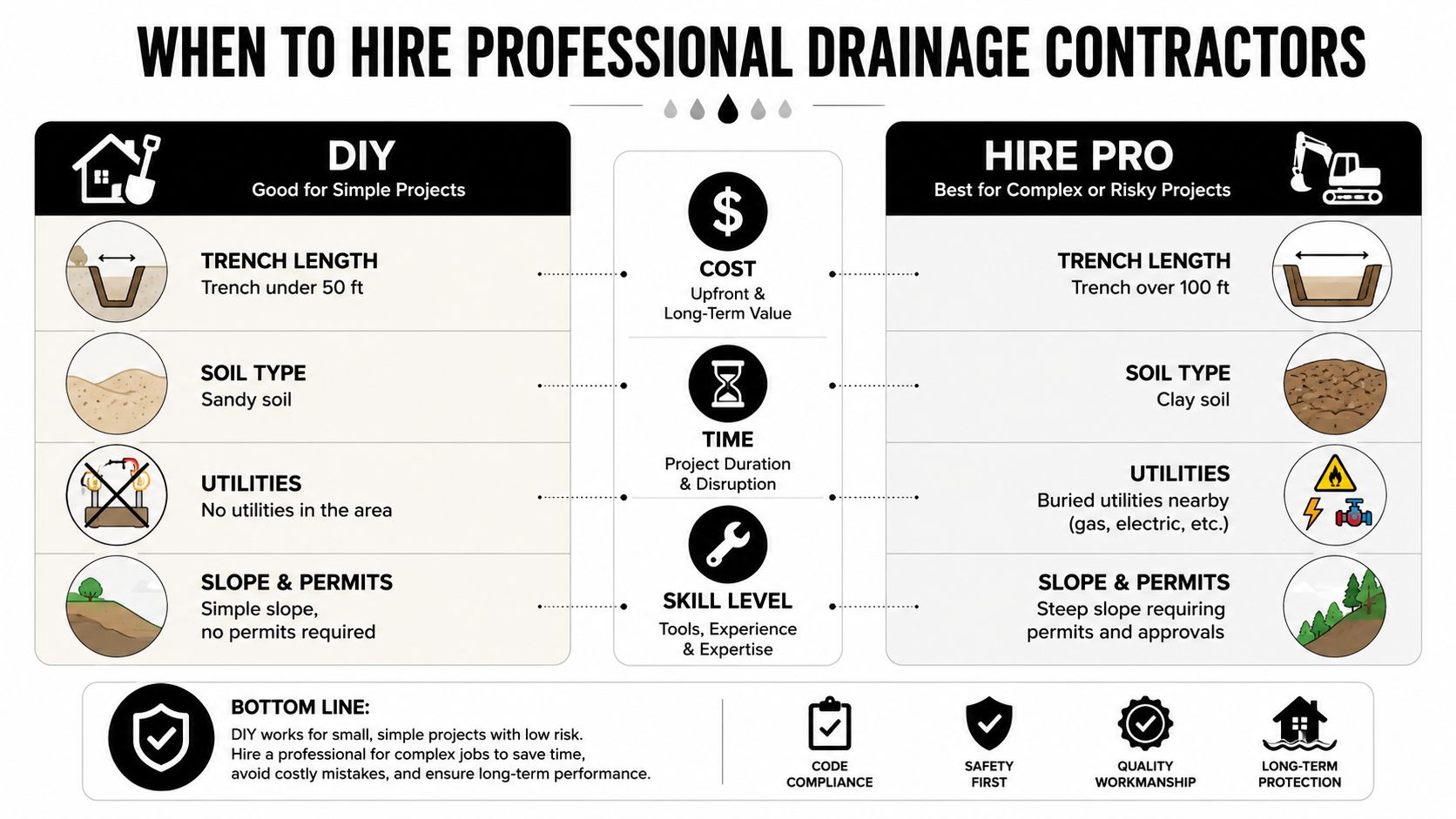
The decision comes down to risk, not ego
DIY makes sense when the problem is narrow and visible. A pro makes sense when the water issue is tied to structural protection, utility conflicts, or a grade that won't cooperate. Clay soil adds another layer of difficulty because excavation is heavier, trench walls are less forgiving, and drainage capacity depends more on careful design.
Jackson-area homeowners should also think about where the collected water will go after it leaves the property line. If the outlet or discharge path is uncertain, a professional can often solve that faster than a homeowner can troubleshoot it on weekends.
If the problem includes crawl-space moisture or repeated water intrusion at a low wall, it may also intersect with pumping solutions. In those cases, sump pump solutions for homes can be part of the drainage strategy rather than a separate fix.
What to ask before you hire
Ask how the contractor will confirm the source of the water, what they're using for pipe and fabric, and where the discharge point will be located. Ask whether the proposal includes utility locating and whether the trench design changes for clay soil. If the answer sounds generic, keep looking.
For local homeowners comparing options, how to choose the right French drainage company for your property is a useful screening guide. It helps you judge whether a contractor is diagnosing the yard or just selling a trench.
Lawn & Leaf Solutions also installs drainage systems in West Tennessee, including French drains, which matters if you want one contractor to handle grading, lawn repair, and water control without passing the job between trades. That kind of coordination can save a lot of backtracking on a messy site.
Maintaining Your French Drain for Long-Term Performance
A well-built French drain doesn't need constant attention, but it does need occasional inspection. The first thing to watch is the outlet. If water stops moving out of the system the way it used to, or if the discharge area gets muddy, the drain needs a look before the problem reaches the buried pipe.
Keep the trench line clear and documented
The safest maintenance habit is simple. Walk the line after wet weather, check the outlet, and note any settling or soggy patches along the route. If you can access cleanouts, flush them. If you can't, the next best move is to protect the line from root intrusion and heavy traffic.
Keep trees and aggressive shrubs away from the trench line. Roots look for moisture, and a drain line is a steady invitation. Driving over the drain or stacking heavy outdoor material on top of it can crush the grade over time and make repairs harder.
Know when repair becomes replacement
If one isolated section clogs, partial repair may be enough. If the whole run settles, backs up, or never drained correctly from the start, the system may need a larger rebuild. That's where good documentation pays off, because the next owner, or the contractor, can see where the pipe runs and what material was used.
Maintenance rule: Protect the outlet, protect the slope, and protect the trench from roots. Those three habits do more than any seasonal miracle product.
For West Tennessee yards, the best maintenance timing is after the wet season has shown you where the system is struggling and before the next stretch of heavy rain returns. That gives you time to clear debris, inspect the outlet, and fix minor settling while the soil is still workable.
A French drain is a quiet system. If it's working, you'll barely notice it. If it isn't, the yard tells on it fast.
Wet yard in the Jackson area? Lawn & Leaf Solutions installs French drains and other drainage fixes for homeowners in Jackson and across West Tennessee. Request a free drainage estimate or call (731) 225-9907.