
You're probably standing in the backyard right now, looking at a patchy lawn, a muddy low spot, or a patio that never drains the way it should. Maybe you've already seen a glossy rendering that made everything look clean, calm, and finished, only to worry later that the plan ignored the problem under your feet. That's the trap with hiring a landscape design company, if the first conversation is about flowers and hardscape finishes instead of water, you're already behind.
In West Tennessee, that mistake costs people. Heavy clay soil and sudden storms don't care how pretty the sketch looks. A yard that can't move water correctly will punish the house, the planting beds, and your wallet.
Why Most Landscape Designs Fail Before the First Shovel Hits Dirt
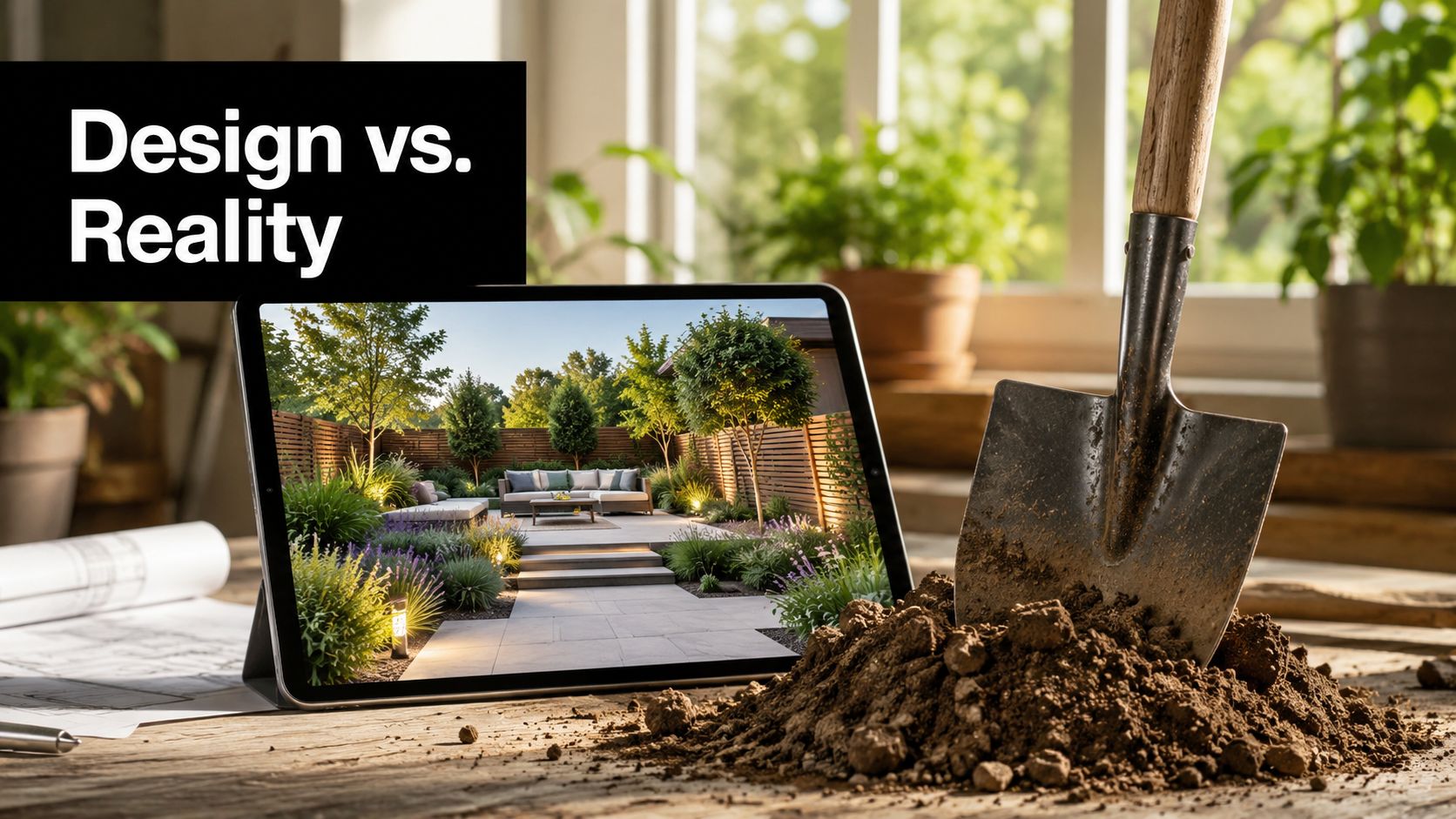
A polished rendering can hide a bad plan for months. The patio looks level, the beds look full, and the lawn looks crisp, then the first hard rain exposes the truth. Water finds the low point, the beds erode, and the edge near the foundation starts acting like a gutter that was never supposed to exist.
That's why a design company focused on the outdoors should start with drainage, not décor. The industry itself is large but still fragmented, with the U.S. design industry estimated at $9.6 billion in 2026 and 48,649 businesses operating in it, according to IBISWorld. In a crowded field like that, the firms that separate themselves are the ones that understand grading, water flow, installation, and follow-through, not just plant color.
Water is the first design element
If a company doesn't ask where the water goes, it's not doing design work, it's doing decoration. In West Tennessee, that's especially reckless because clay holds water and storms dump it fast. A smart designer reads the site like a drainage map, then layers the pretty stuff on top of a functional base.
The best firms think like water engineers before they think like gardeners. They measure grades, identify runoff paths, and decide where the system should shed water before they ever talk about mulch color. That's the difference between a yard that looks finished and a yard that stays finished.
Practical rule: if drainage gets discussed only after the patio and planting plan are already “done,” the company is solving the wrong problem.
You can see the logic in how local landscaping and drainage should work together on why landscaping and drainage go hand in hand in Tennessee. If the provider can't explain that relationship clearly, keep looking.
A pretty yard is not the same thing as a durable yard
The broader landscaping market is massive, with NALP citing IBISWorld data showing the U.S. landscaping services industry at $188.8 billion in 2025, with more than 1.4 million employees and 692,777 businesses. That scale matters because customers expect more than a few plants and a sketch now. They expect integrated service, and they should.
A designer who ignores hydrology is selling a postcard. A designer who starts with water is building something that has a chance of surviving a real Tennessee storm.
How to Vet a Landscape Design Company Before You Hire
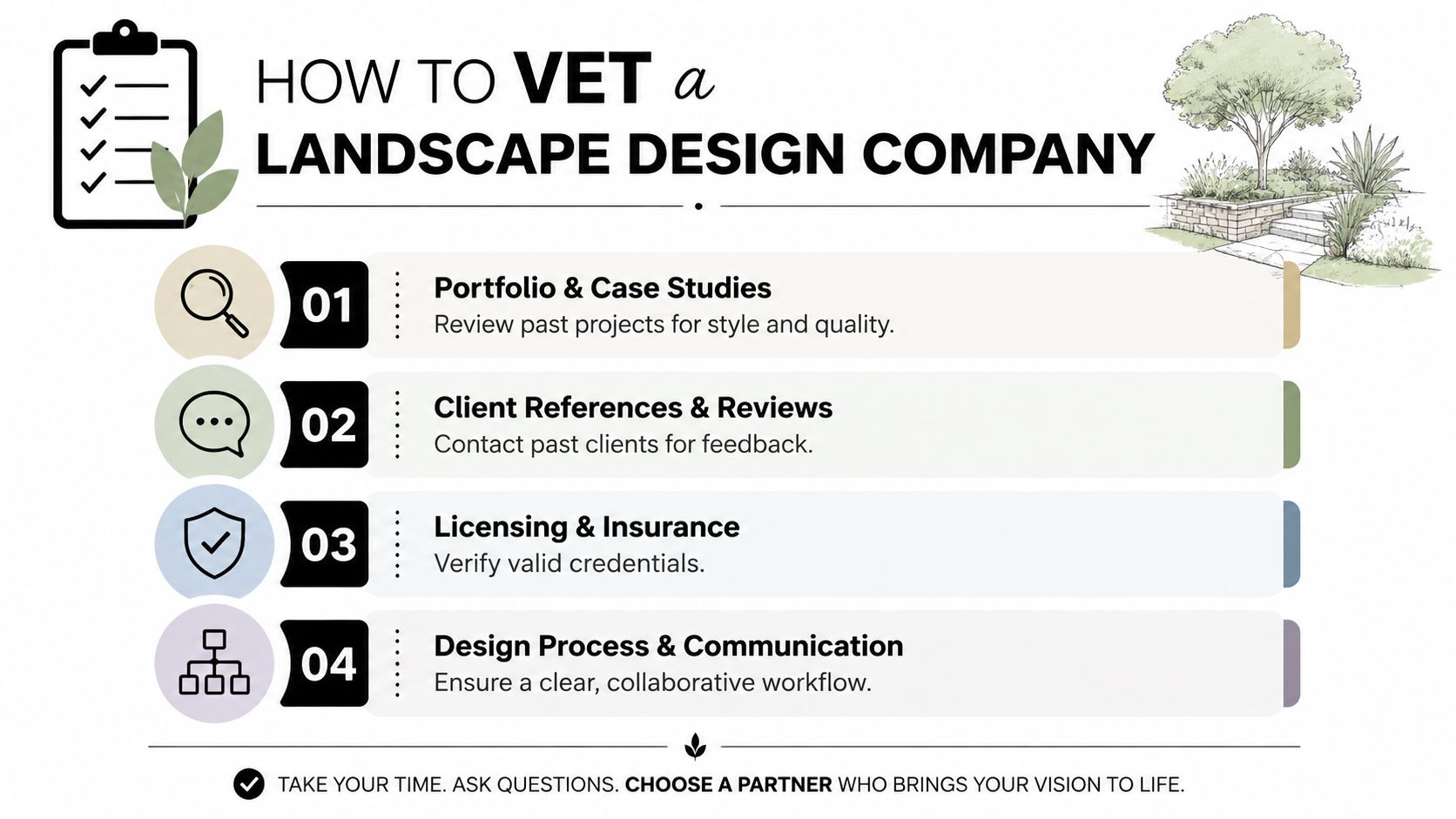
Start with credentials, not charisma. Ask for the Tennessee license number and verify that the company is licensed for the work it wants to sell. If a contractor hesitates, dodges, or gives you a vague answer, that's your cue to move on.
Insurance is essential. You want proof of general liability and workers' compensation before anyone steps on your property. If a company can't produce documentation, you're taking on risk that should belong to the contractor, not you.
A strong local example is Lawn & Leaf Solutions, which lists TNPL23317 and says it has over 18 years of hands-on experience. That's the kind of concrete detail homeowners should look for, because real experience shows up in how a company talks about slope, drainage, and install sequencing, not just in the photos on the website. For a quick service overview, their Jackson landscaping services guide is a useful reference point.
Questions that separate pros from pretenders
Ask these on the first call, and listen carefully to how directly they answer.
- Who handles drainage design? If they subcontract it out, ask who writes the specs and who is responsible if the plan fails.
- What kind of local experience do you have? You want someone who has worked through the same soil and grading problems you have.
- Can you show projects like mine? Similar lots matter more than pretty before-and-after shots from another climate.
- What does your written scope include? If they can't describe the work clearly, the estimate will be fuzzy too.
- How do you handle change orders? A sloppy answer here usually means surprise charges later.
A company that moves too fast is usually skipping something. A company that won't discuss water management in plain language probably doesn't have much of a plan for it.
Reviews matter, but references matter more
Online reviews are a starting point, not a final verdict. Read for patterns, especially comments about communication, cleanup, and whether the finished job matched the promise. Then call references and ask what happened when the first rain came.
Ask past clients one direct question, did the company solve the problem, or did it just make the yard look better for a while?
That question cuts through the marketing. Pretty work is easy to sell. Durable work is what you're paying for.
What to Expect During a Professional Landscape Design Consultation
A real consultation starts outside, not at a desk. The designer should walk the property, study the grades, note utility locations, check sun exposure, and look for where water already travels after a storm. That site data matters because it becomes the basis for the whole plan.
Technically solid firms tend to follow a five-stage workflow, site inventory and analysis, needs definition, functional diagrams, conceptual plans, and a final construction-ready plan, as outlined in University of Florida extension guidance. That sequence is the opposite of guessing. Each stage narrows uncertainty before anything gets built.
What you should bring to the meeting
Bring anything that helps the designer understand the site fast. A property survey helps, but so does your own memory of where water has pooled, where grass dies every spring, and where mulch keeps washing away. Don't assume the pro can see everything on the first pass.
You should also bring a short, blunt list of priorities. If drainage matters more than a flower-heavy front bed, say so. If the yard needs to be easier to maintain, say that too. Good designers appreciate clarity because it keeps the plan from wandering.
What a thorough designer should explain on site
A good consultant will tell you where the problems are and why they matter. They should point out runoff routes, steep transitions, and any spots that could create trouble later if they're ignored. If they talk only about curb appeal, they're avoiding the hard part.
The proposal should not be a mystery document. It ought to spell out scope of work, materials, timing, payment terms, and warranty details. That's also where how to maintain a healthy lawn becomes relevant, because a site that's designed well still needs a plan for what happens after install.
Clear rule: if the consultation ends with vague phrases and no written scope, don't sign anything.
A rushed walk-through usually means a rushed build. A real consultation should feel like someone finally took your yard seriously.
Understanding Landscape Design Budgets and Timelines
Budget is where bad assumptions get expensive. Homeowners often compare a simple refresh to a drainage-heavy installation as if they're the same kind of project. They aren't. Water management work takes more labor, more coordination, and more precision, and that's before any planting or hardscape even starts.
The table below gives a practical way to think about scope, timing, and what you're buying. These are not price guarantees, but they are the right categories to use when reading proposals and comparing bids.
| Project Type | Typical Cost Range | Timeline | Includes |
|---|---|---|---|
| Basic lawn and bed refresh | Smaller project investment | Short design and install window | Cleanup, bed shaping, mulch, simple planting, basic lawn touch-ups |
| Full landscape installation with hardscape | Mid-level project investment | Moderate design and build window | Planting layout, patio or seating area, edging, lighting, and install coordination |
| Integrated drainage solutions with grading and French drains | Highest complexity investment | Longer build window, weather dependent | Regrading, drainage routing, drain installation, erosion control, and replanting around the corrected grade |
If your proposal includes retaining walls or major grade changes, check permitting early. A useful resource on how to avoid permit denial can save you from designing something the city won't approve. That kind of issue delays jobs and blows up budgets fast.
What drives the timeline
Design-only work can move quickly when the site is straightforward and the homeowner knows what they want. Installation takes longer because crews have to sequence drainage, grade correction, and surface work in the right order. Weather can stretch that schedule further, especially when the work depends on soil conditions.
Drainage and grading usually cost more upfront because they're solving the root problem, not decorating around it. Skip that step, and you often pay again for failed beds, washed-out mulch, soggy turf, or repairs that should never have been needed in the first place.
How to read a proposal without getting burned
Look for material specifications, not just broad labels. Ask what happens if a plant is substituted or a product is unavailable. Ask whether the contractor has allowed for cleanup, haul-off, and final grading, because those are common places where vague bids turn into surprises.
If you're comparing turf work as part of the plan, it helps to review professional sod installation cost so you can see how sod fits into the larger budget picture. The point isn't to chase the cheapest number. It's to understand what the number covers.
A Real West Tennessee Project From Design to Completion
A homeowner in West Tennessee calls after another storm leaves standing water in the front yard and dampness in the basement. The first mistake would be to jump straight into planting beds and patio ideas. The right company starts by finding the source of the water problem, because anything else is cosmetic noise.
The diagnosis comes before the design
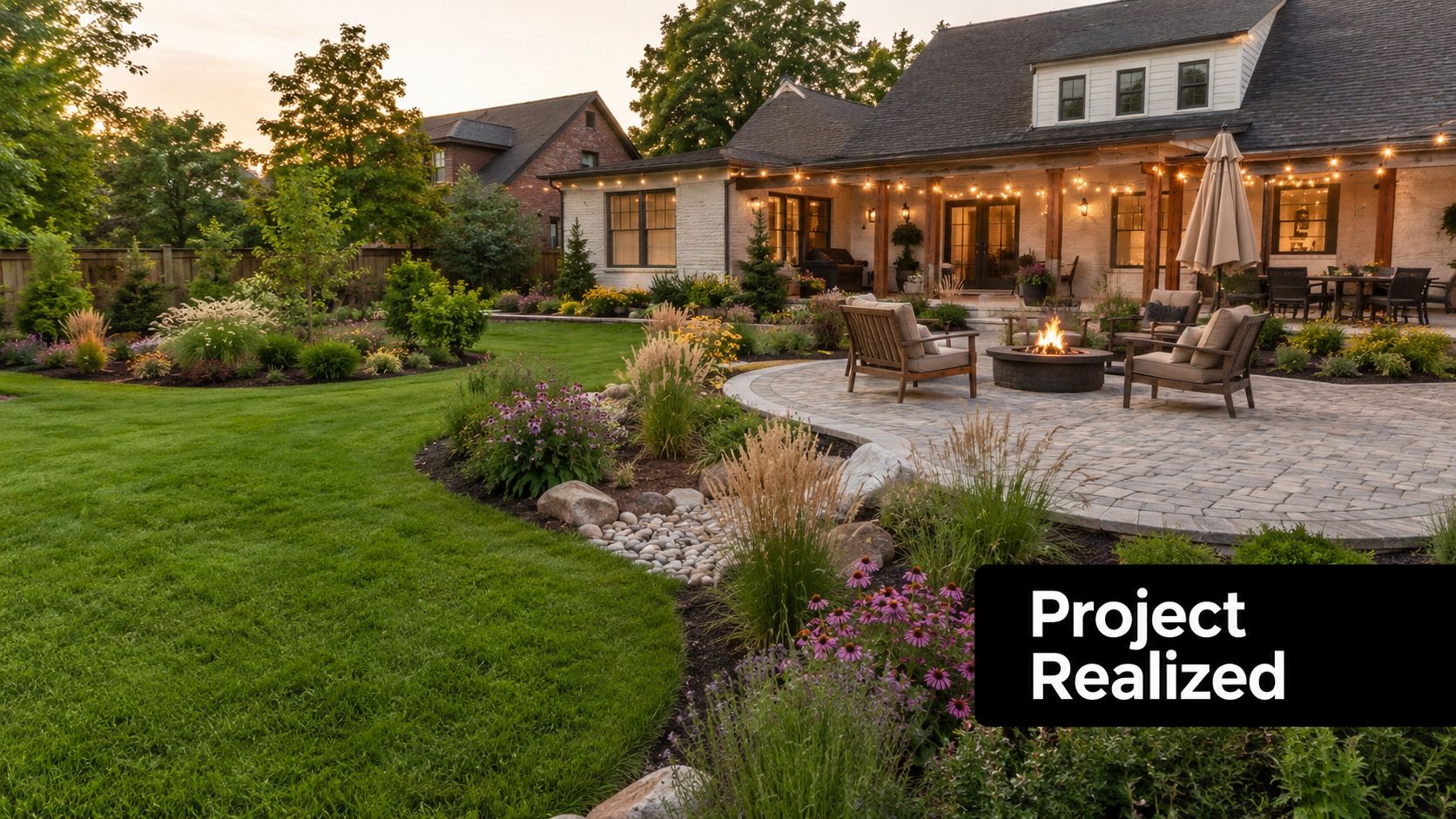
On the first visit, the designer walks the lot and watches how water collects near the foundation and settles in the low area near the front yard. The client points out where the basement feels damp after heavy rains, and the designer maps those trouble spots into the plan. That's the right sequence, problem first, solution second.
The functional diagram shows where the water needs to go, not just where the plants should sit. The design includes regrading to redirect runoff, a French drain system to collect subsurface water, and channel drains near the foundation where surface water is most dangerous. The new planting beds are then positioned to help shed water away from the house instead of trapping it.
Installation follows the logic of the site
A production-minded crew doesn't build the pretty parts first. Drainage work comes before the patio edge, before the sod, before the final bed dressing. That order matters because once the hardscape and planting are in, changing slope gets expensive and ugly fast.
For a job like this, the crew should be organized with pre-visit research, checklists, clear scope documents, and weather contingency planning. Those habits are what keep small mistakes from turning into callbacks later. They also keep the homeowner from getting surprised by delays that were easy to predict.
The patio finish matters too, especially when the owner wants a surface that complements the new layout. If the plan includes decorative hardscape, a resource like cement tiles for patios and courtyards can help homeowners think through visual style after the drainage system is already doing its job.
The final walkthrough should prove the system works
The last visit isn't just a ceremonial handoff. The homeowner should see how the system handles water, either through a real rain event or a deliberate test. If the yard still sends water toward the foundation, the job isn't finished.
That's the whole point. A good landscape design company leaves you with a yard that looks better, yes, but more importantly, one that behaves better when the weather turns nasty.
Maintenance Plans and Next Steps for Jackson Homeowners
A finished design is not self-sustaining. In West Tennessee, rain, clay soil, and weed pressure will test every weak spot in the plan. If the property doesn't get regular maintenance, even a solid design can start slipping fast.
A proper maintenance plan should include mowing, fertilization, weed control, seasonal bed care, and routine drainage checks. That last one matters more than most think. A drain line that clogs can bring back the same standing-water problem you just paid to eliminate.
For broader home care context, the maintenance advice at HIBCO ROOF LLC exterior maintenance is a useful reminder that the outside of a house works as a system, not a set of isolated projects. Landscaping, drainage, and exterior upkeep all affect each other.
What to do in the next 48 hours
- Review the contract carefully. Make sure the scope, materials, and timeline match what was discussed.
- Verify the license and insurance. Don't rely on memory or verbal promises.
- Confirm the site visit date in writing. A good company won't be offended by that.
- Ask how drainage maintenance will be handled. If no one plans to inspect it, problems can return without notice.
- Save every document and photo. You'll want a record if anything needs to be referenced later.
The other thing to do is stay realistic. A yard that has been corrected, planted, and installed still needs care, especially through wet seasons and heat stress. Lawn & Leaf Solutions offers ongoing lawn care and drainage-focused maintenance, and their healthy lawn maintenance guide is a smart place to see how that side of the work fits into a full property plan.
If you're hiring a design company in Jackson or anywhere in West Tennessee, make drainage the first question, not the last. The right crew will talk plainly, show you the site logic, and stand behind the work after the first storm hits.
If you want a design that starts with drainage, grading, and a clear plan for long-term upkeep, Lawn & Leaf Solutions handles the kind of work that keeps West Tennessee yards from turning into puddles and repair bills. Visit Lawn & Leaf Solutions to ask about design, drainage solutions, and maintenance support for your property.