
Professional sod installation in 2026 typically runs about $1 to $6 per square foot, and most U.S. homeowners paying for a residential job land around $2,010 to $2,063. If your Jackson lawn is dead, patchy, or bare after construction, that number is the right starting point, not the final answer.
A homeowner looking at a tired front yard in West Tennessee needs more than a national average. You need to know what a clean install costs, what happens when the contractor has to rip out old turf, and why one quote looks fair while the next one seems crazy. The difference usually comes down to site prep, labor, drainage, and grass choice, not just the rolls of sod sitting on the trailer.
What Professional Sod Installation Really Costs in 2026
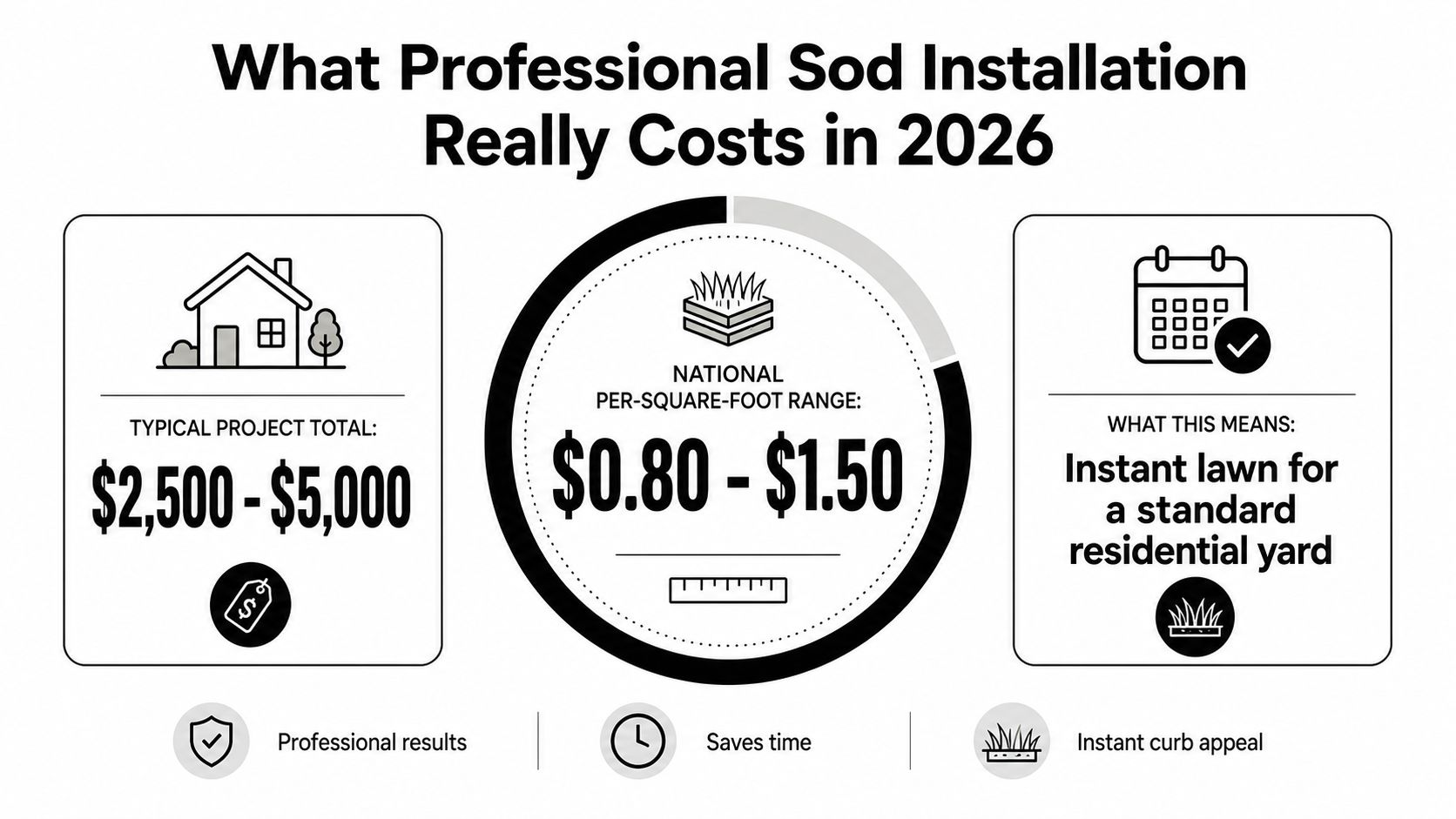
The national picture is simple enough. Professional sod installation in the U.S. is commonly priced at about $1 to $6 per square foot, and a 2026 national average residential project often lands around $2,010 to $2,063 (Steve's Services). That's the number to keep in your head before anybody starts tossing around soft talk about “a little yard work.”
For a Jackson homeowner, that means a small repair patch and a full front yard are not even in the same conversation. A few hundred square feet can be manageable, while a full replacement yard starts moving into serious money fast. The same square footage can still price out very differently because the quote is really buying a finished lawn, not just grass.
Why the same yard can get two different quotes
A contractor sees more than area. He sees access to the yard, whether old grass has to come out, whether the soil is level, and whether the ground holds water after a storm. That's why one 1,500-square-foot lawn can come back cheap and another can blow past the first quote even in the same neighborhood.
Practical rule: If a quote sounds too neat, it probably leaves out prep. The expensive part is often getting the yard ready for sod, not unloading the sod itself.
If you want to understand the actual installation process before pricing a job, the cleanest walkthrough is this step-by-step process of professional lawn sod installation. It helps you see where labor starts and where the hidden work begins.
The bottom line is this. For a typical residential buyer, professional sod installation cost is not a single number, it's a range built from yard size and condition. Walk into your first contractor conversation with a ballpark in mind, and you'll spot the fluff immediately.
The Five Cost Drivers Behind Every Sod Quote
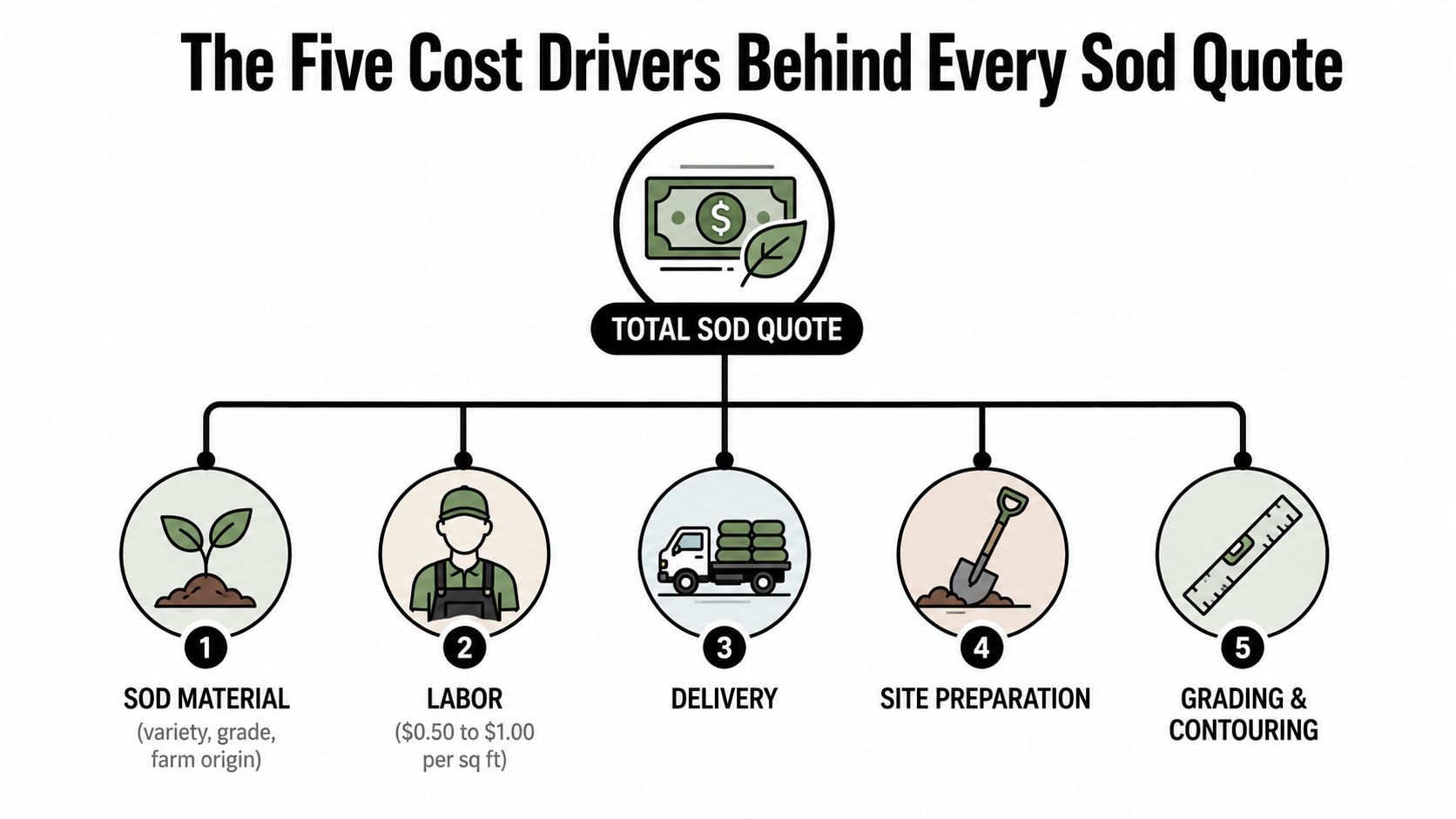
A real sod quote has layers. If a contractor only talks about the grass price, he's not telling you the whole story. The line items that matter are sod material, labor, delivery, site prep, and grading or drainage work.
What each line item actually pays for
Sod material covers the turf itself, and the grade and variety matter more than most homeowners think. Some grass types cost more because they're grown differently, move differently, or are better suited to sun, traffic, or clay-heavy soil.
Labor is the bill that sneaks up on people. Independent pricing guides show labor alone is commonly estimated at $0.50 to $1.00 per square foot on top of sod material (LawnScal). That number tells you why two bids can look close on paper but finish miles apart once the crew starts moving dirt.
Delivery is the plain logistics charge. If the sod farm is farther away, or if the yard is hard to access, the job gets more expensive. Site prep includes removing debris, cutting out old turf, and getting the ground ready for roots to knit into soil.
Why West Tennessee yards often cost more than the clean new-build quote
Clay soil changes the math. In much of West Tennessee, a yard often needs more than a quick rake-and-roll. It may need loosening, adding better soil, and shaping so water moves away from the house instead of sitting under the new lawn.
Grading and drainage work are not luxury upgrades. They're protection against failure. If the yard holds water, the sod may look good for a week and then struggle, because roots can't settle into soggy ground.
A contractor who quotes only the sod roll price is understating the real job. The hard part is usually grading, debris removal, and making sure the sod gets solid soil contact.
If you're comparing bids, this top 5 things to know before you purchase a sod installation service is worth reading before you sign anything.
A strong bid spells out where the money goes. A weak bid hides work under a single number and hopes you won't ask questions.
Real Cost Estimates by Yard Size
The fastest way to make sod pricing make sense is to tie it to the size of the yard you have. A 500-square-foot patch, a 1,000-square-foot side yard, and a full 2,000-square-foot lawn are three different purchases, even if the grass is the same.
Recent industry calculators place the national average installed sod cost around $2.12 to $3.54 per square foot in May 2026 (Homewyse). Other 2026 guides show many residential jobs landing lower than that on the cheap end and higher once prep gets ugly. That's why rough math is useful, but yard condition still decides the final bill.
Installed Sod Cost by Yard Size 2026
| Yard Size | Low Estimate | Typical Estimate | High Estimate |
|---|---|---|---|
| 500 square feet | About $450 | About $1,000 to $1,300 | About $1,500+ |
| 1,000 square feet | About $1,000 | About $1,700 to $2,600 | About $2,800+ |
| 2,000 square feet | About $2,000 | About $3,300 to $5,200 | About $5,500+ |
| 5,000 square feet | About $5,000 | About $8,500 to $13,000 | About $13,000+ |
Those figures line up with the installed pricing ranges homeowners are seeing in 2026. A clean 500-square-foot job can be surprisingly affordable, while a 2,000-square-foot yard often crosses $5,500 once the labor and prep are counted.
If you're still measuring the yard, use thecalcs yardage calculator before you call for quotes. Contractors love exact square footage, and accurate measuring keeps you from overbuying sod or getting blindsided by a change order.
The practical takeaway is simple. A small patch is a different animal than a full replacement lawn. And if you want a local pricing lens, compare those numbers with a sod installation near me cost breakdown before you decide whether the project belongs on this year's budget.
Grass type and soil condition still matter, though. A yard with easy access and good grading will sit near the lower end. A yard with clay, slope, or drainage trouble will push hard toward the top.
Why Site Prep Quietly Doubles Some Quotes
The part homeowners miss is not the sod itself, it's everything before the first roll lands. If the old lawn has to be stripped out, the soil has to be corrected, and drainage has to be fixed, the price rises fast.
Removing old grass before installation can add about $0.50 to $1.00 per square foot, and for a 1,000-square-foot lawn the installed price can move from roughly $1,000 to $2,000 for a clean new-lawn install to $2,000 to $4,500 or more when teardown and prep are required (LawnScal). That is not a small add-on. That is the difference between a basic install and a real renovation.
What makes prep expensive
Old turf has to come out cleanly. Debris has to leave the site. Soil often needs amendment, especially on the heavy ground many Jackson-area yards sit on. Then the crew has to grade the lawn so water runs where it should, not toward the house or into low spots.
Drainage correction is the big one. A channel drain, French drain, or sump setup can be the difference between sod that roots and sod that sulks. If water keeps standing, the new grass becomes a repair bill waiting to happen.
Grade the yard right, or pay for it twice. First in the install, then again when the sod fails.
If your yard holds water after storms, the problem is bigger than turf. That's the kind of job where a drainage-focused crew makes more sense than a grass-only installer. A solid prep plan should be read like insurance, not like an optional upgrade.
Homeowners who want a clearer sense of what goes into the prep phase can look at how to prepare your yard for new sod installation. That's the checklist that keeps the finished yard from becoming a disappointment.
The bid line that deserves the most scrutiny is prep. If that line is thin, the rest of the quote is probably papering over a problem.
Sod Versus Hydroseeding and Phased Seeding
Sod is the premium choice because it gives you an instant lawn. That's useful when curb appeal matters right now, but it's not always the smartest spend.
Professionally installed sod commonly runs about $1.70 to $2.60 per square foot, while hydroseeding can sit around $0.50 to $1.50 per square foot (Lawn Love). On a 2,000-square-foot lawn, that means the price can swing from roughly $1,000 to $2,500 with hydroseeding to $3,300 to $5,200 or more with sod, depending on prep and grass type.
When sod is worth the premium
Sod wins when the house is new, the front yard is bare, or the property needs to look finished fast. It also makes sense where erosion is a problem and you can't wait around for seed to fill in.
Hydroseeding makes more sense on bigger lots, sloped ground, or tight budgets where instant perfection is not the goal. Phased seeding fits homeowners who'd rather build the lawn in stages and spend less upfront.
Grass type changes the bill too. Premium grasses such as Zoysia and St. Augustine push installed costs higher, while budget Bermuda stays closer to the lower end of the market. If you're deciding between speed and cost, that gap matters more than brand names or marketing talk.
For a practical side-by-side view of the tradeoff, this guide on how to choose the right lawn for Cumming is useful even if you're not in Georgia, because the decision logic is the same.
Decision rule: Pick sod for instant curb appeal. Pick hydroseeding for larger or sloped lots. Pick phased seeding when the budget matters more than speed.
If you want to see why many homeowners choose turf over seed in the first place, the case for it is laid out in why choose sod lawn installation over seeding. The key is not that sod is always better. It's that sod is better for a specific kind of job.
How to Compare Bids and Hire the Right Contractor
A good sod bid reads like a plan. A bad one reads like a guess. If a contractor hands you one lump sum with no breakdown, expect surprises later.
A solid proposal should spell out labor, prep, sod, delivery, and watering or establishment details. You need to know what the crew is doing before they step in the yard, not after they start adding charges. In Tennessee, you also want a licensed contractor and proof of insurance. Lawn & Leaf Solutions holds License # TNPL23317, which is the kind of detail a homeowner should expect any serious contractor to produce on request.
Questions that expose a weak quote
Ask these before you sign:
- What grass variety are you installing, and where does it come from? Fresh, locally sourced sod usually performs better than mystery turf hauled in late.
- Is old turf removal included? If not, the quote is incomplete.
- How will you handle drainage or grading issues? A real contractor should answer clearly, not dodge the question.
- What warranty or establishment support do you offer? If the sod struggles, you need to know who owns the fix.
- Is there a follow-up visit after install? That matters more than most homeowners think.
Red flags show up fast once you know the signs. Cash-only pressure, no written scope, and a price that sits far below every other bid usually mean somebody plans to make it up later. Cheap-looking quotes often turn into expensive jobs.
A useful outside reference for how broader outdoor pricing gets structured is commercial landscaping costs in DFW. Different market, same lesson, line items matter.
A contractor should be able to explain the job without making you chase answers. If he cannot, keep moving.
Smart Ways to Reduce Your Sod Installation Bill
You can lower the bill without ruining the lawn, but only if you trim the right parts of the job. Save on labor, timing, and material choices. Do not save by cutting out prep. That is where sod either roots cleanly or starts failing from day one.
The smartest savings come from scheduling, grass selection, and how much work you handle before the crew arrives. Book the job when installers are not buried in peak demand, and you usually get better flexibility on timing. Choose a sod type that fits your yard and your sun exposure, not the flashiest grass on the price sheet.
Where homeowners can actually save
Do your own teardown. If you can pull up weak turf, rake out light debris, or haul off waste yourself, you reduce labor hours fast.
Handle the easy cleanup before install day. Clear toys, branches, and movable clutter ahead of time so the crew can start work instead of burning paid time on basics.
Bundle grading and drainage fixes with the sod job. If the yard needs both, handling them together avoids repeated mobilization charges and keeps the same crew on site for the full scope.
Buy the right amount the first time. Ordering in full pallet loads usually keeps delivery cleaner and helps reduce leftover material you do not need.
Use maintenance plans with a purpose. A steady plan for mowing, fertilization, and weed control usually protects the investment better than paying for random one-off visits.
If you want a reality check on how larger outdoor jobs get priced, a resource like commercial landscaping costs in DFW shows the same pattern, the scope drives the price more than the headline number.
If you are in Jackson or anywhere in West Tennessee, ask for a free estimate before you commit. It tells you whether you are paying for a straightforward install or paying for hidden grading, drainage, or removal work that was never spelled out.
Cheap sod with no prep is expensive. Full-prep sod is the bargain that actually holds up.
Maintenance Costs and Common Questions After Installation
Sod isn't finished when the crew leaves. The first year decides whether the lawn knits in cleanly or starts falling apart from neglect.
Watering, mowing, and fertilization all matter during establishment. A new lawn needs close attention early, then steady care once the roots are set. In West Tennessee, a good annual lawn-care plan usually makes more sense than trying to reinvent the schedule every month.
The questions homeowners ask after the first quote
How long before the sod can handle foot traffic? Not right away. Give it time to root before you start treating it like an old lawn.
Do I need to water every day? Early on, yes, the lawn needs consistent moisture to establish. Miss that window and you invite gaps.
What happens if a section fails to root? The contractor should tell you up front whether patching or replacement is part of the service agreement.
Can I finance a larger project or do it in phases? For bigger yards, phased installation can be a smarter way to manage cash flow without quitting the project altogether.
If the first quote feels painful, compare it to the cost of fixing a failed lawn later. Re-installation costs more than doing the job right the first time.
A lot of homeowners want the instant green look but don't want the follow-through. That's the wrong mindset. Sod pays off when you respect the maintenance, not when you assume it's magic.
If you're ready to talk numbers for your own yard, get a free, no-pressure estimate and let a local crew look at the slope, drainage, and prep before you commit. For Jackson and West Tennessee homeowners, Lawn & Leaf Solutions can turn the rough math into a real plan and tell you whether sod, drainage work, or a phased approach makes the most sense for your property.