
Professional sod installation in the U.S. typically runs about $1 to $6 per square foot installed, and most homeowners end up around $1,500 to $3,000 for an average yard. In West Tennessee, that usually means the key question isn't whether sod is “expensive,” it's whether your yard is closer to the low end or the quote that starts climbing once prep and drainage get involved.
A lot of homeowners in Jackson hit the same wall. The lawn is thin, weedy, or half dead, the yard looks too rough for a quick fix, and the first sod estimate lands harder than expected. The number on the page makes more sense once you break it into yard size, grass choice, site prep, and how much grading or drainage work the contractor has to solve before the first piece of sod ever goes down.
What Sod Installation Actually Costs in 2026
A homeowner usually starts here with a patchy front lawn and one simple question, why is sod so expensive when it is “just grass”? Professional sod installation is priced per square foot, and the current market sits in a $1 to $6 per sq ft range depending on grass type, prep work, and project size. That spread is wide enough to make two similar yards look wildly different on paper.
The national numbers give you a useful baseline. Angi's pricing guide puts the average total cost at $2,063, with most homeowners paying $1,079 to $3,059. Angi also notes that a 500-square-foot yard may cost as little as $450, while a 2,000-square-foot yard can exceed $5,500. Thumbtack's 2026 pricing data shows a similar average range of $1,051 to $3,052 and a typical price of $1,779, with large lawns reaching $6,566 or more.
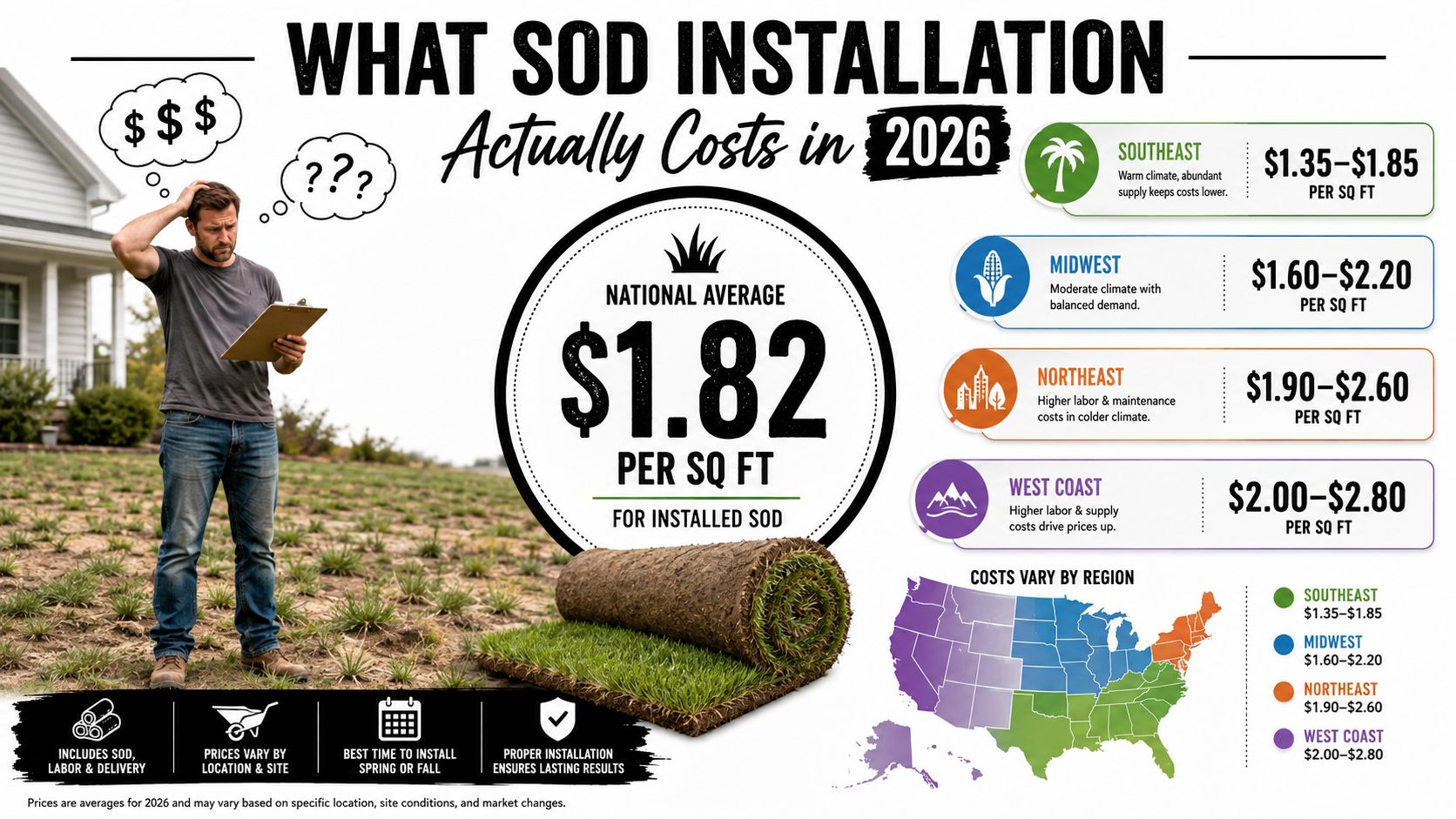
The price window that actually matters
By 2026, the installed price for many standard residential jobs had settled into a more focused band. Lawn Love reports $1.70 to $2.60 per sq ft installed, which puts a 2,000-square-foot lawn around $3,400 to $5,200. A similar spread appears in Homewyse's May 2026 estimate, which starts at $2.12 to $3.54 per sq ft and shows how quickly labor-heavy prep can move the number.
That is the part homeowners need to watch. Sod installation cost depends on square footage, grass choice, and the amount of work hiding inside the quote before the crew rolls out the first pallet.
Practical rule: if two quotes are far apart, the cheaper one usually has less prep built in, not cheaper grass.
For anyone planning a local project, timing and soil condition matter as much as the headline rate. A yard that is already level and accessible will price very differently from one that needs a clean start, especially if you are trying to line the job up with the best time to lay sod.
Where the Money Goes in a Sod Quote
A sod quote in West Tennessee usually breaks into four parts, and each one can move the total in a different direction. The turf is only one piece of the bill. On many jobs, labor and prep end up carrying more weight than the grass itself.
Four buckets you should expect to see
The first bucket is material. LawnStarter pegs sod material alone near $0.60 per sq ft, which is why a do-it-yourself shopper can get fooled into thinking the whole job should stay cheap. It doesn't, because the crew still has to get the product delivered, unloaded, cut to fit, laid correctly, and watered in.
The second bucket is labor, and lawncare.center places professional installed pricing around $1.00 to $2.60 per sq ft. That is the unit rate most homeowners can use when they compare quotes, because it usually folds the sod, labor, and basic materials into one number. Lawn Love gives a similar installed band of $1.70 to $2.60 per sq ft, which is why national pricing looks so steady across a lot of residential projects.
The third bucket is delivery. The truck and pallet turn a quote into a real job, and delivery often shows up as a separate line item on local estimates, especially for small orders or tight access. The fourth bucket is site prep, and that is the line that tells you what your yard really needs instead of what a generic lawn quote assumes.
Rule of thumb: a 1,000-square-foot lawn at a unit rate of $1.00 to $2.60 per sq ft lands around $1,000 to $2,600 before unusual prep starts pushing it higher.
| Anatomy of a Typical Sod Installation Quote | Typical Range | Share of Total |
|---|---|---|
| Sod material | About $0.60 per sq ft | Often a large but not dominant portion |
| Labor and installation | About $1.00 to $2.60 per sq ft installed | Usually the core of the bill |
| Delivery | Often separate and project-specific | Smaller on large jobs, noticeable on small ones |
| Site prep | Varies by yard condition | Can be the line that changes everything |
If you are comparing quotes, ask what each one includes. A bid that bundles removal, leveling, and basic prep gives you a more complete picture than one that only covers turf placement. The first quote may look higher, but it is usually the cleaner apples-to-apples number.
A few jobs also carry extra costs that do not show up in the turf line at all. Brush removal, old sod hauling, and rough grading can push a simple install into a bigger project, which is why homeowners should compare the work scope as carefully as the price. If your yard has clay holdover or standing water, how to improve clay soil drainage becomes part of the budgeting conversation before any pallet gets unloaded.
One more item can matter if the lot is overgrown or needs clearing before the crew can even start. Perth land clearing costs gives a useful reminder that removal work can stand on its own as a separate line, and in a real quote that same kind of cleanup can rival the turf price on neglected yards.
The Site Prep and Drainage Factor Most Quotes Hide
A low sod quote usually assumes the yard is already close to ready. Around Jackson and the rest of West Tennessee, that assumption is often wrong, and it is the reason one homeowner gets a clean install price while the neighbor gets a quote that feels much higher.
Why resodding costs more than a fresh install
HomeGuide draws a clear line here. Resodding an existing yard often runs $1.50 to $4.00 per square foot, while new sod installation can sit closer to $1 to $2 per square foot. The gap comes from the work under the turf. Old grass has to come out, debris has to move, and the grade has to be corrected before new sod has a chance.
That is where quotes start climbing into outlier territory. HomeGuide notes larger or more complex projects can reach $6,566+ or even $7,238+ when grading, removal, and handling stack up. That kind of number usually means the contractor is rebuilding the surface underneath the sod, not just laying grass on top.
West Tennessee yards add their own wrinkles. Clay-heavy subsoil holds water, low spots stay soft, and foundation slopes often need correction before the sod can survive a summer. If one part of the yard stays wet after a hard rain, the primary cost driver is the drainage path.
A good local contractor will treat that as a site-prep and drainage issue. That is where drainage work matters, and it is one reason a company that also handles grading and water management can quote the job more accurately. How to improve clay soil drainage is the right kind of local reference point if you are trying to understand why a yard that “looks flat enough” still needs correction before sod goes down.
The hidden work that changes the price
- Old turf removal: If the lawn has to be stripped first, the labor bill rises fast.
- Re-grading: Low spots and runoff issues need shaping before installation.
- Soil correction: Clay soil often needs more than a simple roll-out.
- Access constraints: Narrow gates and awkward side yards slow down delivery and install.
- Drainage fixes: Standing water can turn a cheap job into a repeat job if it isn't addressed first.
For homeowners looking at outside pricing examples, even land-clearing work in another market shows the same pattern. The cost of clearing the site often matters as much as the new material itself, which is why Perth land clearing costs is a useful comparison when you are trying to understand how removal and access affect a bid.
DIY Sod Installation Versus Hiring a Pro
DIY sod sounds cheaper until you list everything the job requires. The pallet has to be sourced, the soil has to be ready, and every square foot has to be set before the turf dries out or the schedule slips.
What the homeowner takes on
A do-it-yourself install usually starts with pickup or delivery from a turf farm, then moves into rental equipment and a lot of lifting. You may need a sod cutter, a power edger, a lawn roller, a wheelbarrow, and enough help to move heavy pallets without tearing up the yard you are trying to fix. DIY pricing can run $330 to $420 plus the sod itself, and that is before you count the time needed to do the work well.
Tool rental is where the hidden spend shows up. A sod cutter or similar machine can take a real chunk out of the budget, and the work itself often stretches across at least a couple of long days if you have never done it before. If the yard is small, square, and flat, that can still pencil out. If it is sloped, clay-heavy, or tight on access, the labor gets messy fast.
Practical rule: DIY makes sense when the yard is small, simple, and easy to reach. If the job needs grading, drainage correction, or a lot of carrying, hire it out.
What the pro is really selling
A professional crew is selling speed, finish quality, and accountability. A pro also brings expertise in cut tightness, soil slope, and trouble spotting before the sod starts to fail. If something goes sideways with grading or drainage, you have one company to call instead of trying to split the blame between a rental store and a turf supplier.
For aftercare, a local maintenance plan can help keep a new lawn from turning into a second project. How to care for new sod gives homeowners the kind of follow-up guidance they need to protect the money they just spent.
Real Project Estimates for Jackson and West Tennessee Yards
A Jackson homeowner usually starts with one question, what will this yard cost once a crew measures it and sees the dirt? That is the right way to look at sod pricing, because the quote changes fast once the installer factors in access, grading, and how much old material has to come out.
Three common yard sizes
A 500-square-foot patch repair usually sits near the low end if the ground is already open and easy to reach. In a simple case, the installed price can start around $450, but once prep work gets added, the total moves up Angi. For a front strip, side yard, or small backyard section, the difference is whether the crew can lay sod cleanly or has to remove an old lawn first.
A 1,000-square-foot front yard is where homeowners start comparing real bids. Lawncare.center places installed pricing around $1,000 to $2,600 at the unit-rate level, and that is a fair working range for a standard residential install. Once the lot has slope, tight access, or clay soil that needs correction, the total can climb from there.
A 2,000-square-foot full-lawn install is a better test of whether the quote is basic turf placement or a more complete site rebuild. Lawn Love puts that size around $3,400 to $5,200, and larger lawns can run higher when the job calls for removal, re-grading, or drainage work. At that point, the line item list matters as much as the sod itself.
| Sample West Tennessee Sod Installation Cost Estimates | Low Estimate | High Estimate | Typical Conditions |
|---|---|---|---|
| 500 sq ft patch repair | About $450 | Higher if removal or grading is needed | Small area, limited prep |
| 1,000 sq ft front yard | About $1,000 | About $2,600 | Standard residential install |
| 2,000+ sq ft full lawn | About $3,400 | About $5,500+ | Larger yard, prep and access matter |
New-construction homes and recent buyers often fall into a different bucket. If the yard is bare soil instead of a damaged lawn, the quote typically falls in the new-install range rather than the resodding premium. The same acreage can produce two very different numbers depending on what is already on the ground, and whether the crew is starting from scratch or correcting an existing yard. For homeowners who are also weighing timing on lawn recovery, when to aerate and overseed a lawn is a useful next check before deciding whether sod is the better move.
For larger open spaces, the math can start looking less like a turf purchase and more like site work. That matters in West Tennessee yards where clay, runoff, and access problems tend to show up at the same time. If the lot has a low spot or persistent washout, the quote should reflect that work instead of burying it inside a vague square-foot number. A homeowner comparing a clean backyard install with a rough lot repair is not comparing the same job.
There is also a hard reality on alternatives. A walk across a bare lot can look simple on paper, but a practical check should include labor hours, machine time, and cleanup. If someone is also considering planting a Michigan wildflower meadow, that is a different project entirely, with a different finish line and a different maintenance plan.
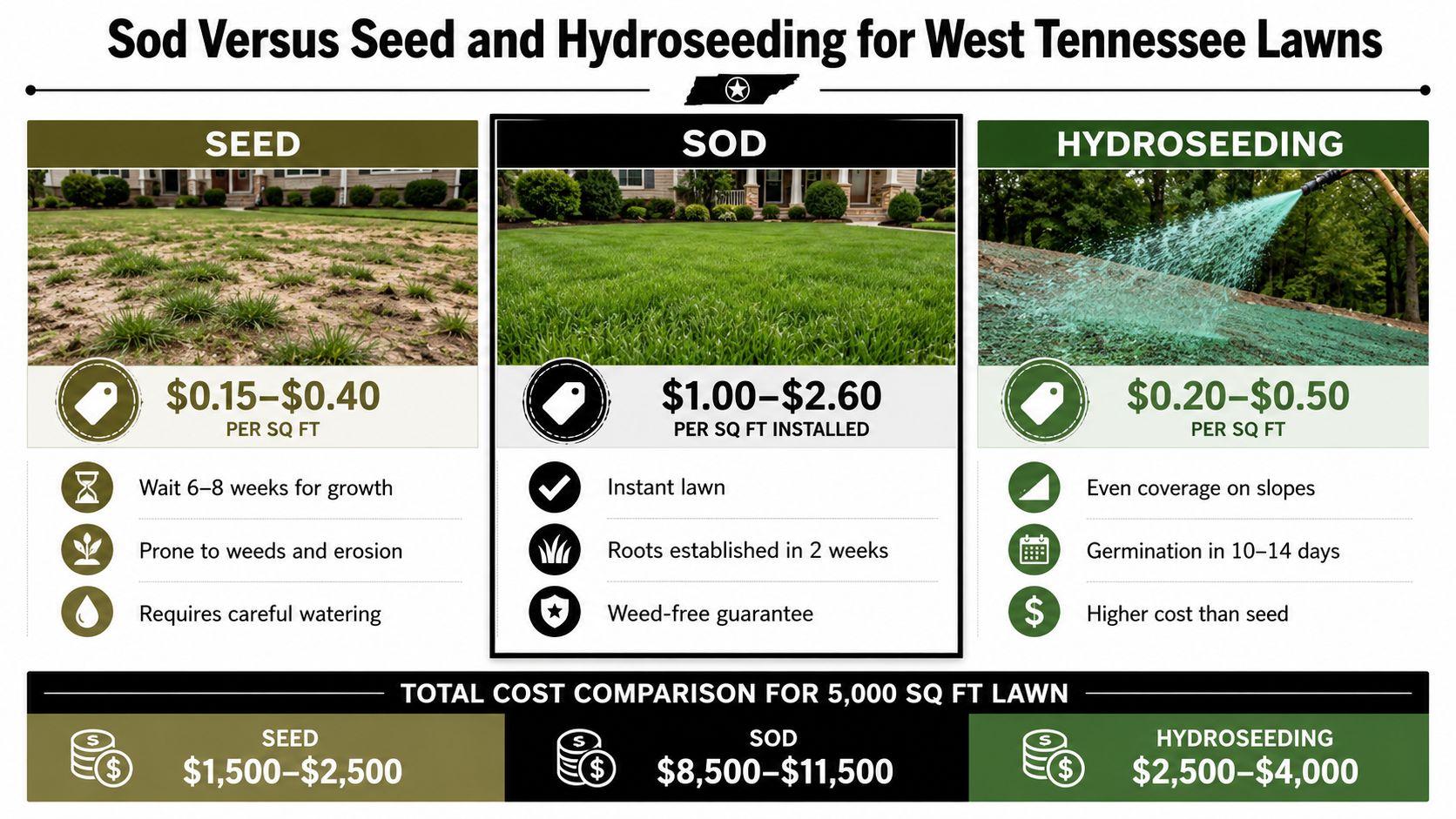
Sod Versus Seed and Hydroseeding for West Tennessee Lawns
A homeowner in Jackson usually runs into the same decision after the first sod quote arrives, pay more now for an installed lawn, or spend less up front and wait on seed to fill in. The right answer depends on how much risk you want to carry through West Tennessee heat, clay, and stretch periods with no reliable rain.
The upfront spread is real
Installed sod in most 2026 pricing guides still lands around $1.00 to $2.60 per sq ft. Hydroseeding usually sits in the middle at about $0.50 to $1.50 per sq ft installed, while conventional seed is still the lowest-cost option at the start Lawn by Season. On a small front yard, that gap is noticeable. On a larger back lot or a long side yard, the difference can turn into a very different budget line.
That is only the first pass on the math. Sod gives you coverage right away, which matters when erosion, pets, foot traffic, or a grading fix make the yard too exposed to wait. Seed can still be a good choice, but it asks for more watering discipline, more patience, and more confidence that the weather will cooperate while it germinates.
Why the premium can be worth it here
West Tennessee summers are hard on weak germination windows. Clay soil can hold water in one spot and crust over in another, and a sloped lot can wash seed downhill before it has a chance to root. In those yards, sod is doing more than improving curb appeal. It is putting stable cover on the ground before the next heavy rain or dry spell changes the soil again.
Practical rule: if the yard needs quick cover, erosion control, or a shorter vulnerable period, sod is usually the safer spend.
For homeowners weighing a broader outdoor plan, it helps to understand when to aerate and overseed a lawn alongside the sod decision. The comparison is useful because establishment method matters as much as the final look, whether the job is fresh sod or planting a Michigan wildflower meadow. The wrong method can cost more later, even if it looked cheaper on day one.
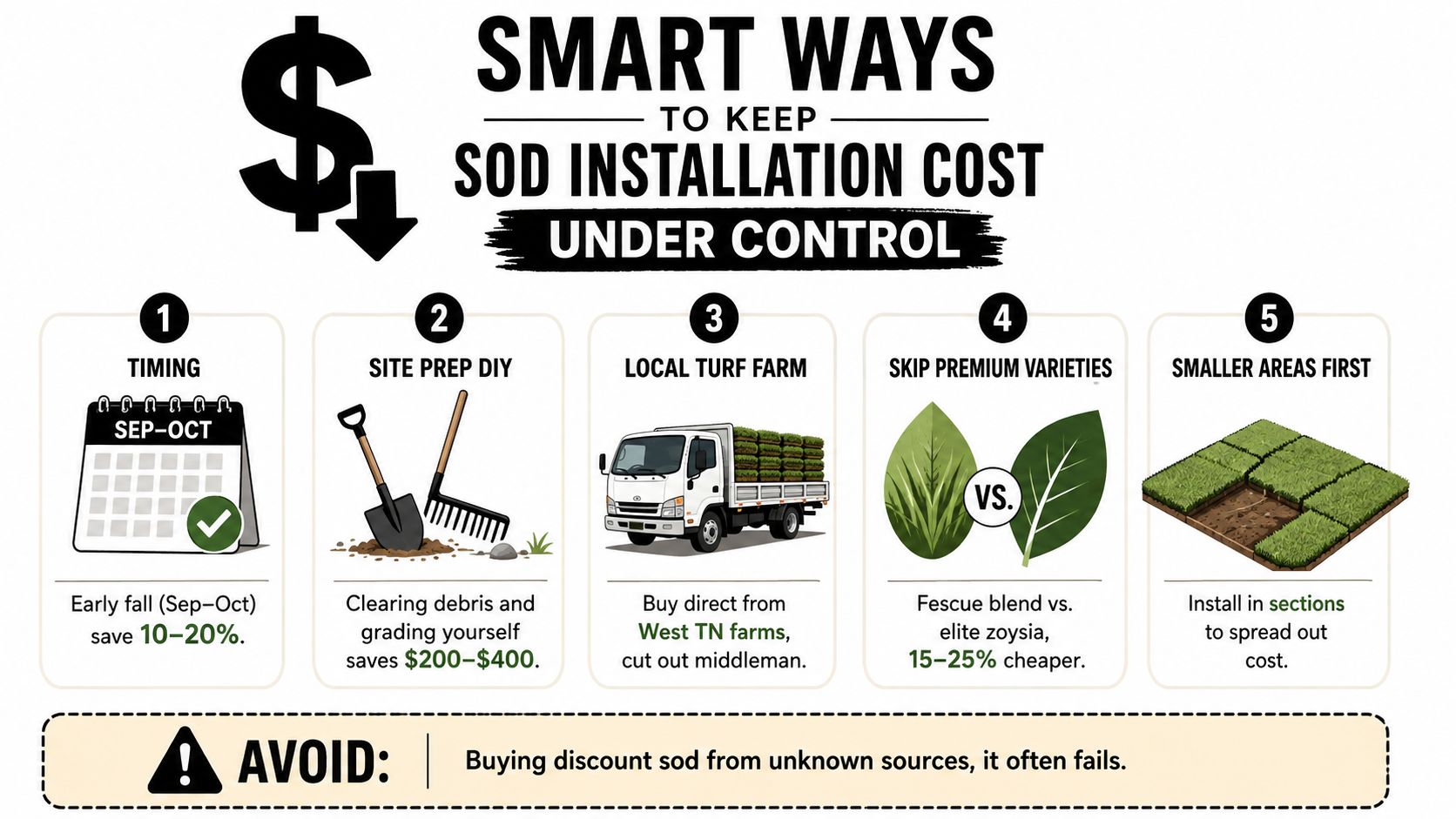
Smart Ways to Keep Sod Installation Cost Under Control
A lower sod bill usually starts before the first pallet lands in the yard. The crew spends less time, the install goes faster, and the quote stays tighter when the site is ready for them.
What helps
- Pick the right timing: Early fall or spring usually lowers watering pressure and stress on new turf, which helps the install settle faster.
- Clear the access path: Move toys, furniture, and yard debris before the truck arrives so the crew can work without delays.
- Match the grass to the site: Fescue or Bermuda may fit West Tennessee conditions better than chasing a premium variety that costs more and performs worse in your yard.
- Bundle the work: One contractor handling prep, drainage, and sod often avoids stacked mobilization and coordination costs.
- Fix small prep jobs yourself: Light debris removal and basic clearing can trim the bill without weakening the install.
The weak savings show up fast once you know what drives the bill. Skipping soil amendment to save a little money can leave the lawn weak. Buying discount sod from an unknown source can create a dead-on-arrival problem that costs more to replace than the original order.
For homeowners who want a real-world quote without the guesswork, the local move is to ask for a site visit, not a phone fantasy. A contractor cannot price slope, access, drainage, and soil condition correctly from a curb photo. If you want a local estimate built around those details, start with sod installation near me.
Practical rule: save money by simplifying the job before the crew arrives, while still keeping the work the lawn needs.
Putting It Together and Getting a Local Quote
For a Jackson homeowner, the three numbers to keep in mind are simple. A typical installed sod rate usually lands around $1.50 to $2.60 per sq ft, many 1,000-square-foot jobs end up around $1,500 to $3,500, and the biggest swing in the quote usually comes from prep and drainage.
That is why a free on-site estimate matters more than a rough calculator. Site access, slope, soil condition, and old-turf removal can change the price fast, and those details are hard to judge without boots on the ground. If you are comparing options and want the local version of the math, a search for sod installation near me should lead to an on-site visit with a customized estimate.
Lawn & Leaf Solutions handles sod, drainage, and prep across Jackson and West Tennessee, so the quote reflects the parts of the job that decide whether the new lawn holds up. If you want a clear price for your yard, book a free estimate and ask about maintenance support that keeps the turf healthy after install.
If you want a local crew to price the job the right way, visit Lawn & Leaf Solutions. They handle sod installation, drainage, and maintenance across Jackson and West Tennessee, and they can give you a free estimate based on your yard's actual slope, access, and soil conditions.