
You can spend good money on a West Tennessee yard and still end up fighting standing water, thin turf, and beds that look tidy for a month before they turn into extra work. I see it all the time. The problem usually isn't that the crew “missed maintenance,” it's that the original layout made maintenance harder from day one. In this trade, installation and maintenance are one decision, because the way a yard is graded, drained, planted, and mulched determines what you'll be mowing, watering, edging, and fixing for years.
That starts before the first shovel hits the soil. A slope that sheds water the wrong way, a bed line that forces awkward mower turns, or a planting plan that crowds shrubs too close together will all show up later as extra labor and extra cost. Those are design choices first, maintenance problems second.
A lot of homeowners ask about the eventual cost of keeping a yard in shape, and a good place to start is a practical look at what routine lawn maintenance service costs. That number only makes sense, though, if the property was set up to be maintained without constant rework. A yard built for easy mowing, proper drainage, and realistic plant spacing stays simpler to care for. A yard built without those details usually gets expensive in small ways, then in big ones.
Why Installation and Maintenance Belong in the Same Conversation
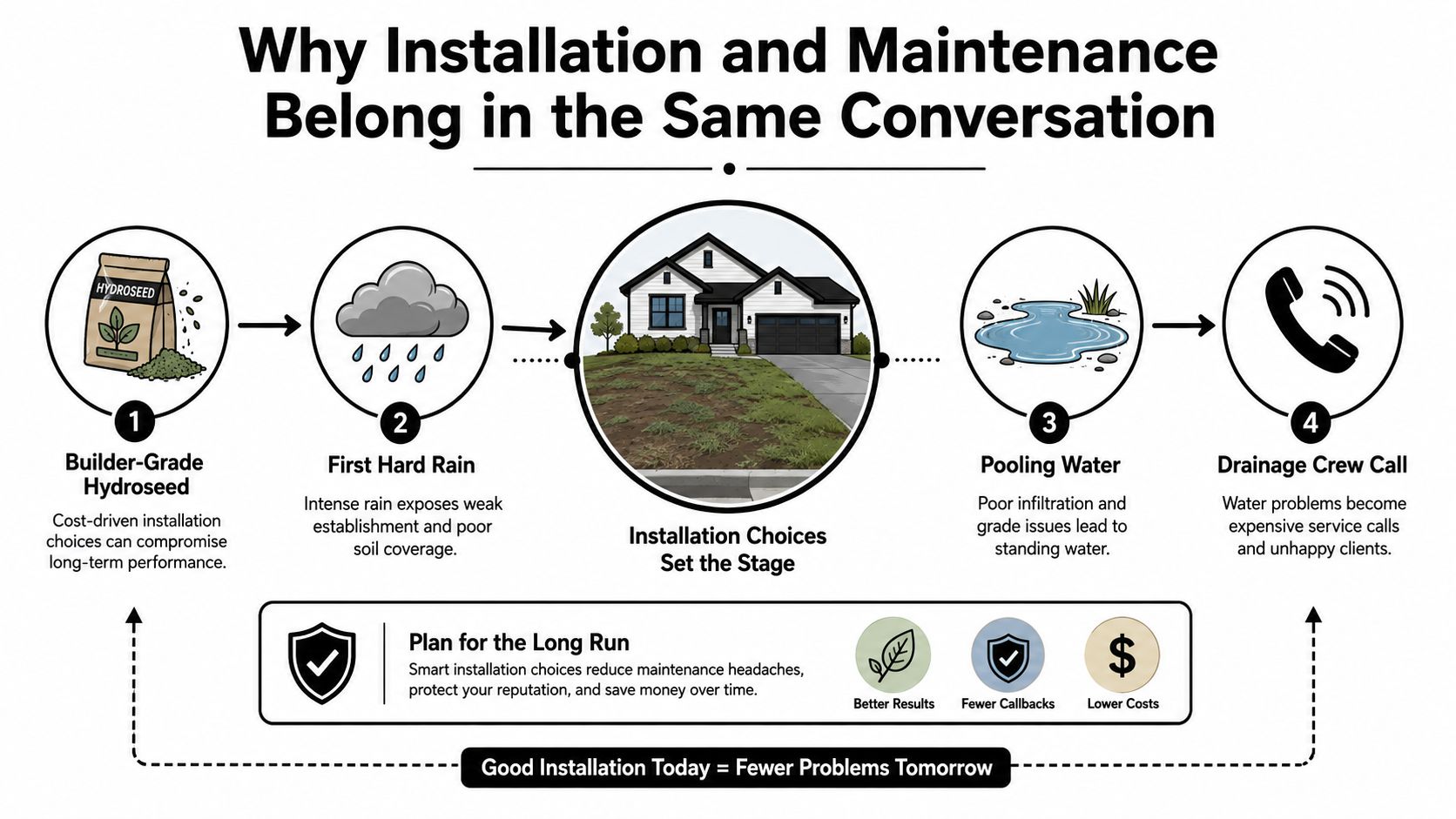
A common Jackson-area call starts the same way. A homeowner closes on a new place, the builder leaves behind hydroseed, and the first hard rain sends a sheet of water drifting toward the back fence, pooling where the kids are supposed to play. By the time the grass has half-filled in, there's a low spot that stays wet, a strip of turf that gets soft underfoot, and a drainage crew gets called in to fix a problem that was built into the yard before the first blade of grass sprouted.
That's why the maintenance headache usually starts during installation. If the grade is wrong, the lawn won't drain evenly. If shrubs are packed too tight, they'll be fighting for light and air in three seasons, and the person trimming them later pays for that mistake every visit. If beds are laid out without thinking about mower turns, every edge becomes slower to cut and harder to keep clean.
The yard you install is the yard you maintain
A yard isn't just plants placed in dirt. It's a system of surfaces, slopes, root zones, access, and water movement. Once that system is set, the maintenance routine either becomes predictable or turns into a series of workarounds.
Practical rule: the cheapest maintenance is the kind you don't have to invent later.
That's why a thoughtful install pays off in plain, unglamorous ways. Mowing is easier when turf edges are clean. Leaf removal is faster when beds are shaped well. Fertilizer and water work better when the root zone isn't drowning in a low spot. Even recurring service has a business reason behind it, because the plantings keep growing, shifting, and demanding attention long after the crew leaves the site.
For a local design example, the layout choices behind a front yard or patio zone matter just as much as the plants themselves, and a landscape design company should be thinking about future upkeep while it's drawing the plan. The same applies to anyone studying a complete guide to patio zones, because hardscape, planting beds, and traffic flow all change the amount of work a yard will need later.
This is the lens for the rest of the guide. Every decision that goes into a yard should be judged by one question, what will this make harder or easier to maintain later?
What You're Really Paying For in the Landscape Industry
A bid can look like it's just covering mulch, labor, and a truck in the driveway. In reality, you're paying for a service model built on repeat visits, equipment upkeep, trained crews, and the ability to keep a property serviceable after the install is finished. The U.S. services industry reached $176.7 billion in revenue in 2026 and included about 556,000 businesses according to IBISWorld. That size matters because it shows this work is not a side hustle. It is a labor-heavy field where the install and the follow-up service usually belong to the same contractor.
The labor side explains the price even more clearly. The U.S. Bureau of Labor Statistics reported 929,930 landscaping and groundskeeping workers in May 2023, with a mean annual wage of $39,790 and a mean hourly wage of $19.13 in the same industry snapshot from IBISWorld. That means every estimate has to cover more than the crew's time on site. It also has to support scheduling, fuel, repairs, supervision, and the day-to-day work of keeping the property in shape after the first install is done.
Why bundled service exists
The trade works better when installation and maintenance are treated as one job with two phases. A new install creates mowing, trimming, fertilization, seasonal cleanup, irrigation checks, and access issues that do not go away once the last plant is set. If the layout is awkward, the upkeep gets awkward too. If the bed lines trap debris or block a mower pass, the service bill usually reflects that reality for years.
The market structure supports that arrangement. NALP reports the U.S. services market at $188.8 billion in 2025, with more than 1.4 million people employed and 692,777 landscaping service businesses in the same period, and says the market grew at an average rate of 6.5% per year from 2020 to 2025 in its industry statistics page at NALP. That kind of scale is what you see in a field built around repeat maintenance, not one-time installs. The work has to keep generating service after the crew leaves the site, or the business model does not hold together.
If you are comparing bids, the lawn maintenance service cost discussion should cover more than the monthly price. Ask what the contractor is doing to reduce future labor, improve access, and keep water moving the right way. A cheaper install can become a harder yard to service within a couple of seasons, and that cost shows up later in cleanup time, repairs, and workarounds.
A good bid is not just a labor quote. It is a promise that the yard will still be practical to maintain after the first year of weather, traffic, and growth.
Planning the Site Before Anything Goes in the Ground
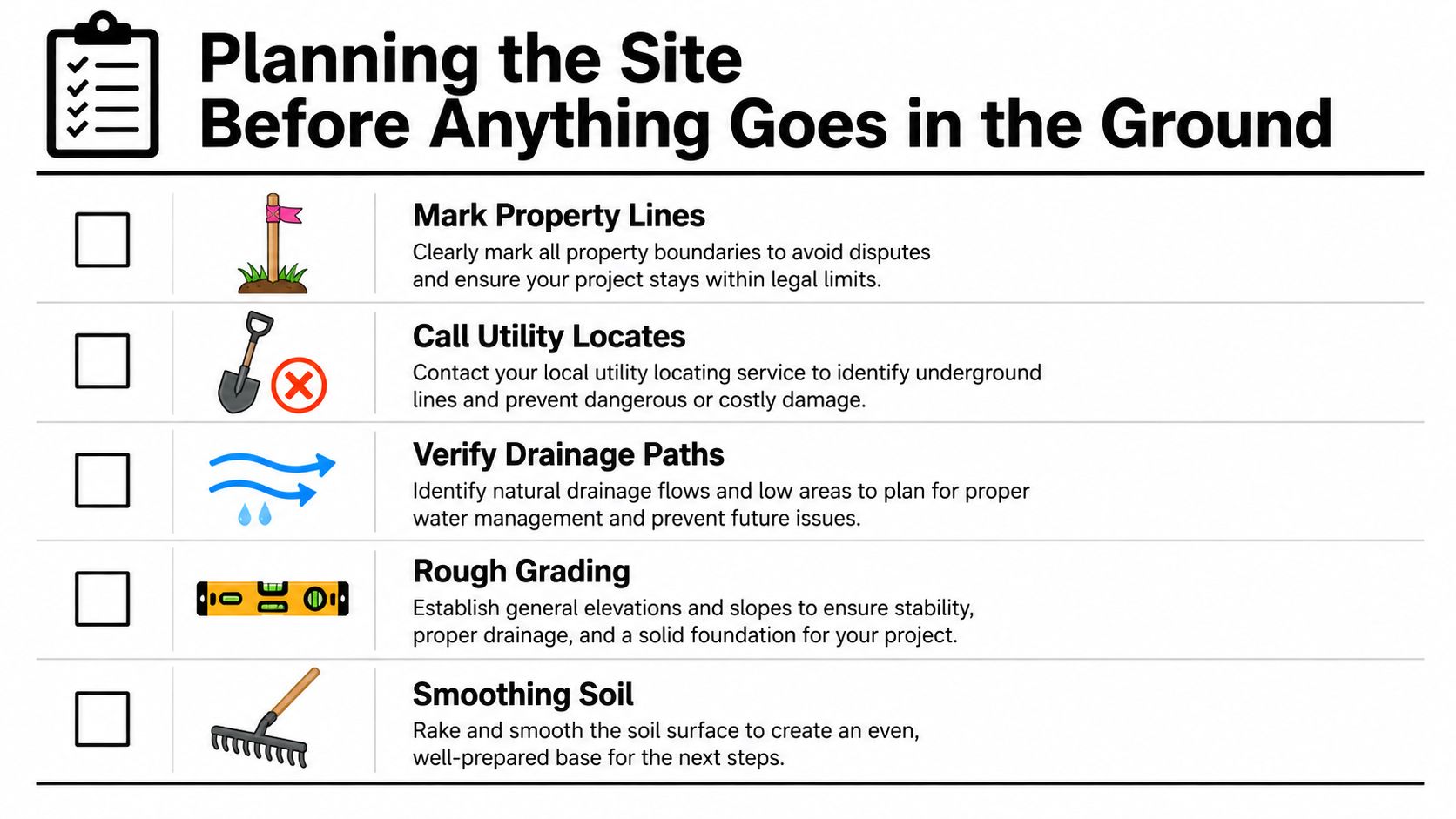
The unglamorous work comes first, and it decides how much upkeep the yard will demand later. A sound install starts with site clearing, rough grading, and utility and drainage layout verification before any planting goes in. Property limits, overhead and underground utilities, and drainage lines get marked first, then the topsoil gets shaped so the finished surface sheds water the way it should and avoids ponding or erosion, according to the landscape technical specifications. That order keeps a crew from paying for avoidable rework after the pretty part is done.
Homeowners can ask better questions before they sign. Has the contractor marked utilities? Did they check where rainwater naturally wants to move? Are they setting the subgrade so low pockets do not trap water? Those details do not look impressive on day one, but they decide whether the yard settles into a workable pattern or spends years dealing with soft spots, saturation, and repairs.
What a real site check should cover
A proper pre-install walk should cover slope, high spots, low spots, runoff direction, soil texture, and where downspouts send water. If a patio, walkway, or future grill area is part of the plan, the layout has to account for how people will move through the space and where water goes after a storm. The complete guide to patio zones shows the same practical truth, outdoor spaces work better when function is set before materials are chosen.
A poor layout creates maintenance headaches that do not show up until the first hard rain or the first mowing season. The surface might look finished, but if the grade is wrong, the yard becomes harder to service, harder to keep dry, and more likely to fail in the same places over and over.
A one-inch low spot does not look like much during install. By midsummer, it can turn into the damp patch everyone walks around.
Good planning also starts with design basics that connect layout, plant choice, and serviceability, and the design basics resource is useful before anyone starts moving soil. Good design is not about adding more features. It is about placing the right features where they work with the site instead of against it.
Choosing Between Sod and Seed for a West Tennessee Lawn
Sod and seed solve the same problem in very different ways. Sod gives you an instant surface, which is valuable when a yard needs to be usable fast or when runoff is a concern. Seed takes longer, costs less up front, and gives you more flexibility, but it asks for patience and better timing.
The trade-offs that matter in Jackson
West Tennessee weather shapes the decision. Fescue and Bermuda behave differently in our heat, shade, and seasonal swings, so the grass type has to match the site, not the homeowner's mood. Fescue tolerates cooler seasons better, while Bermuda handles heat more comfortably in open, sunny areas. Pick the wrong grass and you'll be fighting stress, thin spots, and more maintenance than you planned for.
Here's the practical comparison homeowners need.
| Factor | Sod | Seed |
|---|---|---|
| Establishment speed | Immediate green coverage | Slower to fill in |
| Upfront cost | Higher | Lower |
| Erosion control | Strong on slopes and bare soil | Weaker until rooted |
| Watering demand | Careful early watering | Careful but longer establishment window |
| Variety selection | Limited to what's available | More grass options |
| Best use case | Fast turnaround, erosion-prone areas | Larger areas, tighter budgets |
The best grass seed for new lawns is the right place to start if you're leaning toward seed, because the seed choice matters just as much as the method. A cheap mix can look fine at first and still leave you with a thin, patchy lawn later.
The decision rule I use
Sod makes sense when speed, slope, or erosion control is the priority. Seed makes sense when budget, variety, or large acreage matters more. Mixed properties often benefit from a hybrid approach, sod on the visible or vulnerable areas, seed where time and terrain are more forgiving.
Sod fails when people water it inconsistently during establishment. Seed fails when it's left exposed to erosion, traffic, or poor timing. Both methods work when they're matched to the site and maintained with discipline during the first stretch.
Irrigation, Mulching, and Bed Preparation Done Right
Irrigation, mulch, and bed prep are often sold as separate line items, but they only work when they're designed together. If the beds go in first and irrigation gets added later, the installer usually ends up tearing through fresh work to run lines. That's wasted labor, and it's the kind of mistake that makes a project look more expensive than it really needed to be.
Match water to the planting plan
Irrigation zones should follow sun exposure and plant needs, not just what's easiest to trench. A hot southern exposure, a shaded foundation bed, and a turf strip all want different water behavior. Grouping them together creates weak spots, overwatering, and underperformance that shows up in the form of weeds, disease pressure, or dead edges.
Mulch depth matters too. Two to three inches is the range that usually keeps moisture steadier without burying crowns or smothering roots. Pine straw and hardwood mulch both have their place in West Tennessee, but the primary concern is consistency, not brand loyalty. Thin mulch loses its value quickly, and piles too deep can create their own maintenance problems.
Bed prep that saves work later
A properly prepared bed does more than look finished. It reduces weed pressure, helps irrigation work efficiently, and makes edging easier around turf. Soil amendments should be tied to what's already in the ground, not applied as a guess, because the bed is part of the plant's growing environment, not just a decorative border.
Bed prep is one of the few install decisions that keeps paying you back after the crew leaves.
If you're weighing service options, Lawn & Leaf Solutions handles mulching, sod installation, and water-management work together, which is the right type of bundle for a property where irrigation and planting need to cooperate. That matters because the bed edge, the irrigation layout, and the mower path all end up affecting the same patch of ground.
When those pieces are planned together, the yard is easier to maintain, and the customer doesn't pay twice for the same mistake.
A Season by Season Maintenance Calendar for West Tennessee
A West Tennessee yard can look fine one month and start falling apart the next if the work stays on autopilot. The practical way to handle it is to treat installation and maintenance as one cycle. What gets chosen early, sod or seed, bed shape, drainage, irrigation layout, mulch depth, and mower access, decides how much labor the property will need later and how often it will fail under heat, rain, or neglect.
The Growth and Survival Window
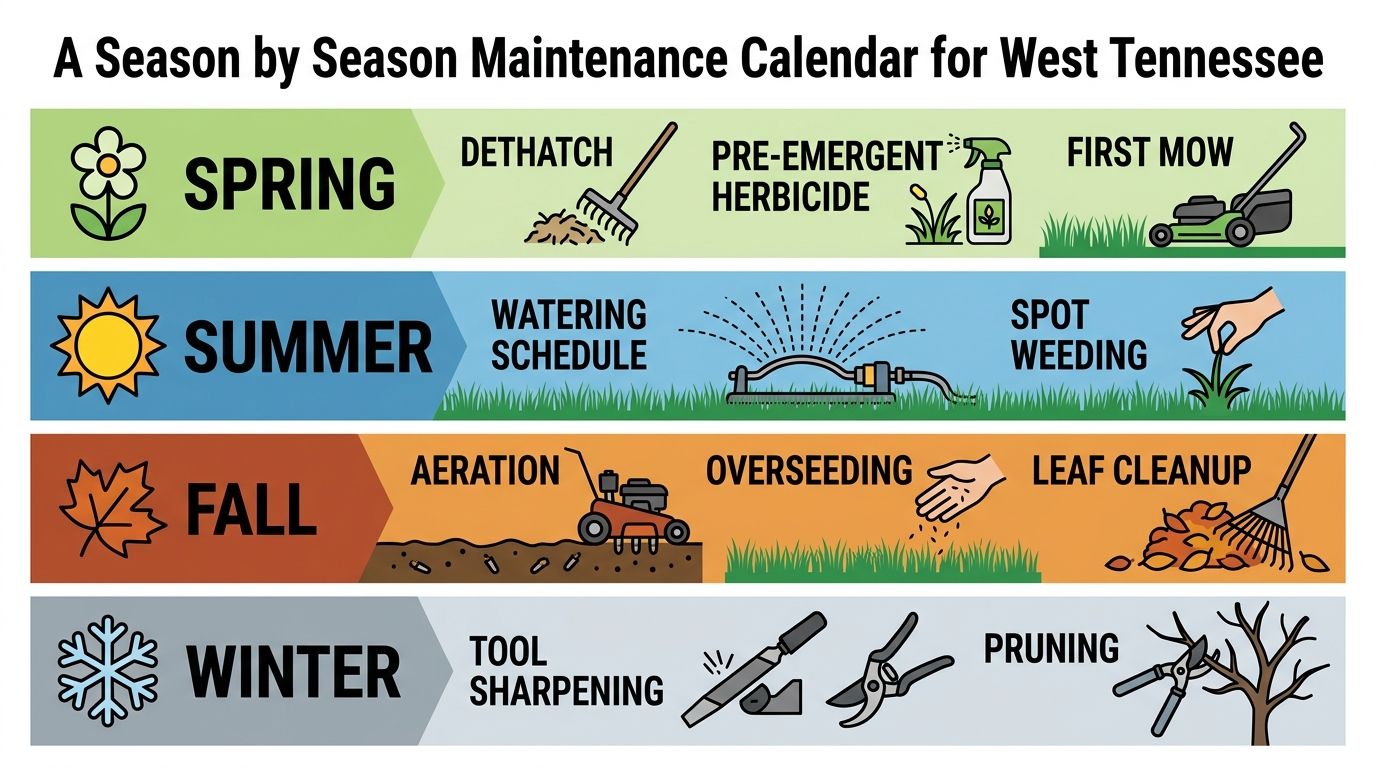
Spring is the reset point. Cleanup comes first, then dethatching only where the turf has built up excess material, pre-emergent timing, and the first mow at the right height for the grass already in the yard. The first cut matters because scalping tender turf adds stress and gives weeds a clear opening. Fertilizer should follow active growth, not the date on a wall calendar.
Summer rewards consistency and punishes shortcuts. Watering has to match heat and dry spells, mower blades need to stay sharp, and mowing direction should change so the grass does not keep laying over the same way. The maintenance guidance from the Professional Landcare Network ties those summer basics together with one practical standard, lawns generally need at least 1 inch of water per week during the growing season, with lower needs in shade or cooler, cloudy weather, and aeration matters because clay soils need it twice a year while sandy soils need it once a year.
That same season is also where bad installation choices show up fastest. Turf laid over weak grading, thin soil, or a poor irrigation pattern will struggle much harder in July than it did in April.
The Prep Window
Fall carries more weight than most homeowners expect. Overseeding, core aeration, winterizer fertilization, leaf cleanup, and bed cleanup all set up the next round of growth. The same maintenance guidance says core aeration should remove plugs at least 75 mm deep, and watering should wet established plantings to 400 to 500 mm depth so roots get moisture below the surface. Shallow routines do not hold up for long.
This is also the time to correct what summer exposed. Thin areas can be filled, compacted soil can be opened up, and edges can be sharpened before cold weather locks everything in place. If a yard is going to need less work next year, fall is where that change starts.
The Cold Weather Check
Winter is for equipment care, careful pruning, and protecting young plantings from cold snaps. It is also the season to watch drainage after heavy rain, because winter often shows the weak points that summer growth hid. A slope that looks harmless in June can reveal washout, pooling, or runoff paths once the leaves are gone and the rain has nowhere to hide.
For homeowners who want a more seasonal reference point, the maintenance for Central Coast weather resource shows the same general principle, timing outdoor upkeep to weather conditions instead of forcing one routine all year. That approach fits West Tennessee too, because the yard asks for different work in different seasons.
Drainage Problems You Can Solve Before They Cost You a Foundation
A wet corner that stays soft after a storm is not just a nuisance. It usually means water is arriving faster than the site can move it away, and that is where small fixes can keep a bigger repair bill off the table. Downspouts that dump too close to the house, mulch that washes out, puddles that linger, and erosion lines on a slope all point to the same issue. The site is shedding water badly.
Read the site before you add more hardware
A French drain moves subsurface water away from trouble spots. A channel drain catches surface runoff where patios or hard surfaces shed water. Catch basins collect water at low points. Sump pumps move water out after it has already been gathered in a pit or basin. None of those systems replaces grading, they work with it.
That matters because a drain cannot fix a bad slope by itself. If the ground still sends water toward the foundation, the pipe just becomes a patch on a grading problem. The better order is simple. Shape the yard first, then add drainage where the site still needs help. On slopes, erosion control gets stronger when bare soil is covered with ground cover, matting, and plants that hold soil in place. For a practical example of how a French drain fits into that kind of site plan, the how to install a French drain system guide lays out the basic layout and installation choices.
A wet path that repeats after every storm is telling you where the site was underbuilt.
For drainage and planting decisions that reduce long-term upkeep, the Ecological Landscape Alliance notes that design choices made early can cut a lot of future maintenance pressure. That is the part homeowners feel later in a cracked driveway edge, a leaning bed border, or a foundation that keeps getting wet on one side. Spending the time to correct grading and choose the right drain type now is what keeps those problems from coming back after every heavy rain.
Putting Together a Maintenance Plan You Can Actually Follow
The easiest plan to keep is the one that was designed to be maintained. A realistic system has four pieces, a yearly calendar, a quarterly inspection routine, a five-year capital plan, and a simple record of what was planted where. That keeps the work organized and stops small issues from becoming expensive surprises.
Build the plan around the property, not around guesswork
The yearly calendar covers mowing, irrigation checks, fertilization, pruning, mulching, and cleanup. Quarterly inspections should look for drainage changes, plant crowding, irrigation leaks, edge failure, and areas where traffic is wearing the yard down. The five-year capital schedule should include bigger items like drainage corrections, plant replacement, irrigation upgrades, or bed redesigns if the property has aged into a new pattern.
A one-page plant map sounds simple, but it saves time. When you know what's planted, where it's planted, and what each area needs, you can hand the property to a crew without re-explaining the whole yard every time. That record also makes warranty conversations cleaner, because everyone is looking at the same layout.
For a useful maintenance reference beyond Tennessee, the maintenance for Central Coast weather resource is a good reminder that local conditions shape upkeep, even when the structure or outdoor design style looks similar on paper. The lesson carries over here, West Tennessee weather should drive the schedule, not a generic checklist.
| Question to Ask | Why It Matters |
|---|---|
| Are you licensed and insured for this work? | It protects the property owner if something goes wrong. |
| How do you handle drainage and grading on installs? | The answer shows whether the crew thinks past the visible finish. |
| Do you offer recurring maintenance, not just install work? | A company that maintains what it installs is easier to hold accountable. |
| What's included in your warranty terms? | This keeps the homeowner from guessing when a problem appears. |
| Can you provide a plant and feature map after the job? | A simple record makes long-term care much easier. |
Lawn & Leaf Solutions offers outdoor installation, lawn maintenance, seeding, sod, mulching, drainage systems, and leaf removal for Jackson and West Tennessee, so it fits this kind of install-plus-maintain model naturally. If you want a yard that's built to be lived with, not just admired on day one, visit Lawn & Leaf Solutions and ask for a plan that treats installation and maintenance as one continuous job.