
If you're standing at the back door after a hard Smyrna rain, looking at tire-rut mud, thin grass, and a low spot that never seems to dry out, you're dealing with more than a mowing problem. A lot of yards in this area struggle with the same combination. Spring rain saturates the soil, summer heat stresses the turf, and compacted ground keeps roots shallow and weak.
That's why good lawn care services in Smyrna TN have to do more than cut grass on a schedule. A healthy lawn depends on grading, drainage, mowing habits, soil movement, cleanup, and timing. If one part is off, the whole yard shows it. You can fertilize a lawn all you want, but if water sits on the surface or runs toward the house, the turf still suffers.
The best results come from treating the property as a system. Turf needs sunlight, airflow, and consistent moisture. Beds need mulch that holds moisture instead of washing away. Drainage needs to move water away from roots, walkways, and the foundation. When those parts work together, the yard looks better and holds up better.
Your Guide to a Greener Lawn in Smyrna TN
A greener lawn in Smyrna usually starts with noticing what your yard is already telling you. Grass that stays pale in one strip, mushy soil near the downspout, runoff carving lines through mulch beds, and edges that look ragged a few days after mowing all point to a maintenance plan that's too narrow. The lawn may be getting cut, but it isn't being managed.
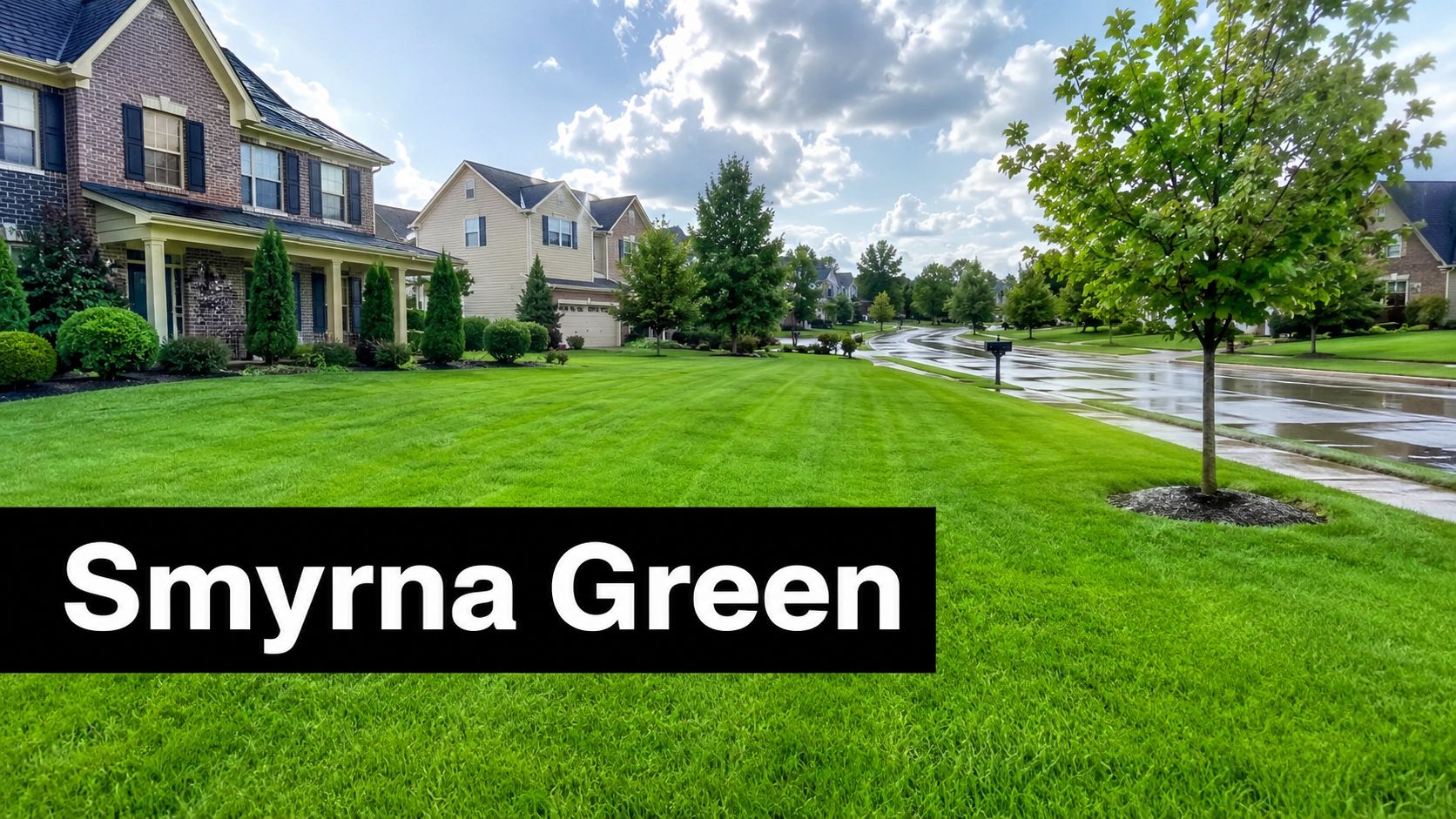
What homeowners usually miss
Most lawn problems show up above ground, but they start below it. If the soil is compacted, roots stay shallow. If water can't move, the grass thins out and weeds move in. If mower blades are dull or the cut is too low, the lawn loses density and dries out faster.
A practical lawn plan should include:
- Consistent mowing: The cut has to match the grass type and the season, not just the calendar.
- Clean edging and blowing: These aren't cosmetic extras. They keep hard surfaces cleaner and define the lawn line.
- Seasonal correction: Bare spots, compaction, runoff, and leaf buildup need attention before they become larger repairs.
- Drainage awareness: Wet turf isn't always a watering issue. Sometimes the yard can't shed water properly.
Practical rule: If an area stays wet long after the rest of the yard has dried, don't keep treating it like a fertilizer problem. Treat it like a water movement problem.
Homeowners who want long-term improvement usually benefit from a broader maintenance approach, not just a quick cut-and-go service. If you're comparing options, it helps to review how professional lawn care in Tennessee is typically structured so you can tell the difference between basic mowing and real property care.
What actually works in Smyrna
What works here is steady, observant maintenance. That means keeping the turf thick enough to shade the soil, correcting water flow before roots rot, and cleaning up organic debris before it traps moisture against the lawn. A beautiful yard isn't built with one treatment. It's built by handling the small problems before they become expensive ones.
Comprehensive Lawn Care Services We Offer
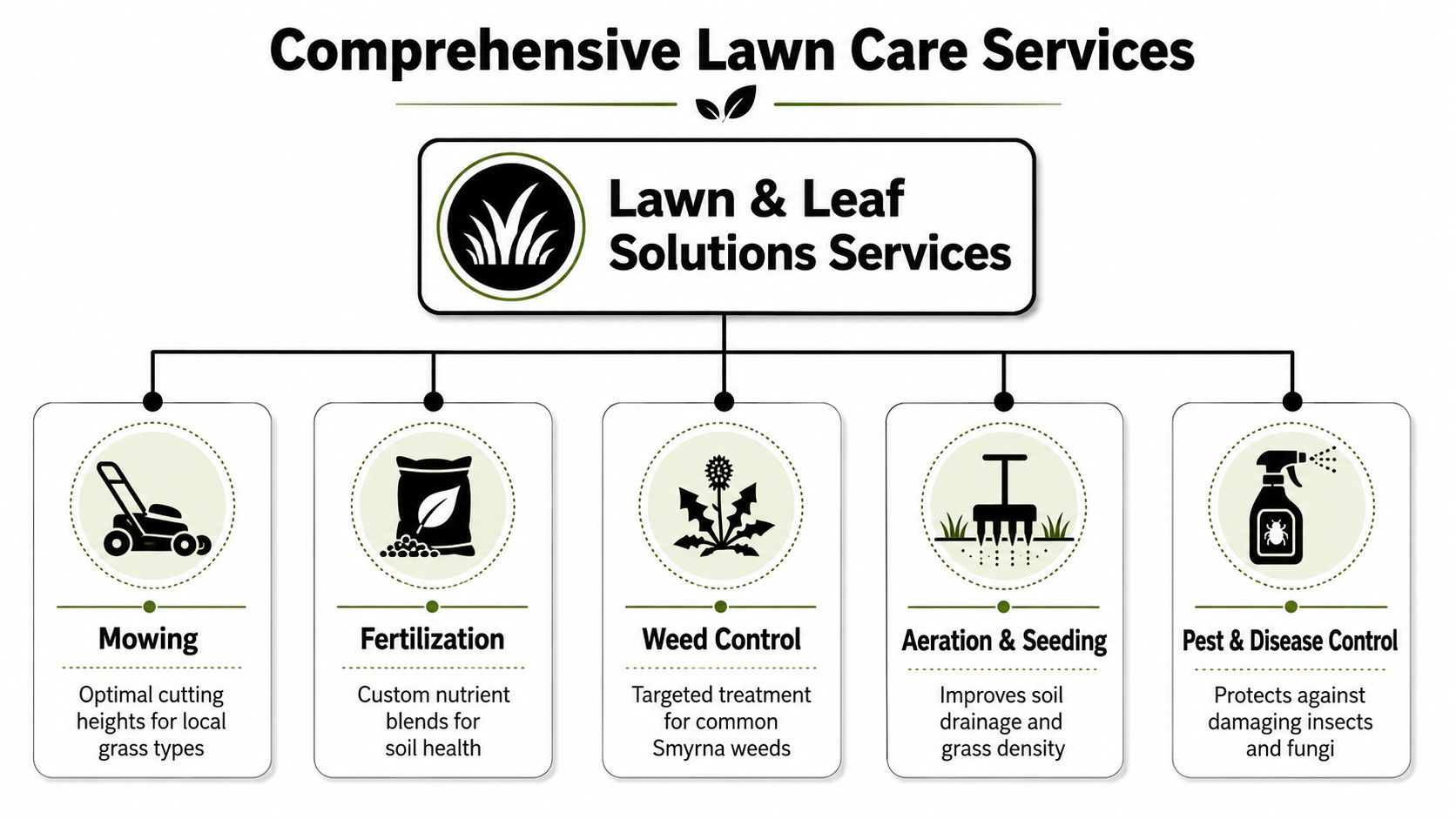
The most effective lawn care services in Smyrna TN cover the whole growing cycle. Mowing keeps growth controlled, but mowing alone won't correct thin turf, nutrient issues, or weak edges. A complete service plan addresses how the lawn grows, how water behaves, and how the property looks from the street.
Mowing and trimming done the right way
A good mowing crew does more than make the lawn shorter. Cutting height matters. So does blade sharpness, turn pattern, and timing after rain. Scalping turf creates stress fast, especially when the heat settles in. The lawn may look neat for a day, then fade, brown, or open up for weeds.
A proper mowing visit usually includes:
- Mowing at an appropriate height: This protects the crown of the grass and helps the lawn hold moisture.
- String trimming around obstacles: Fence lines, mailboxes, and tree rings need a clean finish without damaging bark or posts.
- Edging along hard surfaces: Crisp edges make the property look maintained instead of merely cut.
- Blowing off debris: Grass clippings left on driveways and walks create a sloppy finish and can wash into drains.
Fertilization and weed control
Fertilization works best when it's matched to the lawn's condition, not applied the same way to every property. A thin lawn in full sun needs a different plan than a lawn under shade trees or one that stays wet in the back corner. Weed control also has to be targeted. Blanket spraying without identifying the actual problem often wastes time and product.
The goal is simple. Feed the turf you want and reduce the pressure from the weeds you don't.
Thick turf is the first line of weed control. Weak turf gives weeds room to establish.
Aeration, seeding, and sod
When the soil is compacted, grass roots struggle for air and water. That's when aeration becomes useful. Core aeration opens the soil so roots can expand and seed has a better place to establish. For repair work, overseeding helps fill light thinning. For severe damage or new construction, sod gives an immediate finished surface.
Here's how these services typically differ:
| Service | Best use | Main benefit |
|---|---|---|
| Aeration | Compacted or poorly draining turf | Opens soil and improves root access |
| Seeding | Thin areas and patch repair | Builds density over time |
| Sodding | Bare ground or fast renovation | Creates instant coverage |
If you're also refining bed lines and transitions between grass and planting areas, this guide to defining your garden gives a useful overview of edging choices that improve both appearance and maintenance.
Mulching and seasonal cleanup
Mulch does real work in Tennessee outdoor areas. It helps hold soil moisture, buffers roots from heat, and suppresses weed growth in beds. Bad mulch jobs fail for obvious reasons. The layer is too thin to matter, too thick around trunks, or spread over existing weeds without prep.
Leaf removal matters for the same reason. Wet leaf buildup blocks light, traps moisture, and creates a mat over turf that weakens the lawn. Seasonal cleanup also gives crews a chance to spot drainage scars, exposed roots, and winter damage before growth takes off.
For homeowners comparing service areas and maintenance styles, it's useful to look at how regional lawn care work is handled in Jackson because the same principles apply. Healthy turf comes from consistent field practices, not shortcuts.
Solving Yard Drainage and Flooding Problems
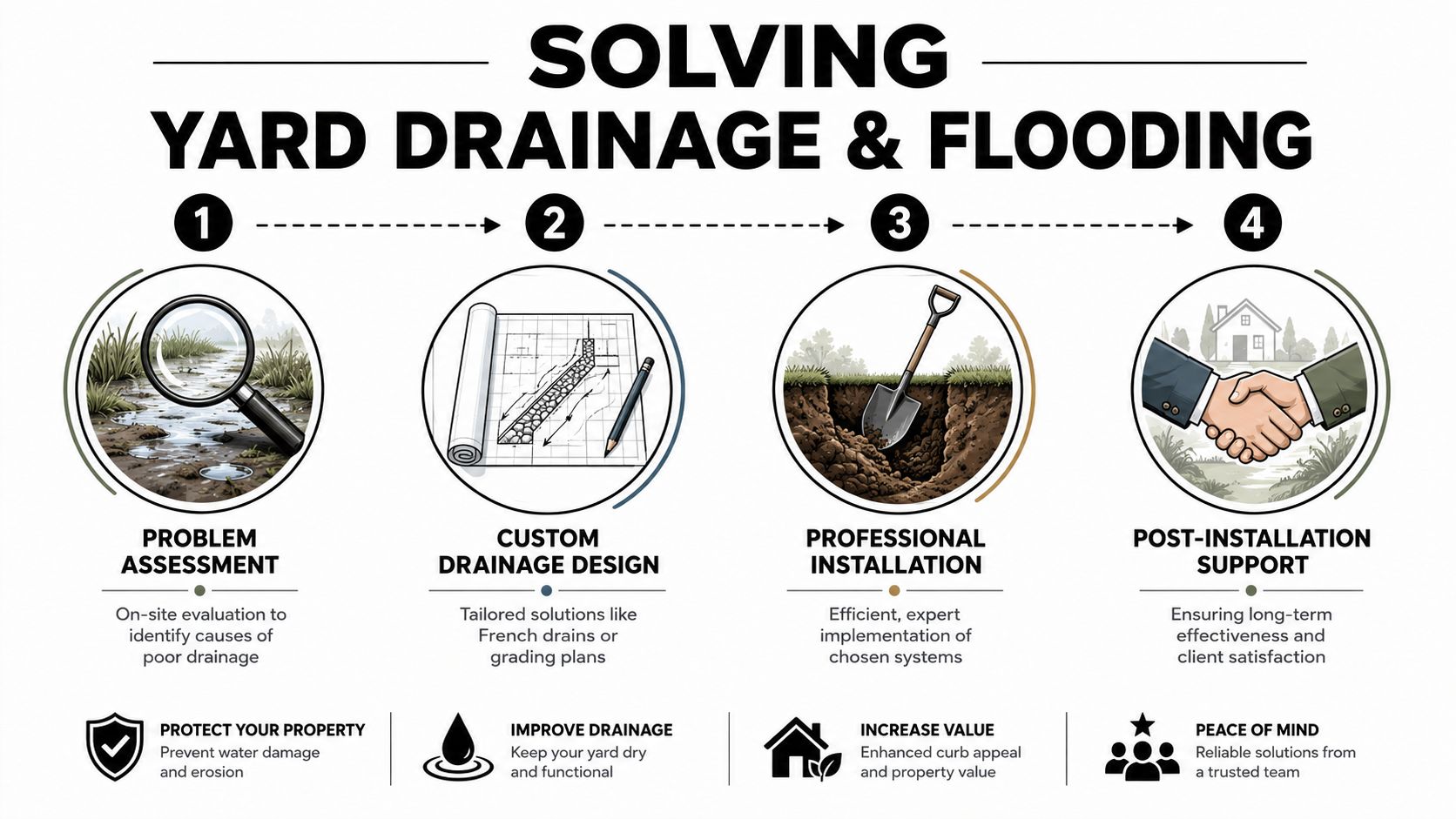
A lawn can't stay healthy if the yard holds water in the wrong places. Many homeowners waste money in these situations. They replace sod, spread seed, and adjust mowing frequency, but the same back corner stays swampy because the primary problem is drainage. Turf fails when roots sit in saturated soil, and the house is at risk when runoff moves toward the foundation.
Signs the problem is bigger than a wet spot
Some wet areas are temporary. Others point to a yard that isn't shedding water correctly. The difference matters.
Watch for these signs:
- Standing water after normal rain: If puddles linger well after surrounding ground has dried, water has nowhere to go.
- Soft, spongy turf: This often means roots are staying too wet and the soil structure is breaking down.
- Mulch washout or soil erosion: Water is moving with enough force to displace material.
- Water near the house or crawlspace area: This is the warning sign homeowners should never ignore.
- Repeated grass failure in the same area: If the same patch dies again and again, the site condition is wrong.
What fixes drainage for the long term
Drainage work has to match the property. There isn't one universal fix. A French drain helps intercept and redirect subsurface water. A channel drain captures surface flow in hardscape areas. A sump pump can move collected water away when gravity alone won't solve it. In other yards, the first correction is grading, not piping.
The right solution depends on slope, outlet options, downspout discharge, compaction, and where water is entering the area. That's why guessing usually leads to partial fixes.
A yard that floods repeatedly doesn't need another temporary patch. It needs a designed path for water to leave.
In certain outdoor settings, retaining structures are also part of the answer because they control grade transitions and help manage how soil and runoff behave together. Homeowners who want a plain-language primer can review this article on understanding retaining wall structures to see how walls support drainage and stability when elevation changes are involved.
Why drainage is a property protection issue
Drainage isn't a luxury add-on. It's part of protecting the usable space around your home and keeping water away from structural trouble spots. For commercial properties in Smyrna, maintenance pricing already reflects how serious this work is. Small commercial sites can run $150 to $300 per visit, medium properties $300 to $600 per visit, and large properties $600 to $1,200+ per visit, while full-service commercial packages and irrigation installations are listed at $4,000 to $8,500 in local market data from Smyrna business lawn maintenance costs. That tells you something important. Water management is treated as infrastructure, not decoration.
If your lawn stays soggy or runoff keeps cutting through the same area, start with a closer look at how to fix yard flooding. The grass won't fully recover until the water issue is solved first.
Understanding Lawn Care Costs and Plans in Smyrna
A Smyrna homeowner usually asks about price right after the first problem shows up. Maybe the yard looks uneven after a few skipped cuts. Maybe the front lawn holds water, the side yard stays thin, and now the question is whether to pay for mowing only or fix the whole property the right way. The honest answer is that lawn care costs depend on what condition the yard is already in and whether you're paying for upkeep, correction, or both.
Routine mowing is the cheapest part of the job. Correcting poor turf, weed pressure, compaction, drainage trouble, and worn-out beds costs more because it takes more labor, more visits, and better timing.
What common lawn services cost locally
For basic mowing, a useful local benchmark comes from LawnGuru's Smyrna mowing pricing. Analysts at LawnGuru list the average cost for a single lawn mowing cut in 2026 at $47.88, with a typical range of $42.47 to $53.30. That standard visit includes mowing, weed whipping, blowing, and edging.
The same source lists seasonal maintenance for smaller yards up to 1/4 acre at $300 to $600 per season. That gives homeowners a reasonable starting point, but only for yards that already have decent grading, usable turf, and no major correction work waiting in the background.
That distinction matters.
A lawn that drains well and grows evenly can stay on a simple maintenance plan for a long time. A lawn with soggy corners, runoff channels, or compacted clay usually needs more than a mow crew. If the water problem stays in place, grass treatments and seed can turn into repeat spending with weak results.
Where plans create better value
The best plan matches the condition of the yard.
Single-service visits work for homeowners who mainly need grass cut and edges cleaned up. Seasonal plans fit properties that need scheduled mowing, fertilization, weed control, and cleanup at the right times. Ongoing service makes the most sense when the lawn has recurring issues, the beds need regular attention, or the property needs a coordinated plan so the yard improves instead of just getting trimmed.
Here is the practical breakdown:
| Plan type | Best for | Trade-off |
|---|---|---|
| Single service visits | Lawns that are already healthy and only need basic upkeep | Lower upfront cost, less consistency |
| Seasonal maintenance | Smaller to mid-size yards that need regular care through the year | Better timing, but limited correction if bigger issues exist |
| Ongoing bundled service | Properties with turf issues, bed maintenance needs, or drainage-related stress | Higher monthly cost, better long-term results |
Bundled care usually saves money over time because the same crew sees the property regularly and catches problems before they spread. That can mean spotting mower scalping from a low spot, seeing runoff damage early, or adjusting care in shaded areas before the lawn thins out.
There is another benefit homeowners overlook. Better turf care can reduce conditions that attract nuisance insects. For a closer look, see professional lawn care for pest prevention.
What changes the final quote
Three factors move the price more than anything else.
- Property size: Larger lawns take more mowing, trimming, blowing, and material.
- Service frequency: Weekly or biweekly visits raise the total, but they often prevent expensive catch-up work.
- Type of work: Mowing is one price. Aeration, overseeding, mulch, shrub trimming, drainage correction, and yard renovation are separate categories.
In Smyrna, that last point is where many estimates start to spread apart. One company may quote for basic appearance only. Another may quote for actual lawn health, bed upkeep, and site problems that keep damaging the grass. Those are not the same service, even if both are called lawn care.
If you want to compare estimates more clearly, this guide to lawn maintenance service cost explains what drives pricing and how to tell whether you're buying simple upkeep or a real property care plan.
Why Choose a Professional Lawn Care Company
You cut the grass on Saturday, and by Tuesday the same spots still look bad. One corner stays soft after rain. Another turns thin and pale near the downspout. The lawn gets mowed, but the yard still does not look or function the way it should.
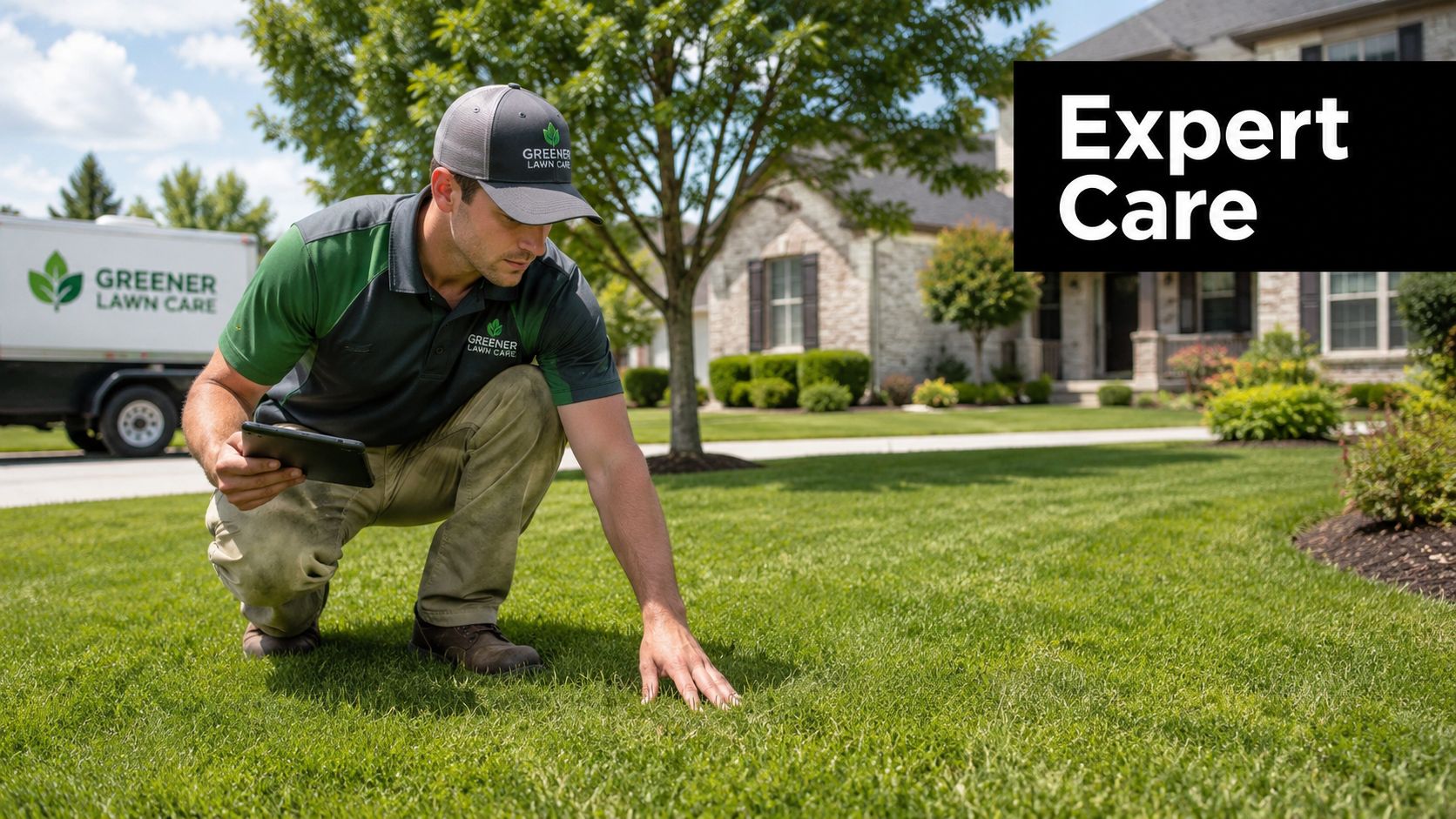
That is usually the point where DIY care starts costing more than it saves. Mowing is only one part of the job. A healthy yard in Smyrna also depends on drainage, grading, soil condition, mowing height, and timing. If one of those is off, the grass keeps showing the same stress no matter how often it gets cut.
DIY versus professional results
Homeowners can handle basic upkeep on a stable yard. If the grade is sound, the turf is established, and growth is even, regular mowing and cleanup may be enough. But recurring problems need a diagnosis before they need a treatment.
A trained crew looks at the whole property, not just the turf surface. Weak grass in one strip might come from dull mower blades, compacted soil, shade, runoff, or buried construction debris. Wet areas may point to poor slope, blocked discharge, or water collecting from a neighboring lot. Those problems do not get fixed with extra seed and fertilizer.
Professional care also improves consistency. The lawn is cut at the right height for the season, edges stay clean, and growth stays more even because service is based on turf conditions instead of a rushed weekend window. If you are comparing schedules, this guide on how often a lawn should be mowed explains why frequency affects both appearance and lawn health.
Why experience and credentials matter
Once the job moves beyond mowing, experience matters more. Drainage correction, erosion control, and grade changes affect the lawn, planting beds, hardscape, and sometimes the foundation line of the house. Poor work can shift water from one problem area to another and leave the property worse off than before.
That is why homeowners should ask who is doing the work, what problems they are trained to identify, and whether they can handle the full yard instead of only the grass. Lawn & Leaf Solutions brings over 18 years of hands-on field experience and operates under License # TNPL23317. That matters when the recommendation involves more than appearance and starts addressing water movement, washout, or long-term turf failure.
There is also a practical quality-of-life benefit. A well-kept yard with controlled overgrowth and fewer wet hiding areas is less inviting to unwanted activity around the property. For an outside perspective, see professional lawn care for pest prevention.
Hiring a professional lawn care company makes sense when the goal is a yard that looks good, drains correctly, and holds up through the season. That is the difference between paying for repeated upkeep and investing in a property that improves.
Frequently Asked Questions About Smyrna Lawn Care
How do I know if I have a drainage problem or just a wet area
A temporary wet patch dries out with normal sun and airflow. A drainage problem keeps coming back in the same place, often with soft ground, thinning grass, runoff marks, or water moving toward the house. If the area stays soggy after the rest of the lawn has recovered, the issue usually isn't cosmetic.
What's usually included in a lawn care estimate
A useful estimate should account for the turf area, trimming needs, edging, cleanup expectations, access, and any visible correction work. If the yard has standing water, erosion, or bare zones, those should be discussed separately instead of folded into a vague mowing quote.
Are full-service plans worth it
They often are, especially when the property needs more than routine cutting. In Smyrna, full-service lawn care packages that include fertilization, weed control, and aeration range from $74 to $167 per service, while spring or fall cleanup services typically range from $150 to $450, based on BBB-listed Smyrna lawn care pricing. For homeowners who want consistency, those plans usually produce steadier results than hiring each task one at a time.
How often should my lawn be mowed
That depends on growth rate, rainfall, season, and turf condition. The right schedule keeps the lawn even without scalping it. If you're trying to judge timing for your yard, this guide on how often a lawn should be mowed gives a practical baseline.
If your lawn looks decent from the street but feels soft, patchy, or high-maintenance up close, don't settle for surface-level care. The best results come from fixing the conditions that keep the lawn from thriving in the first place.
If you want a healthier lawn, better drainage, and a yard that holds up through Smyrna weather, contact Lawn & Leaf Solutions for a free estimate. They handle mowing, seeding, sod, mulching, leaf removal, and precision drainage solutions that protect both your turf and your property.