
If you're searching for leaf removal services near me, there's a good chance your yard already looks familiar. Leaves are packed against the fence, matted into the grass, and blowing back onto the driveway every time the wind shifts. In Jackson, that mess isn't just annoying. It can turn into turf damage, soggy spots, and drainage headaches that linger well past fall.
A lot of homeowners wait until the yard looks bad enough to justify a cleanup. By then, the first layer of leaves has often gotten wet, compacted, and pressed into the lawn. That's when serious problems begin. A proper cleanup isn't just about curb appeal. It's about protecting grass, keeping water moving, and making sure debris doesn't collect where it can cause trouble.
Why Professional Leaf Removal Matters More Than You Think
A lot of leaf problems start where homeowners are not looking. The yard may only seem messy from the street, but trouble usually shows up in the grass, in low areas, and around the paths where water is supposed to move.
When leaves stay in place through repeated rain and cool nights, they mat together and hold moisture against the turf. The University of Minnesota Extension notes that heavy leaf cover can smother grass and encourage disease if it is left sitting on the lawn, especially once it turns wet and dense. That is why a fall cleanup is maintenance work, not just appearance work.
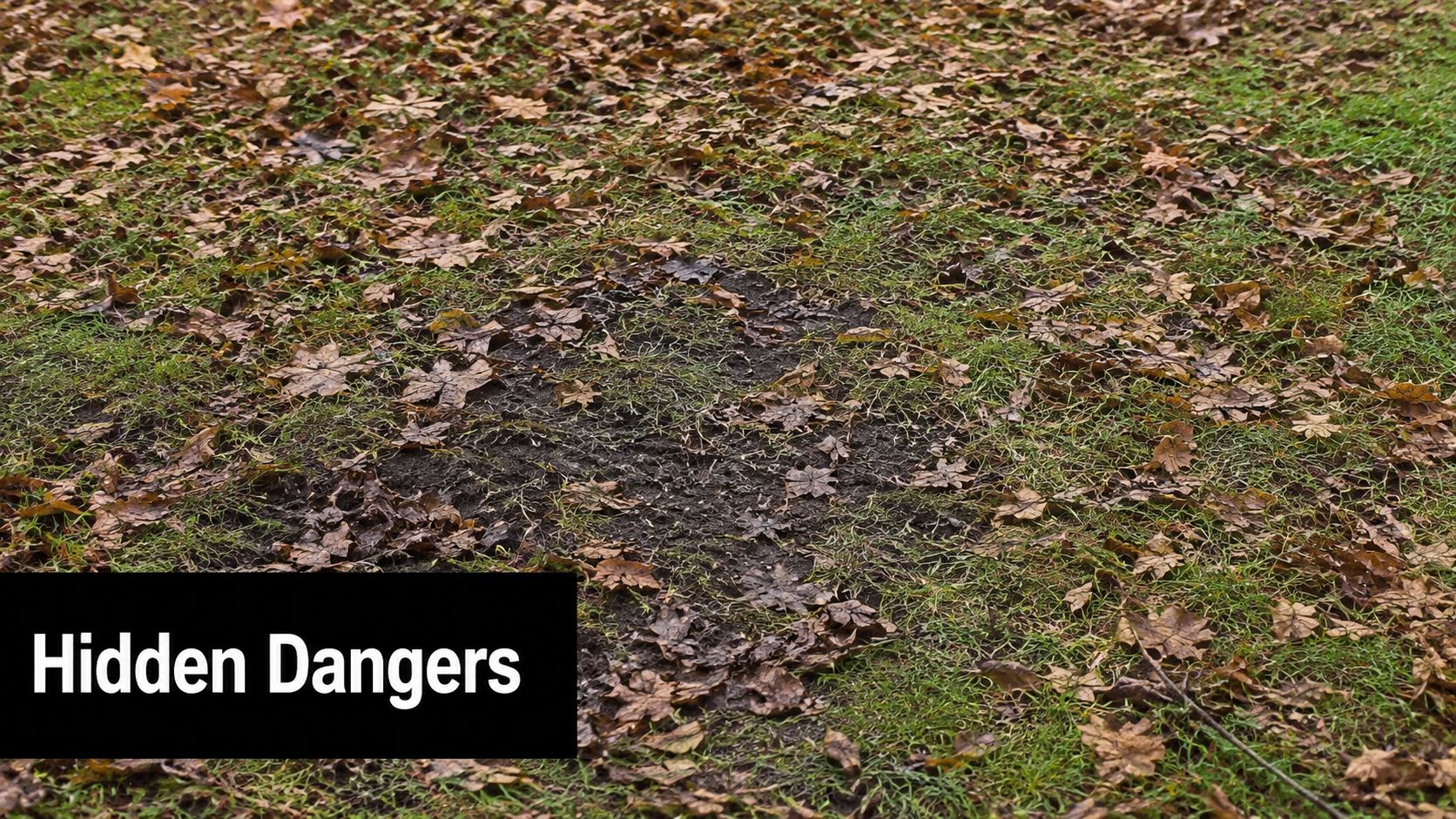
Leaves Smother Grass Faster Than Most Homeowners Expect
I see the same pattern every fall in Jackson. Dry leaves look harmless for a while. Then one good rain presses them down, cuts off airflow, and leaves the grass underneath weak going into winter.
The damage usually does not show up right away. It shows up later as thin turf, slow spring recovery, and damp patches that never seem to dry as fast as the rest of the yard. A quick pass with a blower can help if the leaves are still loose, but it will not fix buildup packed into fence lines, bed edges, corners, or shaded spots.
A simple rule helps here. If the leaves are wet enough to clump, cleanup has shifted from routine yard work to prevention.
In Jackson, Leaf Buildup Often Turns Into a Water Problem
This is the part many service pages skip. On a lot of Jackson properties, leaves do more than cover the grass. They block the places where runoff needs to travel.
The University of Maryland Extension explains that leaves and other debris should be kept out of storm drains and drainage routes because they restrict flow and contribute to standing water and runoff problems. The same thing happens on residential property. Swales fill in. Curb edges clog. Downspout outlets disappear under soggy debris. Water starts spreading sideways instead of moving out.
That connection matters if your yard already has soft spots or puddling after rain. Leaf cleanup and drainage work are closely connected on many properties.
Trouble usually starts in predictable areas:
- Low sections of the yard collect leaves first and stay wet longest.
- Drainage swales and runoff paths lose carrying capacity when debris mats across them.
- Areas near the foundation can stay damp when water cannot move away cleanly.
- Mulch beds, curb lines, and fence rows catch heavy buildup that holds moisture in place.
A good crew should notice those patterns, not just clear the visible open grass. That broader approach is one reason homeowners look into the benefits of hiring a professional lawn service in Jackson, TN instead of treating leaf cleanup like a one-time chore.
Equipment matters too. Wet leaf removal is harder on machines, loading, and hauling than many people expect, which is why crews spend time choosing effective landscape trailers and disposal setups that can handle heavy debris without making a mess of the property.
Our Step-by-Step Leaf Cleanup and Removal Process
A good leaf cleanup follows a sequence for a reason. The goal is not just to make the yard look cleaner for a day. It is to get debris off the turf, out of problem spots, and away from the places where water should be able to move freely.
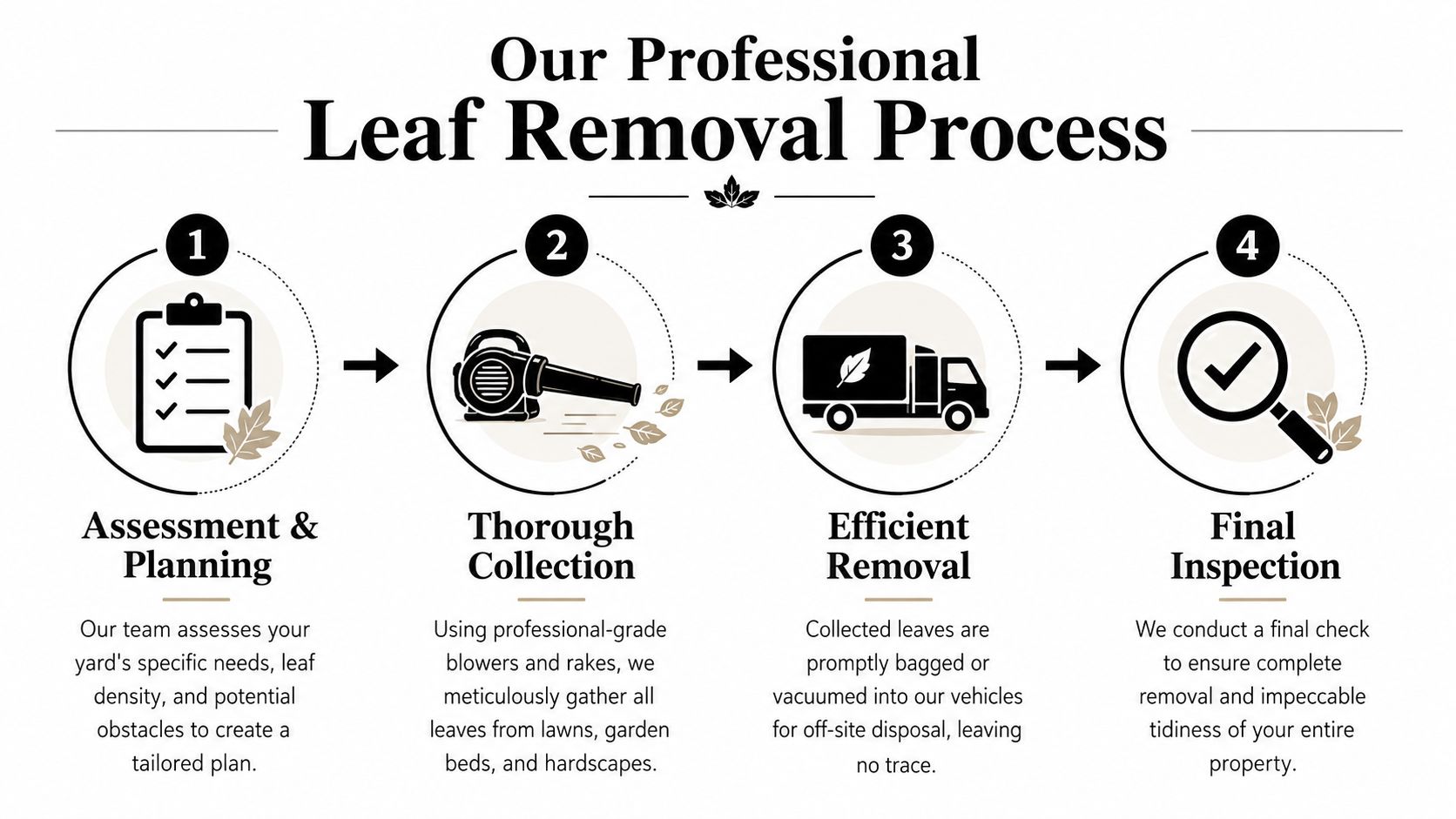
Step One Means Looking Before Touching Equipment
The first pass through the yard should be a walk-through, not a blower pass.
A crew needs to see how the leaves are sitting, where the ground stays soft, and which areas need extra care. In Jackson, that often means checking fence lines, bed edges, low turf, downspout outlets, and any swale or drain path that can disappear under a wet layer of debris. Decorative rock, fresh mulch, exposed grates, and saturated ground all change how the job should be handled.
This part gets skipped on rushed jobs. It should not.
A careful assessment prevents torn turf, scattered debris, and the bigger issue many homeowners do not notice at first. Leaves packed over drainage paths can hold water in the wrong places long after the cleanup crew leaves.
Blowing Has to Be Controlled
Blowers are useful, but good results come from technique, not noise.
Leaves should be worked out of beds, corners, and against structures first. Then they can be moved onto open lawn and consolidated for pickup. Wet leaves near foundations, AC pads, and curb edges usually need slower, more deliberate handling because those are the places where debris buildup turns into trapped moisture and clogged runoff.
Equipment setup matters too. Crews that invest time in choosing effective landscape trailers usually work more cleanly because blowers, vacuums, and hauling gear stay organized instead of being piled together and dragged across the property.
Wet leaf cleanup takes patience. One aggressive pass can create more repair work than cleanup value.
Collection and Removal Depend on the Property
Once the leaves are consolidated, the next step is getting them off the property in a way that fits the site. That may mean raking tight spots by hand, using bagger or vacuum equipment for the main volume, or loading piles directly for haul-away.
No single method fits every yard. Tight gates, steep grades, soft ground, and heavy oak leaf buildup all change the plan. On some properties, mulching a light layer is reasonable. On others, full removal is the better choice because the amount of debris is too heavy or the lawn is already holding moisture.
Lawn & Leaf Solutions handles leaf removal as one service within its broader lawn and drainage work. That matters when cleanup affects runoff patterns as much as curb appeal. Homeowners who are also planning seasonal yard work can pair service timing with these fall lawn care tips to prepare for winter.
The Final Pass Is What Makes the Job Feel Finished
The last step is detail work. It determines if a cleanup either feels complete or looks half done.
A proper final pass clears:
- Driveways and sidewalks
- Patios and porches
- Bed edges and foundation lines
- Corners where leaves keep settling back in
I always pay attention to those edge areas because they tell you whether the crew was thorough. If leaves are still packed along a fence, around a drain, or against the house, the problem has only been moved, not solved.
The finished result should leave open grass, clean hard surfaces, and visible drainage paths. That is what protects the yard after the leaves are gone, especially when the next hard rain hits.
When to Schedule Service in the Jackson TN Area
Timing matters more in Jackson than many homeowners realize. If you wait for every single leaf to fall, the first rounds of debris may already be pressed into wet grass and low areas. If you schedule too early and never follow up, the yard can still head into winter buried again.
The local pattern gives you a useful guide. The City of Jackson's 2025 to 2026 leaf pickup season ran from November 17, 2025, to March 20, 2026, showing the kind of 5-month window when leaf management is still active and relevant in this area.
Early Season Cleanup Prevents the First Layer From Turning Problematic
The first meaningful cleanup is often the most important one. It removes the initial buildup before it gets soaked down into the turf.
If your property has several deciduous trees, shaded lawn sections, or known drainage trouble, don't wait until the whole yard is covered. Early service keeps the lawn surface open and reduces the chance that wet leaves settle into the spots that already struggle to dry.
Homeowners who want to pair cleanup with broader seasonal prep can review these fall lawn care tips for winter in Jackson.
Late Winter Cleanup Sets Up Spring Better
The final cleanup matters for a different reason. It clears the leftover debris that stayed trapped in beds, around shrubs, under fences, and along edges through winter weather.
This is usually the visit that helps the property look ready again. It also makes it easier to spot drainage issues, bare turf, erosion, and compacted zones before spring growth starts.
A simple schedule works well for many West Tennessee yards:
- First cleanup after the initial heavy drop
- Follow-up visit if trees keep shedding across the season
- Final cleanup before spring lawn work begins
City Pickup Doesn't Replace a Full Property Cleanup
Municipal pickup helps, but it doesn't solve everything for every homeowner. City routes follow city schedules, and curbside collection isn't the same as clearing beds, fence lines, hardscape edges, and backyard accumulation.
That's where private service fills the gap. If your home sits outside the city limits, has heavy tree cover, or needs more than curbside leaf piles moved, scheduling your own cleanup gives you more control over timing and results.
Understanding the Cost of Professional Leaf Removal
A leaf cleanup quote can look simple until you walk the property. Two yards with the same square footage can price very differently if one has light cover on open turf and the other has packed, wet leaves in beds, fence lines, ditches, and around downspouts. In Jackson, that difference matters because leaf removal is often tied to water flow, not just appearance.
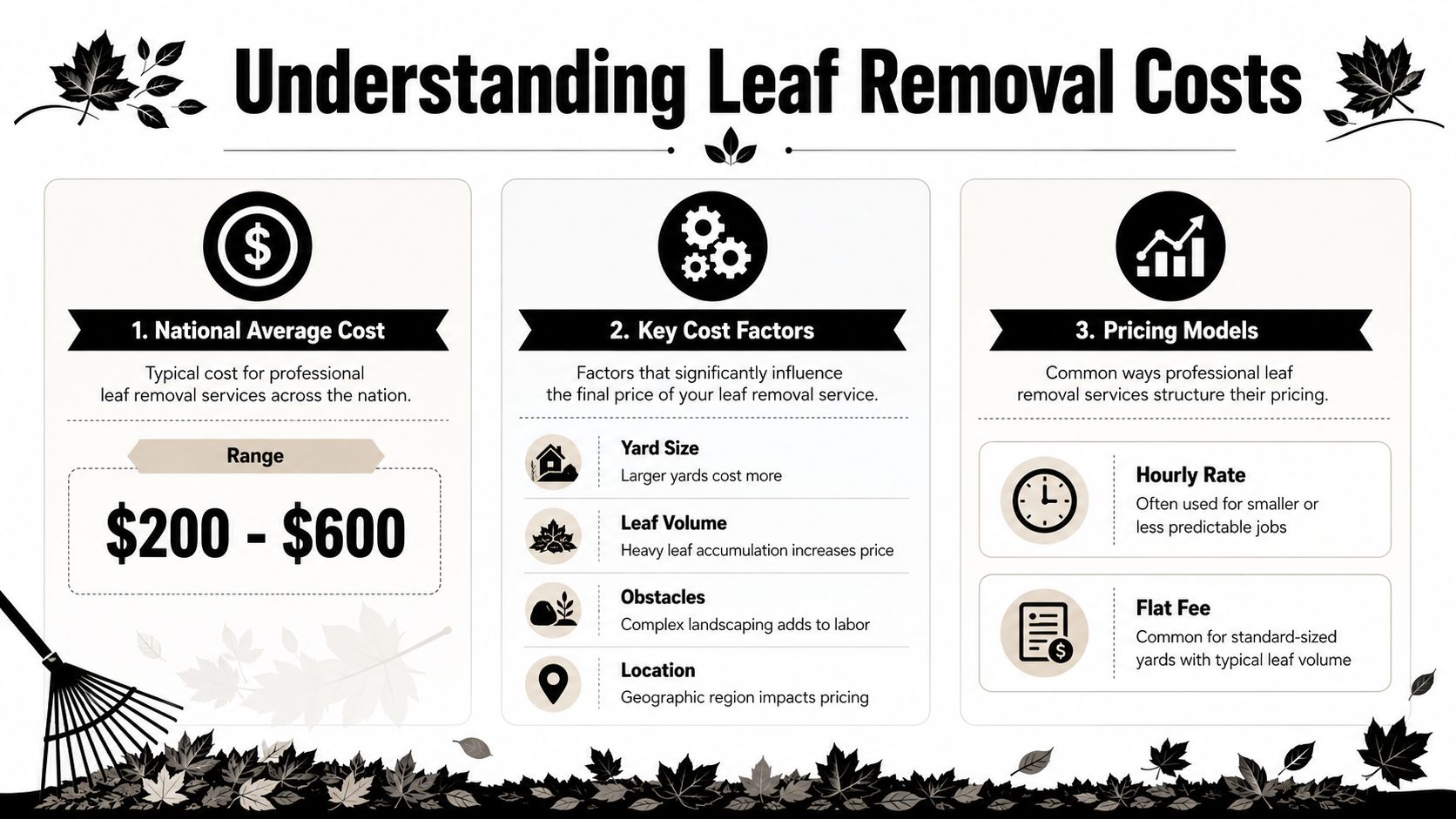
The biggest pricing driver is labor. Heavy buildup takes longer to break loose, gather, and remove. Wet leaves add weight, cling to the lawn, and collect in the same low spots that already hold moisture. That means more handwork and more careful cleanup to avoid tearing up soft ground.
Here's what usually changes the price on a real property:
- Total cleanup area. Front yard only costs less than a full property cleanup that includes backyard edges, beds, and side yards.
- Leaf volume. A thin layer is one job. Deep accumulation under mature trees is another.
- Condition of the leaves. Dry leaves move faster. Wet, matted leaves take more time and often need multiple passes.
- Access and obstacles. Gates, slopes, fencing, ornamentals, and tight corners slow equipment work.
- Drainage trouble spots. Swales, curb lines, grates, and downspout outlets need careful clearing because buried leaves can block water and create bigger problems later.
- Removal and disposal. Bagging, loading, hauling off-site, or staging for pickup all affect labor and trailer time.
Disposal is where vague estimates cause trouble.
A low price can sound fine until the crew finishes blowing everything into piles and leaves the bags at the curb, or adds hauling charges after the job starts. A useful estimate should state exactly what happens to the debris and which areas are included. If the quote does not mention beds, fences, patios, drainage paths, and hauling, ask before the work begins.
| What to confirm | Why it matters |
|---|---|
| Collection method | Shows whether the crew is just moving leaves around or fully removing them |
| Disposal plan | Clarifies whether debris is bagged, hauled away, or staged for municipal pickup |
| Areas included | Prevents misunderstandings about beds, edges, rear yards, and hard surfaces |
| Ground conditions | Helps explain added labor in wet turf or low areas |
| One-time or repeat visits | Makes it easier to compare a single cleanup with seasonal service |
From an operations side, pricing also reflects whether the company runs an organized route, communicates clearly, and shows up with the right equipment. Good scheduling and crew planning affect labor hours in the field. That is part of landscaping business efficiency, and it often separates a dependable estimate from a guess.
For homeowners comparing seasonal services, this guide to lawn maintenance service cost helps show where leaf cleanup fits into the broader upkeep budget.
A fair leaf removal price matches the work on your property, includes disposal details, and accounts for the areas where trapped leaves can lead to thinning turf, soggy soil, and drainage backups. That is the part many homeowners miss until the winter rains start.
Choosing a Reputable Leaf Removal Company
A clean-looking truck and a blower don't tell you much. The things that matter are whether the company is licensed, insured, clear in its communication, and experienced with the kind of properties common around Jackson.
That's especially important when the yard has drainage concerns, soft turf, retaining areas, or hardscape features that can be damaged by rushed work.
Start With Legitimacy and Local Experience
If you're hiring someone to work around your home, ask basic questions first. Are they licensed? Are they insured? Can they explain how they handle leaf buildup in wet areas, around beds, and near drainage paths?
Lawn & Leaf Solutions operates under License # TNPL23317, which gives homeowners a concrete credibility check rather than a vague promise. That matters because leaf cleanup often overlaps with bigger property concerns like erosion, runoff, and lawn recovery.
You should also look for signs the company runs a real system, not just a seasonal side job. Businesses that think carefully about scheduling, routing, and communication tend to give more consistent service. If you're curious how organized operations affect reliability, this look at landscaping business efficiency is a useful outside reference.
Reviews Should Tell You More Than Whether They Showed Up
A review that says “good job” isn't enough. Look for comments about thoroughness, cleanup quality, communication, and whether the crew left the property completely finished.
Pay attention to details like these:
- Mentions of damaged turf or missed debris. Those tell you how careful the crew is.
- Notes about responsiveness. Leaf season gets busy fast, so communication matters.
- Photos of completed work. They often reveal whether edge cleanup and final finishing were done well.
- Repeat local customers. That usually says more than one-time praise.
Hire the company that explains its process clearly before work starts. Confusion on the front end usually shows up in the yard later.
If you're comparing local providers, this guide on how to choose the right landscaping company in Jackson, TN gives a solid framework for narrowing the field.
Common Questions About Leaf Removal Services
A lot of leaf cleanup questions come up after a homeowner has already dealt with one bad season. The yard looked messy at first. Then the grass started matting down, the curb line stayed packed, and water stopped moving the way it should. That is usually when leaf removal stops being a simple cleanup job and starts being a property protection issue.
What's the difference between residential and commercial leaf removal
Residential leaf removal is usually more detailed work. The goal is to clear the lawn without tearing it up, pull leaves out of beds and fence lines, and clean the spots that stay damp longest. On many Jackson properties, those low corners and edge lines are also the places where drainage trouble starts.
Commercial work is built around coverage, access, and repeatability. Crews may be clearing larger turf areas, entrances, sidewalks, parking edges, and common spaces on a set schedule. The equipment can be bigger, but the primary difference is planning. A commercial site needs traffic control, consistent appearance, and debris removal that does not interfere with daily use.
What should be included in a leaf removal quote
A good quote should answer the practical questions before work starts. Homeowners should know exactly what areas are included, whether the leaves are being hauled away or staged for pickup, and how heavy buildup or wet conditions will affect the job.
Ask for these details in writing:
- Service areas included, such as front lawn, back yard, beds, side yards, porches, and driveway edges
- Collection and disposal method, including haul-off, bagging, curb placement, or on-site composting if offered
- Conditions that affect pricing, such as soaked leaf piles, steep slopes, limited access, or neglected buildup
- Finish level, including whether hard surfaces get blown off and whether small debris is removed after the bulk cleanup
Hauling is one of the most common places where confusion shows up. If disposal is not spelled out, the final price can change once the crew sees how much material is on the property.
Do you serve only Jackson or the surrounding area too
Jackson is usually the main service area, but many leaf removal companies also work in nearby West Tennessee communities. The deciding factors are often travel time, crew routing, and whether the property is a one-time stop or part of ongoing maintenance.
The fastest way to get a clear answer is to request a leaf removal estimate for your Jackson-area property and include your address, lot size, and any problem areas that stay wet or collect heavy buildup.
Can leaves just be mulched into the lawn
Sometimes, yes. Sometimes, no.
A light layer of dry leaves can often be mulched and returned to the lawn without causing trouble. Thick, wet leaf cover is different. It clumps, blocks sunlight, traps moisture, and can smother turf if it sits too long. On properties with drainage issues, mulching alone also leaves material in the same places where water already struggles to move.
How often should leaf removal be done during the season
That depends on the trees, the lot layout, and the weather. Some yards need one full cleanup after most leaves have dropped. Others need two or three visits because the property keeps refilling, especially where oaks and maples drop at different times.
In Jackson, timing matters because rain changes the job fast. Dry leaves are easier to clear cleanly. Wet leaves get heavy, pack into turf, and clog swales, grates, and curb edges much faster.
Get Your Free Estimate for a Cleaner Healthier Yard
Leaf cleanup is one of those services that looks simple until the yard starts holding water, the grass thins out, or the same corners keep filling back up. Done right, it protects more than appearance. It helps your lawn breathe, keeps drainage paths open, and makes the property easier to manage through the season.
That practical approach is what matters in Jackson. You don't need vague promises. You need a clear plan, a complete cleanup, and a quote that tells you exactly what's included.

If your yard is covered now, or you already know certain areas turn into soggy trouble spots every fall and winter, the next step is simple. Request a free estimate from a Jackson lawn expert and get a specific recommendation based on your property, not a one-size-fits-all guess.
If you need dependable help with leaf cleanup, drainage-aware yard care, or seasonal property maintenance, contact Lawn & Leaf Solutions.