
You know the pattern. It rains overnight in Jackson, the dog goes out at daylight, and by breakfast there's a trail of mud across the kitchen floor. The side yard stays slick for days. The back corner never dries out. The kids avoid the grass, the mower leaves ruts, and every plan to “just throw down some seed” turns into another muddy patch after the next storm.
That kind of yard usually isn't failing because you picked the wrong grass. It's failing because the ground under that grass can't move water where it needs to go. In West Tennessee, that's a common problem. Heavy clay soil, compacted traffic lanes, shallow low spots, and runoff from roofs or neighboring grades all work together to keep a yard wet long after the rain stops. If you want to know how to fix muddy yard problems for good, you have to diagnose the water first and then choose the right level of repair.
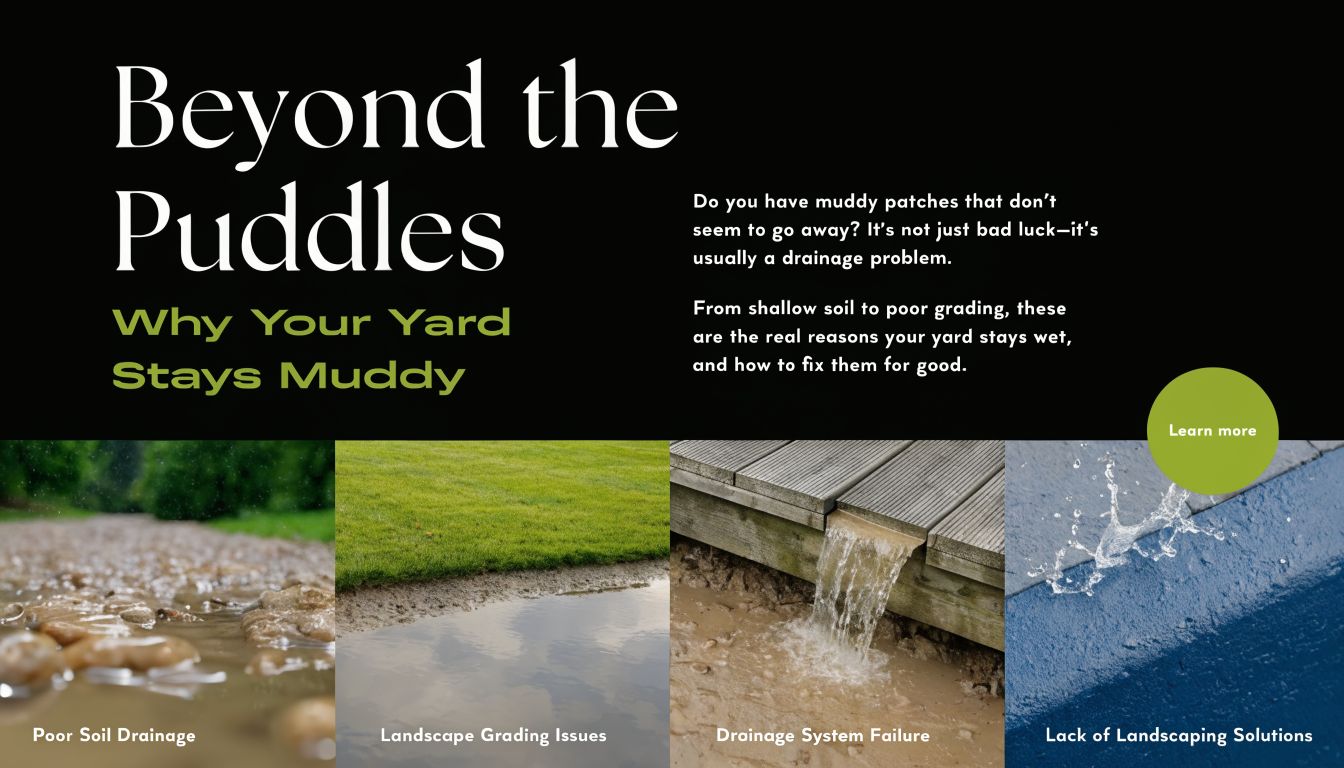
Beyond the Puddles Why Your Yard Stays Muddy
In Jackson, a yard can look fine on Monday, take two inches of rain on Tuesday, and still feel greasy underfoot by Friday. That usually points to a drainage problem below the grass line, not a grass problem.
A muddy yard in West Tennessee usually comes from the same three causes. Heavy clay soil, poor grading, and compaction. On most lots, all three are working together.
Clay is the main local troublemaker. It absorbs water, then seals up and drains slowly. Once it gets saturated, the top few inches stay soft, slick, and easy to rut with foot traffic or mower tires. That is why one wet week in Jackson can leave the same spots muddy over and over, especially in winter and spring when evaporation is slow.
Grade is the next issue to check. A yard does not need a dramatic slope to hold water. I see shallow depressions near patios, settled utility trenches, and fence lines that trap runoff from the whole side yard. Homeowners notice the muddy patch first, but the primary problem is often the way the ground funnels and holds water after every storm.
Compaction makes both problems worse. Dog runs, play areas, mower paths, and gate openings get packed down fast in Tennessee clay. Once that soil tightens up, less water moves through it, roots struggle, and thin turf gives mud an open invitation.
What a muddy Jackson yard usually looks like
Certain patterns show up again and again on local properties:
- Near downspouts: Roof runoff dumps too much water into one small area.
- Along fence gates or dog paths: Repeated traffic packs the soil and wears the grass out.
- At the rear of the lot: Water settles at the lowest point, sometimes with runoff from a neighboring property.
- Beside patios, walks, and driveways: Hard surfaces shed water quickly and overload the lawn edge.
Most muddy yards are not dealing with one isolated flaw. They have a water source, slow soil, and a low or compacted place where that water collects.
Why local soil matters so much
West Tennessee soil changes the fix. Advice that works in sandy parts of the country often falls flat here because Jackson-area clay drains slower, compacts harder, and stays sticky longer after a storm. If you start adding topsoil or seed without correcting that base condition, the yard usually slides right back into the same cycle.
Soil structure matters more than many homeowners expect. If you want a practical primer before you start bringing in compost, sand, or fill, this guide on healthy soil basics for a thriving lawn explains how soil condition affects drainage, root growth, and lawn performance.
One more point. If the mud showed up right after a major storm, look beyond the lawn. Overflow from gutters, washed-out swales, and hidden grading damage can all create new wet spots, which is the same reason property owners sometimes need emergency storm damage repair in Tampa after heavy weather exposes drainage failures fast.
First Response Quick Fixes for Immediate Relief
If you need the yard usable this week, temporary cover works. It won't solve the drainage issue, but it can keep people and pets out of the soup while you decide on a permanent repair.
The key is simple. Cover the mud, spread traffic out, and stop making the soil worse. Don't keep walking directly on saturated spots and expect them to recover on their own.

Fast materials that help today
Use what fits the spot and the time you have.
Wood chips for broad muddy areas
Spread a generous layer over the worst sections, especially under trees, along fence lines, and around play zones. Chips are quick, they improve footing, and they're easy to rake back later. The downside is that they migrate, break down, and can disappear into soft mud if the area stays wet.Straw for bare patches that need light cover
Straw goes down fast and helps reduce splashing. It's useful when you need a short-term surface and don't care much about appearance for a week or two. It can blow around, look messy, and hold moisture if the drainage problem underneath is severe.Pine or cedar shavings in pet zones
Homeowners with dogs often try shavings because they're soft on paws and easy to spread. They can help briefly, but they're still a stopgap. In high-traffic pet areas, those materials usually need refreshing and they won't keep mud from returning if the soil stays saturated.
Temporary paths that keep the mess contained
Avoid attempting to dry the entire lawn simultaneously if the actual issue is that everyone continues to walk across the same soggy path.
- Lay planks or scrap boards from the door to the gate.
- Set stepping stones where traffic naturally wants to go.
- Use stall mats or outdoor rubber mats at the back door where paws and boots hit hardest.
Practical rule: If the ground squishes under your foot, don't “work it in” by walking on it more. Redirect traffic first.
If the mud showed up after a storm and the issue includes runoff, roof drainage, or pooling around structures, it helps to see how restoration contractors think through urgent water problems. This resource on emergency storm damage repair in Tampa is about a different market, but the triage mindset is useful: control active water first, protect the structure second, then repair the site.
What these quick fixes won't do
They won't regrade the yard. They won't change clay into draining soil. They won't pull water away from the foundation. They also won't hold up long in a dog run or side gate that stays wet after every storm.
For standing water that lingers and keeps feeding the muddy spot, this overview of yard solutions for standing water problems helps narrow down whether you're dealing with compaction, runoff concentration, or a drainage path that needs to be built.
Permanent Fix Part 1 Improving Your Soil and Surface
In Jackson and across West Tennessee, a muddy yard usually starts at the surface. Our clay soil seals up fast, especially after winter rain and spring storms, so even a decent drainage system can struggle if the top few inches are compacted, bare, or shaped wrong.
That is why I usually look at the yard in this order. Soil condition first. Surface shape second. Plant cover third.
Start with the soil you actually have
Heavy clay is slow to absorb water. Once it gets packed by foot traffic, mower tires, or repeated dog runs, it sheds water even faster. A thin layer of topsoil spread over hard clay rarely fixes that. It often creates a soft cap over a dense base, which means the yard still stays wet.
A better approach is slower and less flashy, but it works.
- Core aerate compacted areas when the soil is damp enough to pull plugs cleanly.
- Topdress with compost so organic matter drops into those holes and begins improving structure.
- Work in cycles if the yard has been packed for years. One treatment helps, but repeated treatment gets better results.
- Stay off the area afterward so you do not press it right back down.
For homeowners trying to time that work around Tennessee growing seasons, this when to aerate and overseed a lawn resource covers the window when recovery is most realistic.
Compost helps clay over time because it improves aggregation and gives roots a better place to grow. Sand is where homeowners often get into trouble. A little sand mixed into clay can make the surface tighter, not looser, unless you are doing a properly designed root-zone blend. For most Jackson yards, compost is the safer choice.
Use stone where it belongs
Gravel has a job, but that job is not fixing an entire muddy lawn by itself.
Use stone under a path, in a trench, along a drip line that stays slick, or beneath a stabilized pet area. In those spots, gravel helps support the surface and gives water a route through a constructed layer. Scattering gravel over open lawn usually creates a mess you will still fight next season. It sinks, migrates, and makes mowing miserable.
Good stormwater planning always matches the material to the water pattern. This guide for Long Island homeowners is written for a different region, but the core principle carries over. Manage runoff where it lands, where it concentrates, and where the yard is failing.
Regrading fixes the shape of the problem
Some muddy yards stay wet because they are pitched wrong. I see this a lot in newer subdivisions around Jackson where fill dirt settled after construction, and in older yards where years of patching created low pockets that hold water.
Small regrading jobs are reasonable DIY work if the wet area is limited and away from the house. A shallow depression in the lawn, a settled utility trench, or a worn spot near a gate can often be corrected with added soil, light compaction, and reseeding.
Bigger grade problems are different. Bring in help if you see any of these conditions:
- Water draining toward the foundation
- A broad low area that crosses much of the yard
- Runoff entering from a neighboring lot
- Hardscape edges trapping water
- Erosion that keeps cutting through fresh fill
Those jobs affect where water goes after the repair, not just how the yard looks when it dries.
Check the yard during rain, not after it
A dry-day inspection misses too much. Go outside during a steady rain and watch the yard for ten minutes. Look for where water enters, where it picks up speed, and where it stops moving.
That tells you whether you need better soil, a surface correction, or a real drainage system.
If water keeps arriving from uphill ground and collecting in the same low section, the yard does not have a grass problem. It has a water-routing problem.
Plant cover helps hold the improvement
Once the surface drains better, roots help keep it that way. Thick turf reduces splash, slows erosion, and protects the soil from sealing over in every storm. In wet-prone areas, moisture-tolerant ground covers or native plantings often hold up better than forcing standard turf to survive in a bad spot.
Resodding too early is a common mistake. If the yard is still compacted or still draining into a low pocket, the new sod turns into expensive mud.
High-traffic pet areas need a tougher plan
Back door landings, fence runs, and shady side yards take more abuse than the rest of the lawn. In those spots, grass usually fails because the soil stays packed and traffic never lets it recover. The fix is usually a combination of surface support, soil improvement, and a material that can handle repeated use.
Here is the practical version:
| Area type | Usually works | Usually fails |
|---|---|---|
| Back door landing | Stabilized surface, stepping path, drainage correction | Bare soil with fresh seed |
| Fence line run | Permeable surface or reinforced turf over prepared base | New sod alone |
| Shady side yard | Drainage plus resilient ground cover | Repeated mulch only |
| Play corner | Soil amendment plus traffic control | Constant reseeding |
In West Tennessee clay, pet zones often need a harder surface than the rest of the yard. That is not overbuilding. It is matching the repair to the wear.
If you fix the soil, correct the grade, and protect the high-traffic areas, many muddy yards improve without jumping straight to buried pipe. When those steps are not enough, the next layer is drainage infrastructure.
Permanent Fix Part 2 Installing Advanced Drainage Systems
Some Jackson yards stay muddy even after you loosen the soil and correct the obvious low spots. That usually means the problem is bigger than the surface. Water is either moving through the yard from somewhere else, collecting with no outlet, or being forced across patios, driveways, and compacted clay that will not absorb it fast enough.
Different drainage systems handle different failures. A French drain collects water below the surface and carries it to daylight or another approved outlet. A dry well handles a concentrated discharge, usually from roof runoff. A channel drain cuts off sheet flow on hard surfaces before it spreads into the lawn. Permeable pavers solve a different problem. They create a stable surface in spots that stay muddy under repeated traffic, while the stone base below gives water room to move and drain.
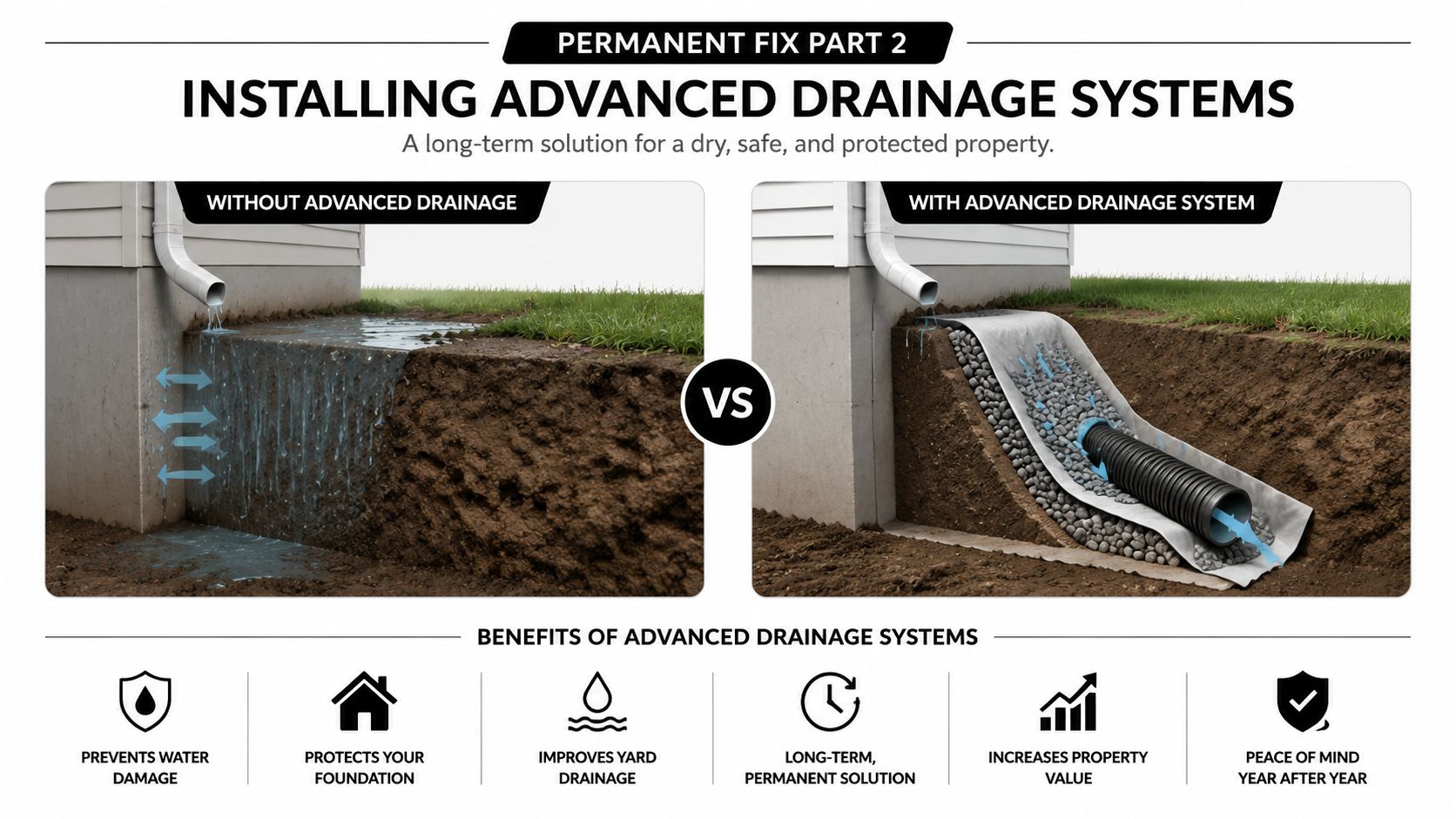
French drains for wet lawns and low spots
In West Tennessee, French drains are often the first buried system that makes sense. Our clay soils hold water near the surface, and a properly built trench gives that water somewhere to go besides your root zone.
The details decide whether it works. Pipe size, gravel, trench depth, slope, fabric, and discharge location all have to fit the site. I have seen plenty of so-called French drains around Jackson that were nothing more than a gravel trench with no real outlet. They looked fine for a month, then filled with silt and stayed wet.
A French drain is a good fit when the yard has one or more of these conditions:
- Lawn edges that stay soft long after the rest of the yard dries
- A low swale that never fully drains
- Water moving downhill through the soil from a neighboring lot
- Soggy bands along fences, retaining edges, or the base of a slope
If you want to see the layout and parts before starting, this walkthrough on how to install a French drain system is a useful reference.
DIY can work on a short, simple run with a clear downhill outlet. It gets risky fast if the trench has to pass near a foundation, tie into downspouts, cross utilities, or discharge near a property line. In those cases, one bad decision can move the water problem instead of solving it.
Dry wells and channel drains solve separate runoff issues
Dry wells are for concentrated water. If one downspout dumps a heavy roof load into the same back corner every storm, a dry well can store and slowly release that volume below grade. They work best where the surrounding soil and stone envelope have enough capacity to disperse the water between storms.
That last part matters in West Tennessee. In dense clay, a dry well can struggle if it is undersized or placed where the water table stays high after repeated rain. A lot of homeowners hear "underground storage" and assume it solves everything. It does not. If runoff arrives faster than the soil can empty the system, the well backs up and the yard goes right back to mud.
Channel drains belong at the surface. Use them where water runs across concrete, pavers, or compacted approaches, such as:
- garage fronts
- patio edges
- walkways at the bottom of a slope
- pool decks
- driveway low points
A channel drain will not fix a broad soggy lawn by itself. It is a collection tool, not a whole-yard drainage plan.
Permeable pavers for muddy traffic lanes
Some problem spots need a usable surface as much as they need drainage. Side gates, shed paths, dog runs, and utility access strips usually fail because traffic keeps kneading wet clay into soup. Grass does not hold there for long, no matter how many times you reseed it.
Permeable pavers or grid systems can be a practical answer if they are installed over the right base. The trade-off is cost and excavation. In our clay soils, the base layer does most of the work, so a shortcut install over bare ground usually settles, pumps mud, or traps water. Done right, these systems hold up well in repeated-use areas and reduce the mess that mulch, loose gravel, or fresh sod cannot handle.
That makes them a good match for:
- Dog runs
- Side yards with daily foot traffic
- Utility access lanes
- Overflow parking edges
- Areas near gates or sheds
For properties around Jackson with more than one issue, such as roof runoff, low grade, and traffic damage in the same area, Lawn & Leaf Solutions handles drainage installation and related yard remediation, including French drains and grading work. That is often the better route when the fix needs excavation, slope calculations, and a discharge plan that will hold up through a wet Tennessee spring.
A drainage system should match the source of the water, the route it takes across the property, and how you need the area to function after the rain.
Comparing Permanent Drainage Solutions
| Solution | Best For | Estimated Cost (Pro Install) | DIY Difficulty | Maintenance |
|---|---|---|---|---|
| French drain | Subsurface water, low spots, consistently soggy lawn edges | Varies by depth, length, outlet, and access | High | Periodic inspection of outlet and flow path |
| Dry well | Concentrated roof runoff or one repeated discharge point | Varies by size, soil conditions, and tie-ins | High | Occasional check for sediment and proper inflow |
| Channel drain | Patios, driveways, garage fronts, hardscape runoff | Varies by linear footage and discharge route | Moderate to high | Debris cleaning at grate level |
| Permeable pavers | High-traffic muddy zones, pet lanes, stable walking or driving surface | Higher initial investment than simple surface fixes | High | Low after proper installation |
For a broader look at runoff control around structures, this guide for Long Island homeowners is useful because it shows how gutters, discharge points, grading, and drainage have to work together. The climate is different, but the planning principle applies here too.
Budgeting Your Fix Cost Estimates for a Mud-Free Yard
A muddy yard in Jackson usually turns expensive when the first fix does not match the actual cause. I see homeowners spend a little on straw, a load of gravel, or a few bags of topsoil, then spend again after the next hard rain because the yard still holds water. West Tennessee clay is the reason a lot of those quick fixes fail. It seals up, sheds water slowly, and stays slick long after the storm passes.
Budget the work by problem type, not by product. Covering a churned-up dog run is a surface fix. Correcting a low side yard that traps runoff is site work. Installing drainage to move water off the property in a controlled way is a different class of job with different labor, equipment, and risk.
Three cost tiers that actually help you plan
Use these buckets when you price the job:
- Surface relief: mulch, wood chips, stepping paths, small stabilized traffic areas
- Soil and grade correction: core aeration, compost incorporation, adding soil, reshaping shallow dips
- Drainage work: trenching, pipe, catch basins, rock, outlet work, and cleanup afterward
That distinction matters because material cost is only part of the bill. In muddy clay, labor often drives the total. Digging, hauling spoil, protecting existing turf, and getting fall right on a drain line take time.
Permeable surfaces can still make sense in high-traffic spots like a gate, trash can path, or the stretch beside the driveway where people cut across every day. The trade-off is simple. The upfront cost is higher because the base prep has to be right, especially on our heavier soils, but the area usually holds up better than repeated patching with loose material.
Where DIY saves money, and where it usually wastes it
DIY is reasonable when you can afford a cosmetic result or when the area is small enough that a mistake is easy to correct.
Good DIY candidates
- A worn footpath
- Mud around a hose bib or gate
- Light topdressing after aeration
- Filling one shallow depression in the yard, away from structures
Jobs that usually justify professional pricing
- Any grading near the house
- A soggy area fed by downspouts or concentrated runoff
- Long trenches that need steady slope
- Erosion, washouts, or repeat failures in the same spot
That line is important in West Tennessee. A yard can look like it just needs fill dirt, but if the subsoil is tight clay and the water has nowhere to go, added soil often turns into a raised muddy spot.
If you want a better handle on grading scope before calling around, this guide to estimate yard grading square foot costs is useful for framing questions about access, finish work, and how much reshaping the yard may need. For drainage budgeting, Lawn & Leaf Solutions also breaks down the main price drivers in its guide to the cost of French drain installation, including length, digging conditions, and discharge setup.
A practical budget starts with the cheapest fix that has a real chance of working. In a small, isolated muddy patch, that might be enough. In a yard with standing water after every spring storm, paying for the correct fix first is usually the cheaper path.
When to Call the Pros The Lawn & Leaf Solutions Difference
Some muddy yards are annoying. Some are risky. Knowing the difference saves money and prevents bad fixes.
If the problem is a worn patch by the grill, you can probably handle it. If the problem involves structure, neighboring property, recurring erosion, or failed drainage attempts, that's when professional work stops being optional and starts being protective.
Red flags that mean stop digging
Use this checklist.
Water is collecting near the house
Saturated soil near a foundation can lead to movement, seepage, and damage that's far more expensive than the yard repair itself.Your fix would send water onto someone else's property
A trench or grade change that solves your mud by creating their mud is not a real solution.The yard is eroding, washing out, or forming voids
Once soil starts moving, the job usually needs more than a cosmetic patch.The same area has failed after multiple DIY attempts
If seed, mulch, and fill keep disappearing, the diagnosis is probably wrong or incomplete.You need equipment or layout precision
Long trenches, outlet planning, and grade corrections require accurate elevations, not guesswork by eye.
The biggest DIY mistake isn't effort. It's moving water without knowing where that water should end up.
What professional help changes
A pro should do more than install a product. They should identify the water source, confirm the fall, choose the right system, and build it so the yard still works when it's dry.
That's where local knowledge matters. West Tennessee clay behaves differently from sandy soils, and the same rain event that dries out fast in another region can sit here and turn a side yard into a rut. A contractor who works those conditions regularly is less likely to prescribe surface-only fixes for a below-grade problem.
Lawn & Leaf Solutions has over 18 years of hands-on experience serving Jackson and West Tennessee and operates under License # TNPL23317. For homeowners deciding whether to keep patching the same muddy area or solve the drainage issue underneath it, that kind of drainage-focused field experience matters.
A simple decision line
Handle it yourself if the problem is small, isolated, and clearly caused by traffic or a shallow low spot.
Call a pro if the water threatens the house, crosses property lines, causes erosion, or keeps returning after you've already tried the basic fixes.
Your Lingering Muddy Yard Questions Answered
Will new sod fix a muddy yard
Usually no. Sod covers the symptom fast, but if the soil stays saturated or the yard is graded wrong, the sod struggles and the mud comes back. Fix the water pattern first, then install sod.
Can I just add sand to clay soil
Not as a blanket fix. In many yards, random sand addition creates a tighter, less workable surface instead of a better one. Compost, aeration, and designed drainage are safer bets than guessing with sand.
How long does a proper drainage repair last
That depends on the system, the outlet, and whether the installation matches the site. Properly maintained French drains can last 20 to 30 years when built with gravel backfill and geotextile fabric, according to the drainage summary referenced earlier on French drain performance and lifespan.
Are French drains hard to maintain
Not usually, if they're installed correctly and have a valid discharge point. The main maintenance item is checking that the outlet stays clear and water can still leave the system.
What about muddy yards with dogs
Those need a tougher plan than a normal lawn area. High-traffic pet zones often do better with a combination of drainage correction and a stabilized surface, especially near gates, along fences, and outside the back door.
Is there a best season to fix yard drainage
The best time is when the ground is workable and the problem can still be observed clearly. Don't wait for the driest stretch of the year if you can't tell where the water travels. Diagnosis is easier when the issue is visible.
What's the biggest mistake homeowners make
They treat all mud like a surface problem. Sometimes it is. Often it's a grading or drainage problem wearing a lawn mask.
If your yard in Jackson or West Tennessee stays muddy after every rain, Lawn & Leaf Solutions can help you figure out whether you need soil improvement, regrading, drainage installation, or a combination of all three. The company provides fast, transparent estimates and practical recommendations based on what the water does on your property.