
A West Tennessee downpour stops, the sky clears, and your yard still looks like the rain never left. Water sits in the lawn. Beds stay slick for days. The mower leaves ruts, and the same low spot keeps turning into a shallow pond. If that sounds familiar, the problem usually isn't just the weather. It's the soil under your feet.
Clay soil holds a lot of good things for plants, but drainage usually isn't one of them. The fix also isn't one-size-fits-all. Some yards need better soil structure. Some need grading. Some need a real drainage system because the water has nowhere else to go. Knowing which problem you have is what keeps you from wasting time and money on the wrong fix.
Why Your Yard Stays Wet After It Rains
If your lawn stays soggy long after the storm passes, heavy clay is usually the reason. Clay particles are extremely small, and they pack together tightly. That means water moves through the soil slowly, air can't circulate well, and roots struggle in the same places where puddles keep forming.
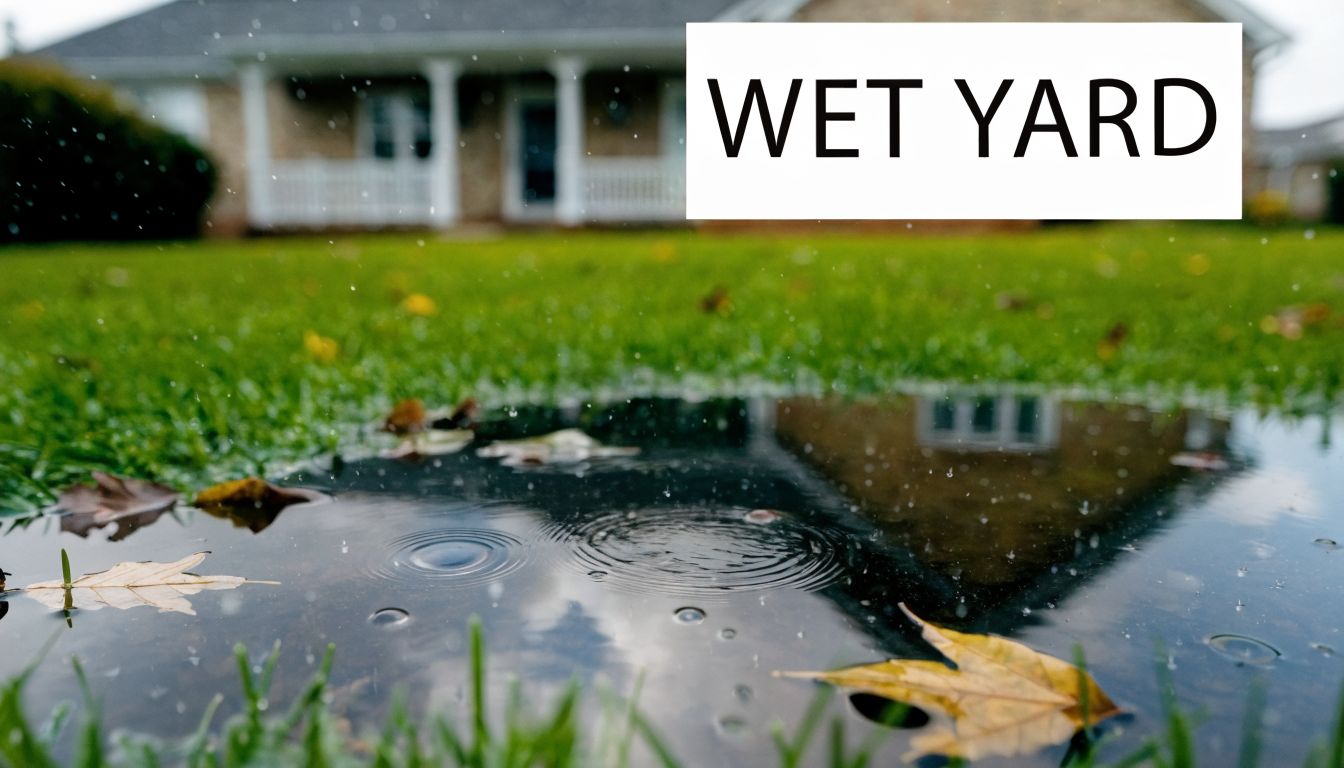
In Jackson and across West Tennessee, that often shows up the same way. The yard looks fine during a dry stretch, then one hard rain exposes everything. Water collects near downspouts, lawns stay soft underfoot, and beds near the house hold moisture longer than they should. If water starts moving toward the foundation or creeping into a crawl space or basement, it's worth reading Restore Heroes' water damage guide so you know what to do on the indoor side while you solve the outdoor cause.
What clay drainage problems usually look like
A clay-heavy yard rarely fails in just one way. Most homeowners notice a mix of these issues:
- Standing water in open lawn areas after normal rainfall
- Mushy turf that tears up when you walk or mow
- Beds that stay saturated while nearby surfaces dry out
- Water collecting near the house instead of moving away
- Thin or stressed grass in the same wet zones over and over
If that's what you're seeing, this overview of standing water in yard solutions can help you match the symptom to the right type of fix.
Wet yards don't always need a full drainage system. But they always need the real cause identified first.
Why rain alone isn't the whole story
Rain exposes the issue. It usually doesn't create it. In most problem yards, one or more of these conditions are already in place:
- Compacted soil from construction, foot traffic, or mowing when the ground is wet
- Flat grading that gives water nowhere to travel
- Low spots that collect runoff from higher parts of the yard
- Dense clay subsoil under a thin layer of topsoil
That's why learning how to improve clay soil drainage starts with diagnosis, not guessing. Good drainage is possible, but the path depends on whether your problem is surface water, soil structure, trapped subsurface water, or a combination of all three.
First Steps Diagnosing Your Drainage Problem
Before you add compost, rent equipment, or dig a trench, check what your yard does during and after rain. Two simple tests tell you a lot. One shows how water moves into the soil. The other shows how water moves across the surface.
Run a simple percolation check
Pick the area that stays wet the longest. Dig a hole and fill it with water. Then watch how quickly that water disappears.
Here's what to pay attention to:
- Choose the right spot. Use the soggiest part of the yard, not the high side that already drains better.
- Dig below the surface layer. You want to test the soil where roots and water are interacting, not just the grass canopy.
- Fill the hole and observe. If the water drops steadily, the soil may just be surface-compacted. If it lingers for a long time, the issue is deeper.
- Repeat after another rain event. One test can mislead you if the soil was unusually dry or already saturated.
This doesn't need to be lab-precise to be useful. You're looking for a pattern. Fast movement points toward grading or runoff issues. Slow movement points toward clay structure, compaction, or both.
Watch the yard during real rainfall
This is a frequently skipped step, and it's often the most revealing. Go outside during a moderate rain and trace where the water comes from, where it gathers, and where it stops.
Look for these clues:
- Water coming off a driveway or patio into the lawn
- Downspouts dumping into one area
- Runoff from a neighbor's property entering your lot
- Low areas that fill first
- Spots where water should exit but doesn't
A puddle isn't always the source of the problem. It's often the place where water finally gets trapped.
One of the most useful things a homeowner can do is sketch the flow. Mark the house, downspouts, hard surfaces, low spots, and the area that stays wet the longest. That rough map makes the next step much easier, whether you're tackling it yourself or talking with a contractor.
Separate soil trouble from grading trouble
Use this quick comparison to narrow it down:
| Sign you see | What it usually suggests |
|---|---|
| Water ponds across a broad flat lawn | Compaction, clay soil, or both |
| Water races downhill and erodes mulch | Surface runoff and grading issues |
| One low area stays wet no matter the weather pattern | Basin effect or trapped subsurface water |
| Water builds near the house | Grade problem, roof runoff issue, or blocked drainage path |
If you want a deeper walkthrough of how pros assess these issues, this guide to lawn drainage diagnosis is a good next read.
Know when the problem is bigger than DIY
Some signs mean you shouldn't keep experimenting:
- Water sits near the foundation
- The same area stays saturated after every rain
- Grass keeps failing in one section
- You see erosion, washouts, or exposed roots
- A previous fix already failed
At that point, the smartest move is to stop treating symptoms and identify the water path. That's how you avoid repeating the same repair every season.
Improving Clay Soil from the Ground Up
The most common mistake with clay soil is adding sand and expecting it to loosen things up. In practice, that usually makes the problem worse. Soil science guidance notes that meaningful improvement from sand requires 50 to 60% sand by volume, and adding less can cause clay to bind around the sand and create a dense, concrete-like mix. The same guidance notes that annual applications of 2 to 4 inches of organic matter can increase pore space by 20 to 30% over 3 to 5 years, and gypsum at 50 to 100 pounds per 1,000 square feet can improve internal drainage by 15 to 20% in sodic Mid-South clays (University of Illinois Extension).
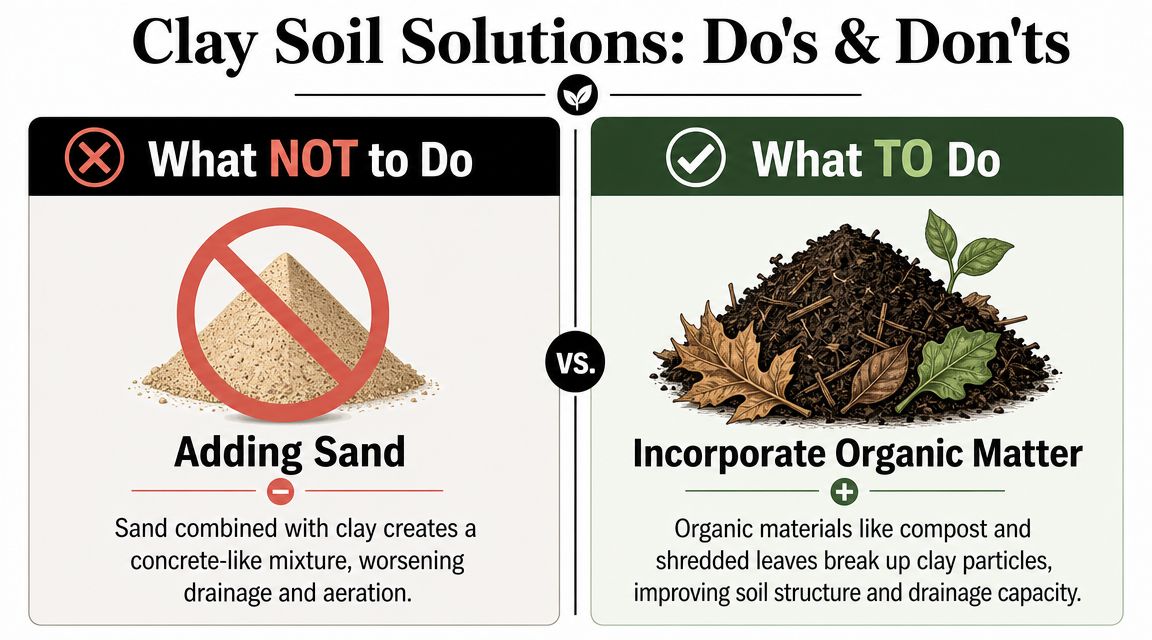
Stop adding sand to heavy clay
This myth has been around for years because it sounds logical. Sand seems coarse. Clay seems dense. Mix them together and drainage should improve. But unless you're replacing a huge portion of the soil, that isn't what happens.
What usually happens instead:
- Small sand additions fill space unevenly
- Clay binds around the grains
- The soil tightens instead of opening
- Water movement gets worse, not better
If you're turning a bed by hand, a compact cordless tool can help with light mixing in the top layer. Something like this cordless Ryobi cultivator tool is useful for shallow prep work, but the tool isn't the solution by itself. What you mix into the soil matters more than the machine doing the mixing.
What actually improves clay structure
Organic matter is the long-game fix because it changes how clay behaves. Compost, aged leaf material, and other organic inputs help clay particles clump into larger aggregates. That opens pathways for water and air.
A practical approach looks like this:
- Use compost generously. Work organic matter into planting areas and topdress lawns over time.
- Repeat yearly. Clay doesn't become ideal after one weekend of work.
- Avoid overworking wet soil. If you till or rake when it's sticky, you can smear and compact it more.
- Keep feeding the soil. Leaves, compost, and root activity all help build better structure.
For broader soil-health basics, this article on the science of healthy soil explains why structure matters as much as nutrients.
Practical rule: If the soil sticks to your boots and tools in thick slabs, wait. Working clay when it's too wet often sets you back.
Where gypsum fits and where it doesn't
Gypsum can help certain clay soils, especially where sodium is part of the problem. It isn't a universal cure. When it fits the site, it helps clay particles flocculate, which improves internal movement of water.
Use gypsum thoughtfully:
- Apply it where soil conditions support it. It's most useful in the right type of clay, not every clay yard by default.
- Pair it with organic matter. Gypsum and compost do different jobs, and they work better together than either does alone.
- Don't expect a one-time miracle. Clay improvement is usually gradual.
Core aeration helps the top layer breathe
For lawns, core aeration is one of the most practical ways to start improving drainage. It doesn't solve every drainage problem, but it creates openings that let air, moisture, and amendments move deeper into the root zone.
A few field-tested guidelines:
- Aerate when the soil is moist, not saturated
- Topdress after aeration so compost can settle into the holes
- Repeat as needed because compacted clay tends to close back up over time
- Stay off the lawn when it's soaked so you don't undo the work
For yards in Jackson and nearby areas, Lawn & Leaf Solutions handles this kind of soil-structure work alongside drainage corrections when the problem isn't just at the surface.
Smart Surface Solutions for Managing Water Flow
Some yards don't need the soil changed first. They need the water told where to go. That's a different problem, and it calls for surface solutions that guide runoff instead of waiting for the ground to absorb everything.
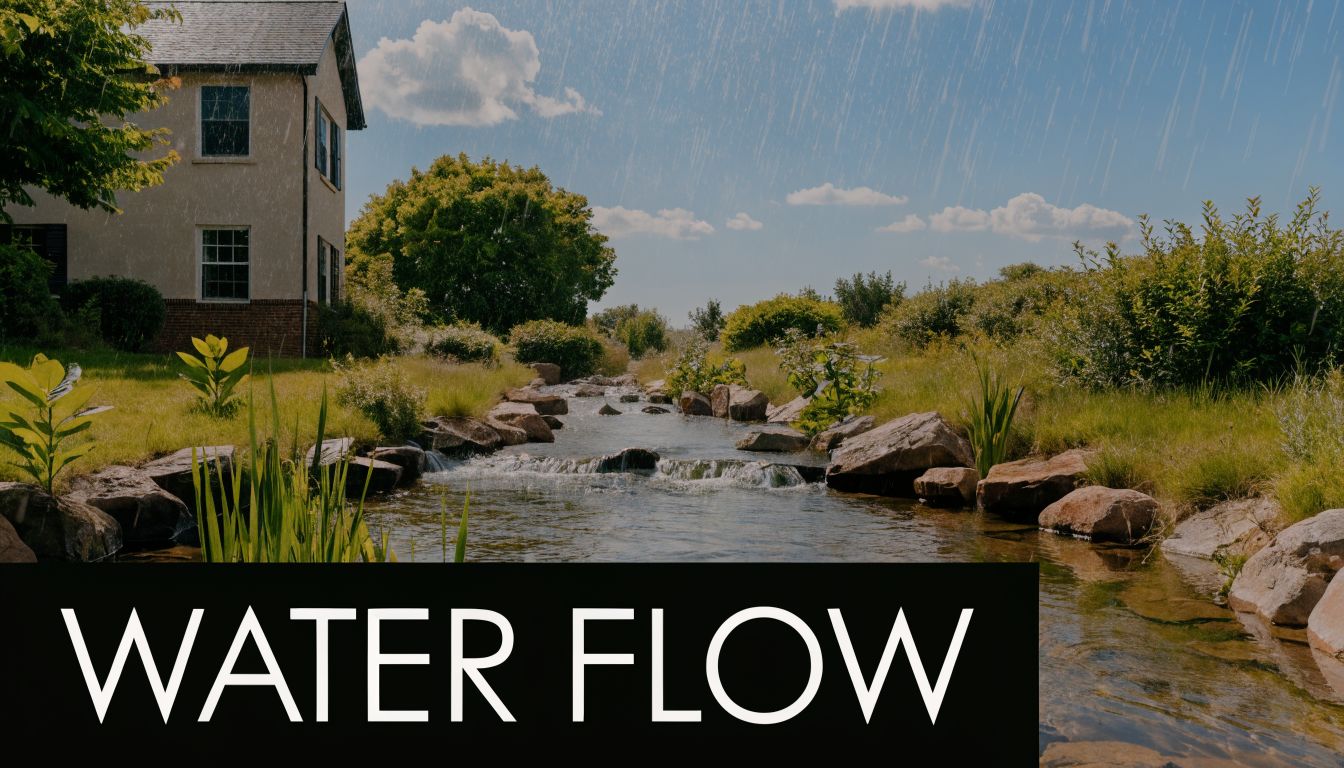
A common West Tennessee setup is a backyard that looks mostly flat but still has subtle fall from one corner to another. Water sheets off the patio, drifts through the lawn, and settles along the fence or near a bed line. In that case, trying to solve everything with amendments can be slow and frustrating. A better approach is often to reshape the surface and let gravity help.
Raised beds get roots above the problem
Raised beds are one of the cleanest fixes for planting areas that stay wet. Instead of forcing roots to live in slow-draining clay, you lift them above it.
Raised beds work well when:
- You want vegetables, herbs, or shrubs to establish quickly
- The native soil stays wet in spring
- You need more control over soil quality
- One area fails repeatedly while the rest of the yard is manageable
The guidance commonly used for clay sites is raised beds about 8 to 12 inches high, which gives roots a better environment above the dense soil layer.
Grading solves problems people often blame on soil
I've seen plenty of yards where the soil got all the blame, but the primary issue was the shape of the ground. A subtle dip near the house, a flat side yard, or a swale that was never finished after construction can hold water even if the soil improves.
A proper grade should move water away from structures and toward a safe outlet. This guide on grading a yard for drainage shows what that looks like in practical terms.
Rain gardens and swales can look intentional
The best surface drainage work doesn't have to look like drainage work. A shallow swale can read like a garden feature. A rain garden can turn a wet corner into a planted focal point instead of a dead patch of lawn.
Here's where they make sense:
| Surface solution | Best use |
|---|---|
| Raised bed | Wet planting areas and garden zones |
| Regrading | Water moving toward the house or stalling in flat areas |
| Swale | Redirecting surface runoff across the yard |
| Rain garden | Capturing runoff in a designated planted basin |
If water has a visible path every time it rains, give that path shape instead of fighting it at random points.
These solutions work especially well when the yard has a recurring pattern. The same wet zone, the same runoff line, the same overflow after every storm. Once that pattern is obvious, design becomes part of the fix.
When to Bring in Heavy Equipment for Engineered Drainage
There comes a point where compost, aeration, and minor grading aren't enough. If water is trapped below the surface, if runoff has no reliable outlet, or if the ground around the house stays saturated, you need a system that moves water on purpose.
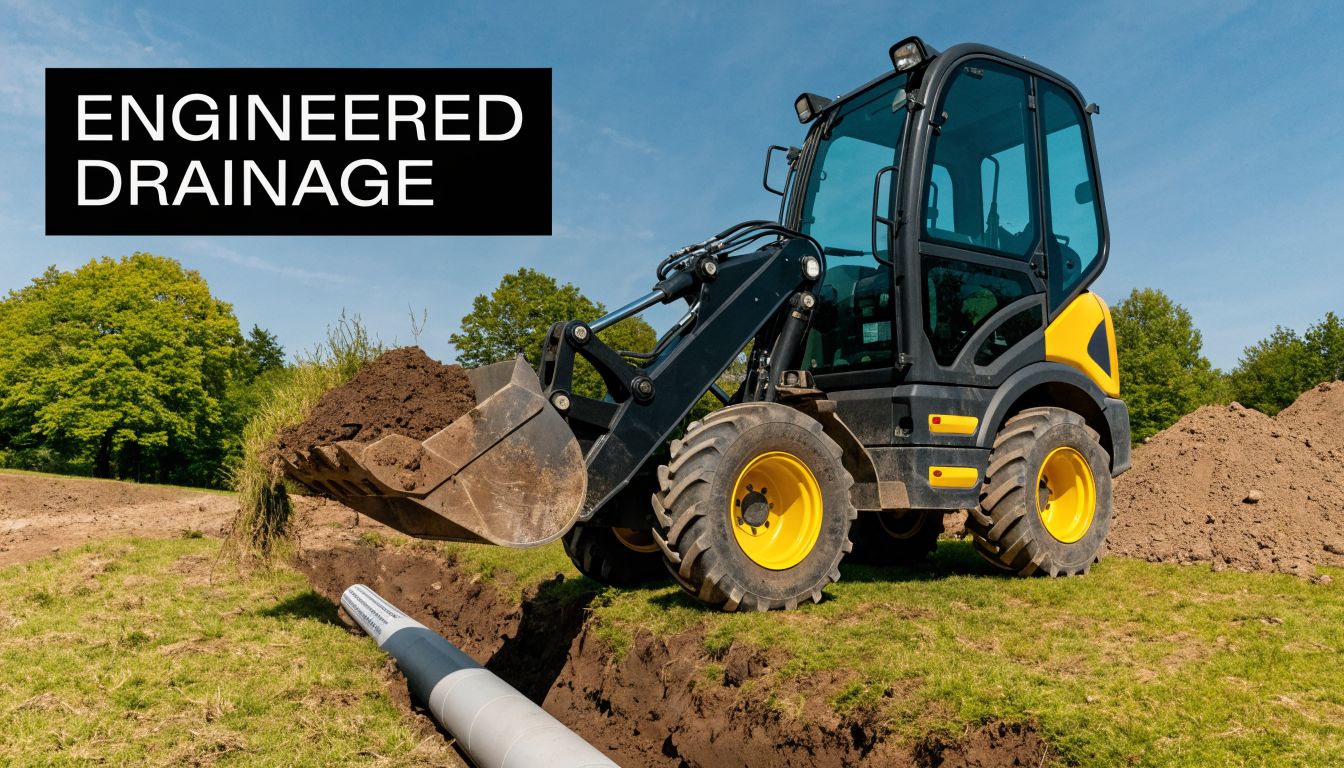
Often, homeowners waste time. They keep trying another topdressing, another load of soil, another weekend of hand digging. Meanwhile, the underlying problem is hydraulic. Water enters the yard faster than the site can absorb or release it.
French drains for subsurface water
A French drain is the workhorse solution when water is moving through or sitting in the soil below the surface. The system intercepts that water and redirects it to an outlet.
French drains are usually the right conversation when:
- A lawn stays wet even after the surface dries
- Water shows up at the base of a slope
- The side yard stays muddy for long stretches
- Moisture is collecting near a foundation
This overview of how to install a French drain system gives a clear picture of what the system does and why layout matters so much.
Channel drains for hard surfaces
Channel drains are different. They don't collect underground moisture. They catch fast-moving surface water on paved areas like driveways, patios, and garage approaches.
They make sense when:
- Water rushes across concrete
- A driveway channels runoff toward the house
- A patio edge floods before the lawn does
- You need to intercept water before it reaches a structure
These systems have to be placed exactly where water concentrates. If they're off by even a little, water will bypass them.
Sump pumps for low spots with no gravity outlet
Some properties have a harder problem. Water collects in a low area, but there isn't enough fall on the lot to drain it by gravity. That's when an outdoor sump system may be the right answer.
A sump pump becomes part of the conversation when:
- The property is bowl-shaped
- The outlet location sits higher than the wet area
- The yard holds water with nowhere natural to discharge
- A gravity drain would be too shallow or impossible to route
If water can't leave by slope, the system has to move it mechanically.
Why engineered drainage often lasts longer
One reason these systems matter is durability. Soil amendments help, but they need maintenance. Guidance summarized from University of Maryland Extension and a 2023 study notes that organic matter requires annual reapplication, and gypsum improvements in sodic clays may last only 2 to 3 years (drainage amendment summary).
That doesn't make soil improvement unimportant. It means severe drainage problems usually need infrastructure, not just repeated amendment. If water threatens pavement, turf stability, or the foundation, engineered drainage is usually the more reliable long-term fix.
Choosing Plants and Maintaining Your Drier Yard
Once the drainage problem is under control, the next step is keeping the yard from sliding backward. Clay soil improves when roots, organic matter, and smart timing all work together. It gets worse when the ground is left bare, compacted, or neglected through the wet season.
Choose plants that help the site
The best plant choice depends on what part of the yard you're working with. In persistently damp areas, use plants that tolerate periodic wetness instead of forcing drought-loving material into a bad location. In transitional areas, favor plants with strong, penetrating root systems that help open the soil over time.
A few practical rules help:
- Match the plant to the moisture zone instead of trying to make every bed uniformly dry
- Use deeper-rooted selections where you want long-term soil improvement
- Mulch planting areas to buffer moisture swings and protect structure
- Don't crowd the bed so air can move and the surface can dry between rains
Follow a seasonal routine in West Tennessee
Season matters with clay. Verified guidance for West Tennessee notes that winter freeze-thaw cycles can reduce percolation by 40%, and that planting daikon radish in September or October can increase macropores by 30%. The same guidance recommends combining that with annual aeration and a 2 to 4 inch layer of mulch for long-term drainage retention (regional clay drainage guidance).
That gives homeowners a workable yearly rhythm:
| Season | What to do |
|---|---|
| Spring | Check for compaction, clean drain outlets, aerate if conditions are right |
| Summer | Avoid heavy traffic on wet areas, watch for new low spots or erosion |
| Fall | Plant daikon radish in problem beds or garden zones, refresh mulch |
| Winter | Monitor runoff paths and fix blockages before the next heavy rain cycle |
Good drainage isn't a one-time project. It becomes part of how you manage the yard through the year.
Keep the gains you made
Maintenance doesn't have to be complicated, but it does need consistency.
- Clear outlets and drain ends before leaves and debris build up
- Refresh mulch where it has washed thin
- Avoid parking or repeated traffic on soft ground
- Watch how water behaves after major storms, not just average ones
If the yard drains well now, protect that progress. Most backsliding happens because the system gets blocked, the surface gets compacted again, or runoff patterns change after new landscaping or construction nearby.
Your Partner for a Dry Yard in West Tennessee
Most drainage problems don't need guesswork. They need the right level of fix. Sometimes that's better soil structure and annual maintenance. Sometimes it's regrading, a raised bed, or redirecting runoff. Sometimes it's a French drain, channel drain, or sump pump because the water problem is bigger than the soil.
If you've tried the basic fixes and the yard still stays wet, it's time to stop experimenting. The same goes for water near the foundation, repeated flooding in one section, erosion, or turf that never recovers because the root zone stays saturated.
Homeowners and property managers in Jackson and across West Tennessee need solutions that fit local clay, local rainfall patterns, and the way the property is laid out. Lawn & Leaf Solutions brings 18+ years of hands-on experience and License #TNPL23317 to that work, with drainage and property design plans built around the site instead of a one-size-fits-all script. The company also brings 5-star reviews and offers fast, free estimates for properties that need a clear path forward.
If your yard stays soggy after every storm, water is creeping toward the house, or past DIY fixes haven't held up, contact Lawn & Leaf Solutions for a fast, free estimate and a practical plan for getting your West Tennessee property dry and usable again.