
A lot of West Tennessee homeowners are in the same spot right now. The lawn looked decent for a few weeks, then the color faded, weeds started filling thin areas, and that expensive fertilizer bag didn’t do what the label seemed to promise.
That usually isn’t because the grass is hopeless. It’s because southern lawns don’t respond well to guesswork.
In Jackson and across West Tennessee, you’re dealing with warm-season turf, hard summer heat, clay-heavy ground in some neighborhoods, sandier soil in others, and drainage problems that can undo a perfectly good fertilizer plan. A lawn can be hungry, but it can also be too acidic, too compacted, or too wet to use what you put down.
A good-looking lawn comes from a system. Grass type, soil pH, drainage, fertilizer choice, timing, and application all have to work together. If one part is off, the whole thing underperforms.
Your Guide to a Greener Southern Lawn
If you’ve been standing in the fertilizer aisle staring at bags with big promises and confusing numbers, you’re not alone. Most homeowners get sold the idea that the best fertilizer for southern lawns is a single product. It isn’t.
What works in West Tennessee depends on what’s under your feet. Bermudagrass, zoysia, and St. Augustine all feed differently. A yard that stays soggy after every storm needs a different plan than a yard that dries out fast. And if your soil pH is off, even a quality fertilizer won’t perform the way it should.
That’s why the best results come from starting with the lawn itself, not the marketing on the bag. You identify the grass. You test the soil. You look at how water moves across the property. Then you match the fertilizer to the lawn’s actual condition and the season it’s in.
That approach is slower than grabbing the most popular bag at the store. It’s also how you stop wasting money and start getting results that last.
If you want a local view of how that works in practice, this guide from West Tennessee lawn care professionals is useful because it reflects the turf and weather conditions homeowners around Jackson deal with.
A greener lawn usually isn’t one product away. It’s one better plan away.
Start with Your Soil Not the Store
The first decision isn’t what fertilizer to buy. The first decision is whether you actually know what your soil and grass need.
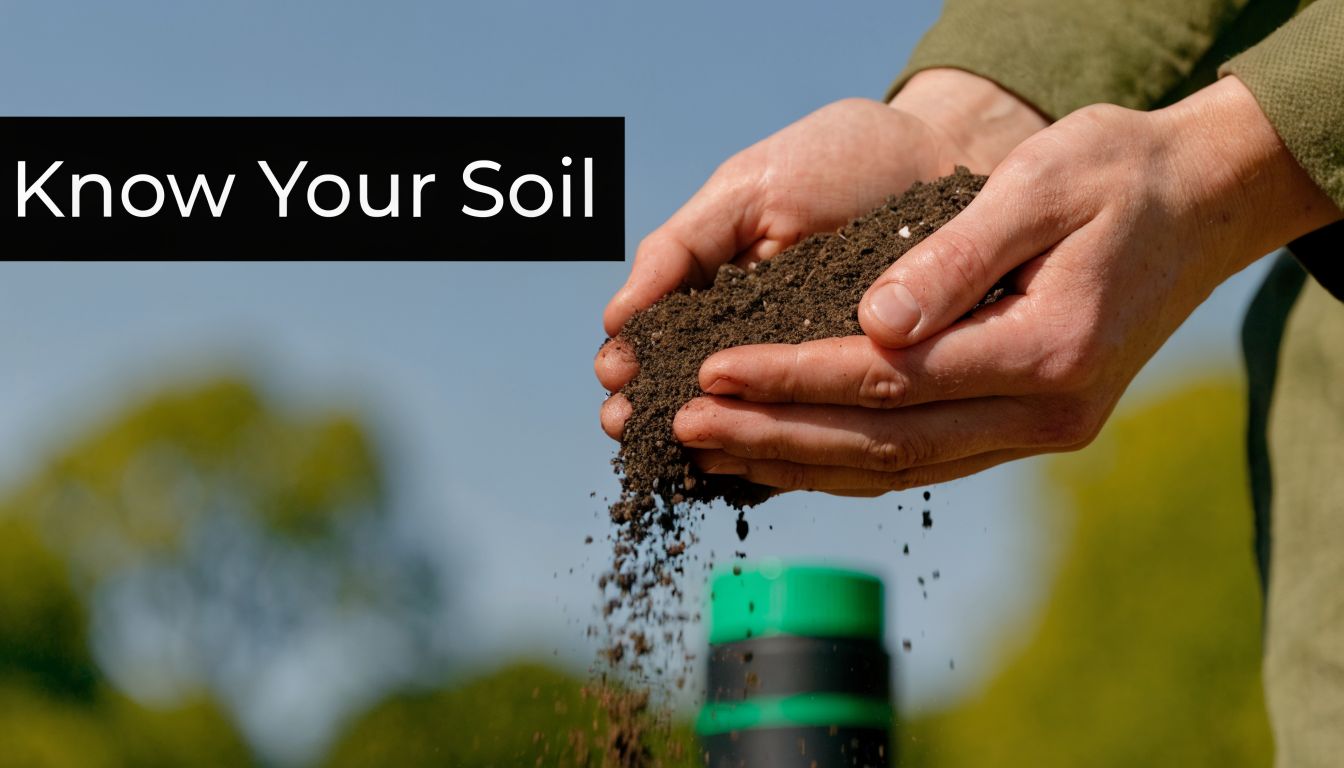
In West Tennessee, most residential lawns are some mix of Bermudagrass, zoysia, and occasionally St. Augustine in the right microclimates. Each one behaves differently.
Know which grass you have
Bermuda is aggressive, sun-loving, and responds well when it’s fed at the right time. It fills in fast, but it also shows mistakes fast. Push it too early, and you can create weak growth.
Zoysia is denser and slower. It can make a beautiful lawn, but it won’t forgive impatience. Overfeeding often creates more mowing and stress than benefit.
St. Augustine wants a balanced approach and does best when its root zone and moisture are managed correctly. It can look great in southern conditions, but it doesn’t like being treated like Bermuda.
If you don’t know your grass type, every fertilizer choice after that is a guess.
Why soil testing matters more than most homeowners think
A soil test tells you what the lawn can use. It gives you a read on pH and nutrient levels, and that changes everything. If the pH is off, you can apply a good fertilizer and still get poor color, shallow rooting, and weak growth.
That’s common here. UGA-based guidance summarized by Lawn Love warns that southern soils, especially sandy types common in West Tennessee, often have low pH. The same source notes that applying high-nitrogen fertilizer without testing can lead to weak roots and disease, and that 40% of southern lawns over-fertilize nitrogen.
That number tracks with what a lot of yards look like in spring. Homeowners often assume yellow grass means “add more nitrogen,” when the issue is poor soil chemistry, compaction, or drainage.
Practical rule: If you haven’t tested your soil, you don’t have a fertilizer plan. You have a fertilizer guess.
pH is the gatekeeper
Think of pH as the switchboard for nutrient uptake. Your fertilizer bag might contain what the lawn needs, but if the soil chemistry is wrong, the grass can’t efficiently access those nutrients.
That’s why lime sometimes helps a lawn more than another feeding. The problem wasn’t always “not enough fertilizer.” Sometimes the ground wasn’t in a condition to use it well.
A lot of homeowners skip this because soil testing sounds technical. It isn’t. It’s one of the simplest ways to stop wasting product and start treating the actual problem.
For a deeper look at what healthy ground should look like before you fertilize, this article on building better lawn soil in Tennessee is worth reading.
Don’t ignore drainage while you’re thinking about fertilizer
This is the part most generic lawn guides miss. Fertilizer choice only matters if the root zone stays functional.
In West Tennessee, some yards hold water because of clay, grading, or compacted subsoil. Others shed water too fast off a slope. In both cases, the fertilizer program can underperform because the soil environment is wrong.
That same principle shows up even in very different climates. A solid piece on desert soil preparation for planting makes the broader point well. Healthy growth starts with preparing the ground for the plant, not just feeding the plant afterward. Different region, same lesson.
Before you buy a bag, do these things first:
- Identify the grass: Bermuda, zoysia, or St. Augustine need different feeding strategies.
- Test the soil: Especially if the lawn stays pale, patchy, or inconsistent year after year.
- Check the drainage: Standing water, mushy spots, and runoff patterns matter.
- Read the site: Full sun, tree shade, slope, and compacted traffic areas all change how fertilizer performs.
The best fertilizer for southern lawns starts with the ground it lands on.
Decoding the Fertilizer Bag What NPK Numbers Mean
Most fertilizer bags confuse people because they assume you already know what the numbers mean. Once you understand them, the label gets a lot less intimidating.
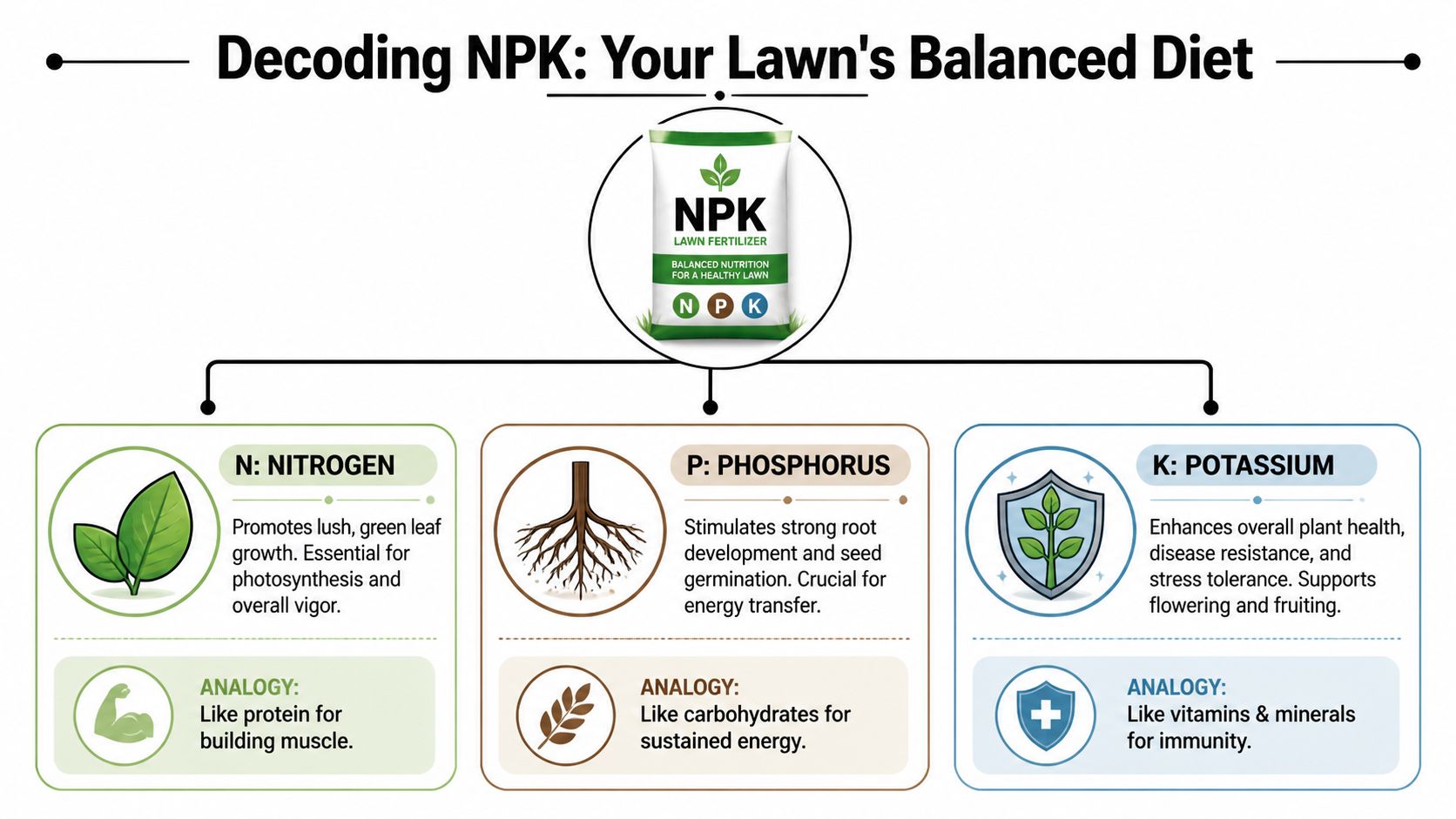
Think of NPK like a balanced meal for your lawn.
N is for top growth
Nitrogen drives green color and blade growth. It’s the part homeowners usually notice first because it makes turf look lush fast.
If your lawn is actively growing and healthy enough to use it, nitrogen can wake it up. If the soil is off or the timing is wrong, too much nitrogen creates soft growth that looks good briefly and then struggles.
P is for roots
Phosphorus helps with root development and establishment. It matters most when turf is coming out of dormancy, recovering, or trying to build a stronger foundation below the surface.
That’s why phosphorus-heavy blends can make sense in certain spring situations, especially for Bermudagrass.
K is for toughness
Potassium supports overall plant health. It helps turf handle stress better, including heat and general wear.
It doesn’t create the flashy color response nitrogen does, but lawns with enough potassium usually hold up better when summer gets rough.
If nitrogen makes a lawn look better fast, potassium helps it hold together when conditions stop being easy.
What a bag like 16-4-8 is telling you
A 16-4-8 fertilizer is a balanced southern lawn blend and a common recommendation for warm-season grass. According to this Florida fertilization guide, applying 16-4-8 to deliver 1 lb of nitrogen per 1,000 sq ft, with at least 40% slow-release nitrogen, can reduce nutrient runoff by up to 50% and increase turf density by 20-30%.
That’s why you’ll see experienced lawn people favor balanced products over flashy high-nitrogen bags for many southern lawns. A balanced formula gives growth, rooting support, and stress help in one pass.
Read past the front label
The front of the bag sells the dream. The fine print tells you whether the product fits your lawn.
Check for:
- The NPK ratio: That tells you the fertilizer’s job.
- Slow-release nitrogen content: This matters in warm weather and in lawns prone to runoff.
- Application rate: The right product applied wrong still gives poor results.
- Grass compatibility: Some blends are better fits for Bermuda than St. Augustine or zoysia.
Once you can read the numbers, you stop shopping by slogan. You start buying by purpose.
Your Year-Round Fertilization Schedule for West Tennessee
Timing matters as much as product choice. Warm-season grass in West Tennessee should be fed around active growth, not hope, not habit, and definitely not the first warm weekend in late winter.
A simple schedule works better than a complicated one, as long as it respects grass type and soil conditions.
The quick-reference schedule
| Season | Timing | Goal | Ideal N-P-K Ratio | Example Fertilizer |
|---|---|---|---|---|
| Early spring | After full green-up and after frost risk | Root development and steady wake-up | 16-25-12 for Bermudagrass | 16-25-12 with MESA |
| Late spring to early summer | Active growth period | Color, density, and sustained feeding | 16-4-8 | Slow-release 16-4-8 |
| Fall | As growth slows but before dormancy fully sets in | Maintain health without pushing tender growth | Lower-nitrogen, stress-support approach based on lawn condition | Product chosen from soil test and grass response |
Early spring for Bermuda
Many lawns get pushed too soon. Homeowners see a little green and start feeding. If the grass isn’t fully out of dormancy, that fertilizer isn’t doing what they think it is.
For Bermudagrass, spring is the one time a more root-focused fertilizer makes a lot of sense. Carolina Fresh Farms notes that 16-25-12 with MESA is an optimal spring choice for Bermuda, and that the higher phosphorus supports root development after winter dormancy, leading to a 15-20% denser canopy and better summer drought tolerance.
That’s a practical fit for Bermuda in West Tennessee. After dormancy, you want the lawn building from the bottom up, not just flashing green on top.
Use this window for:
- Bermuda lawns with solid sun exposure
- Lawns coming out of winter stress
- Areas that thin out every summer because roots never got established well in spring
Late spring and early summer for most warm-season lawns
Once the lawn is fully growing, a balanced fertilizer usually makes more sense than a heavy spring-start blend. This is the phase where the lawn needs steady nutrition, not a spike.
A slow-release 16-4-8 is a dependable choice for many southern lawns because it feeds without pushing the kind of surge that creates mowing headaches and stress. It also makes more sense in yards where summer storms can move nutrients quickly.
What works in this period is consistency:
- Feed active turf, not dormant turf
- Choose slow-release when possible
- Don’t fertilize before a heavy rain
- Watch the lawn, not just the calendar
If the lawn is growing evenly, has decent color, and you’re mowing regularly, you’re in the right feeding window.
Fall takes a lighter hand
Fall in West Tennessee isn’t the time to chase aggressive top growth on warm-season grass. The lawn is winding down, storing energy, and preparing for dormancy.
That means your fall approach should be conservative. You’re trying to support the turf, not force fresh, tender growth right before colder weather. A lot of homeowners cause problems here by applying too much nitrogen late because they want to hold summer color a little longer.
Feed for strength in spring and steadiness in summer. In fall, avoid turning the lawn into something it shouldn’t be.
For many lawns, fall is also when hidden problems become easier to spot. Thin areas that didn’t recover, soggy zones that stayed weak all year, and compacted traffic lanes all show up more clearly once growth slows. That’s useful because it tells you where the plan needs to change next season.
A few local timing rules that save headaches
In West Tennessee, weather swings can fool people. A warm week in late winter doesn’t mean the lawn is ready. A rainy stretch in late spring doesn’t mean more fertilizer is the answer.
Use these practical checks:
- Wait for real green-up. Don’t fertilize dormant or half-dormant warm-season grass.
- Treat Bermuda differently from zoysia and St. Augustine. Bermuda usually responds faster and more aggressively.
- Respect wet lawns. If the yard is saturated, fix the water issue before expecting fertilizer to perform.
- Don’t force late growth. Fall should support the lawn, not overstimulate it.
For homeowners who like a season-by-season checklist, this year-round Jackson lawn maintenance guide pairs well with a fertilizer schedule because it puts feeding alongside mowing, cleanup, and seasonal turf care.
A schedule works best when it stays flexible. The grass tells you when it’s ready. Your job is to recognize the signal and feed accordingly.
Synthetic vs Organic Fertilizers Making the Right Choice
Homeowners usually ask this as if one option is right and the other is wrong. That’s not how it works. Both can be useful. The better question is what problem you’re trying to solve.
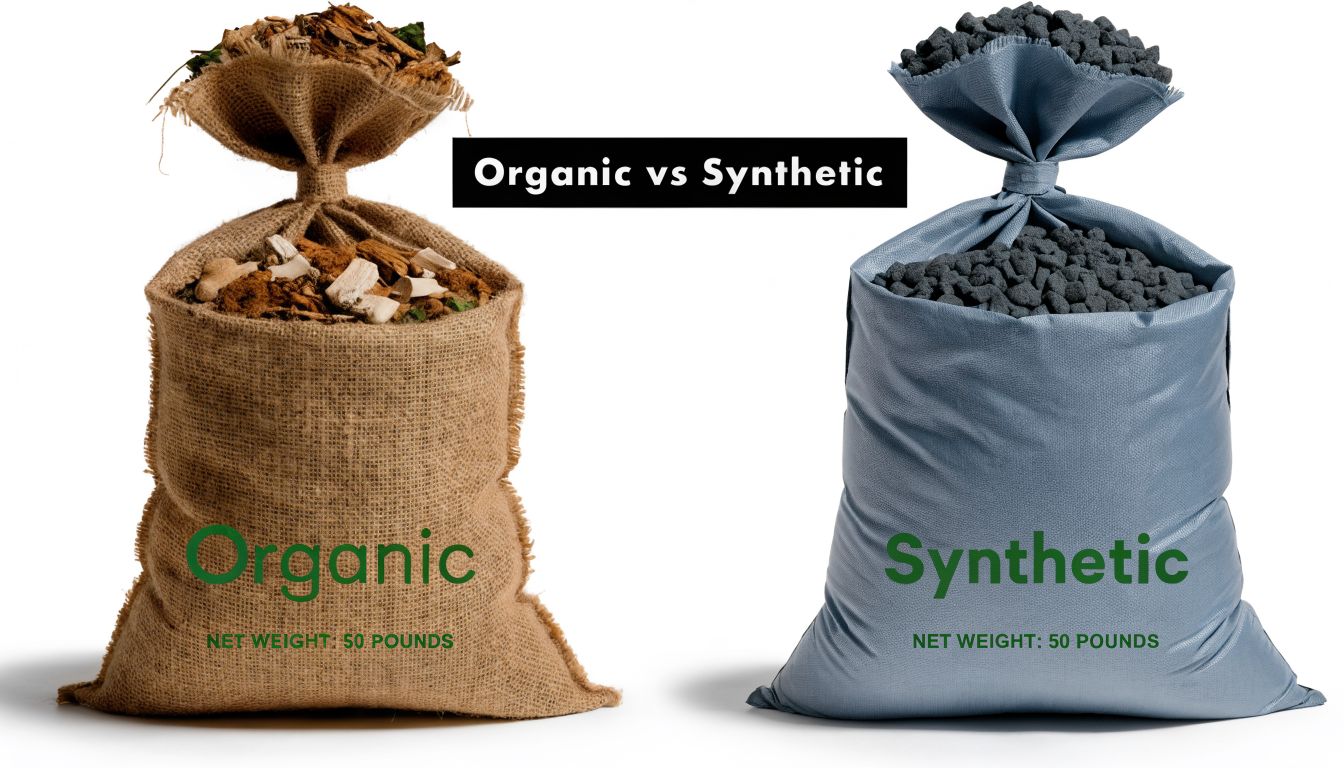
When synthetic makes sense
Synthetic fertilizer is direct and predictable. If you need a controlled nutrient analysis and a faster visible response, it does that job well.
It’s often the easier option when you’re targeting a specific seasonal need, such as a spring Bermuda feeding with a precise ratio. The trade-off is that it doesn’t do much to improve the soil itself.
When organic is the smarter play
Organic fertilizer is usually slower, but it helps the ground as well as the grass. In yards with poor structure or recurring moisture issues, that matters.
UGA Extension guidance summarized here notes that in poorly drained yards, nutrients can leach by 50%, and that slow-release organic fertilizers such as Milorganite 6-4-0 can retain 70% more nitrogen in wet conditions compared to synthetics.
That’s a big deal for West Tennessee lawns with soggy pockets, runoff, or compacted clay. In those yards, the question isn’t just “What feeds the grass fastest?” It’s “What stays put long enough for the lawn to use it?”
A practical way to choose
Use synthetic if:
- You need a targeted ratio
- Your soil condition is already decent
- You want a more immediate response
Use organic if:
- Your lawn has drainage trouble
- The soil feels tight, crusted, or lifeless
- You want to build better soil over time
In a wet yard, the fastest fertilizer isn’t always the best fertilizer. The best one is the one the lawn actually gets to keep.
A lot of homeowners do well with a blended mindset. They use precise synthetic products when the season calls for it and lean on slower organic feeding where the soil needs rebuilding. That’s usually more realistic than treating the debate like a loyalty test.
How to Apply Fertilizer Like a Pro
Good fertilizer applied badly can stripe a lawn, burn the blades, or wash into the street. Application matters.
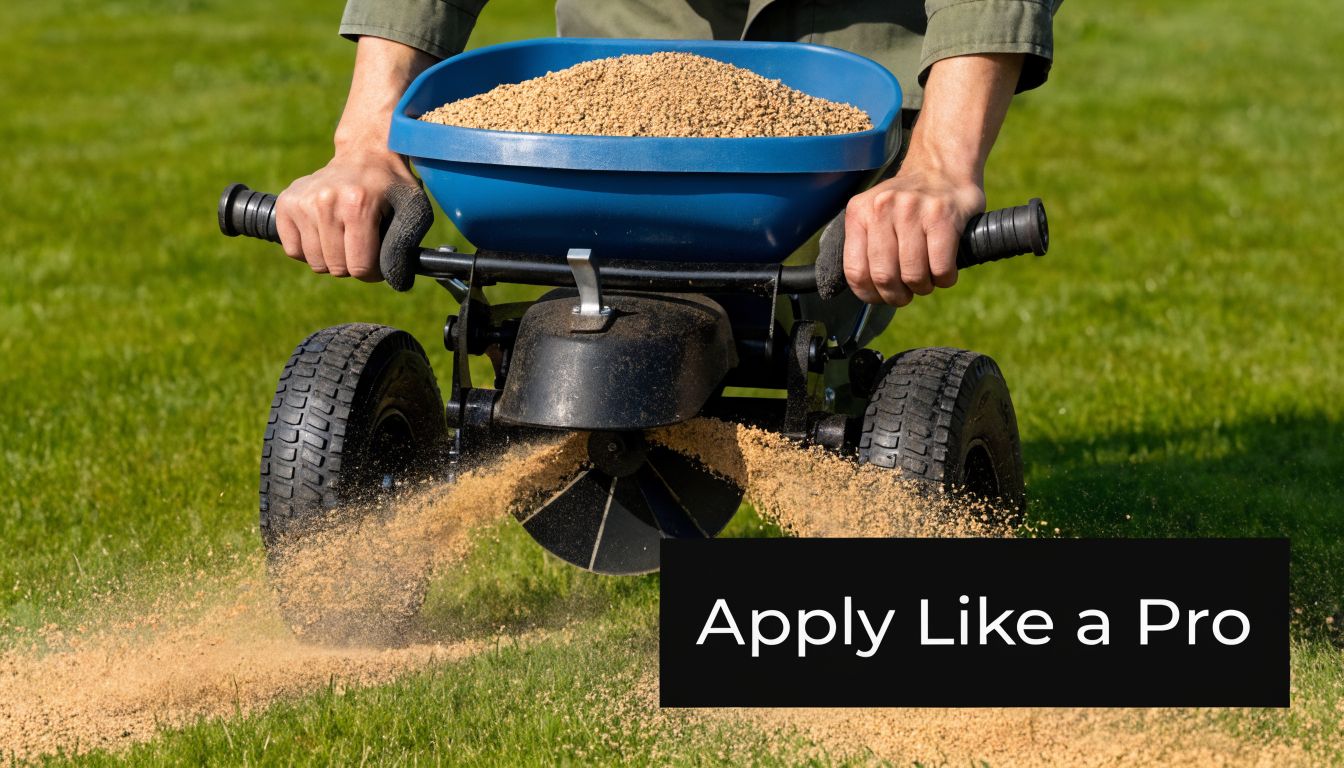
For most residential yards, a broadcast spreader is the practical tool. It covers ground efficiently and works well as long as you walk steadily and overlap properly. Drop spreaders have their place, especially in tight spaces, but most homeowners get better overall coverage from a broadcast model.
The basic application routine
Start with the square footage of the lawn. Don’t guess. If the bag says to apply a certain amount per 1,000 square feet, that number matters.
Then follow a clean process:
- Mow first if needed. Not scalped. Just trimmed to a normal height.
- Fill the spreader on a hard surface. If you spill, you can sweep it up.
- Set the spreader conservatively. It’s better to make two light passes than one heavy one.
- Walk in straight lines. Overlap slightly so you don’t leave skips.
- Keep product off sidewalks and driveways. Sweep it back into the lawn.
- Water it in when the product calls for it. That helps activation and lowers burn risk.
Avoid the mistakes that make lawns look worse
The most common homeowner errors are simple:
- Applying too much: More fertilizer doesn’t create better turf. It usually creates stress.
- Spreading unevenly: That’s how you get dark stripes next to pale ones.
- Applying before heavy rain: The lawn can’t use what washes away.
- Feeding a stressed lawn in the wrong moment: If the turf is waterlogged or badly heat-stressed, solve that issue first.
A useful outside perspective on application timing and weed-and-feed decisions comes from this NZ guide for greener grass. Different region, same core point. Product choice and application method have to match lawn condition.
Don’t forget the root zone
If your lawn is compacted, fertilizer won’t move through the profile the way it should. That’s one reason some homeowners fertilize repeatedly and still get shallow improvement.
When traffic, clay, or thatch are part of the problem, aeration can help the fertilizer program perform better because it improves access to the root zone. If your yard fits that description, this guide on when to aerate and overseed a lawn gives a solid overview of how timing affects results.
The cleanest lawns usually come from simple habits. Correct rate. Even spread. Good timing. Water in properly. That’s what a pro does.
Troubleshooting Common Southern Lawn Problems
Sometimes fertilizer isn’t the fix. It’s just the first thing people reach for.
A pale lawn can be hungry, but it can also be waterlogged, diseased, compacted, or chewed up by insects. If you fertilize the wrong problem, you usually make the lawn more frustrating instead of better.
When it’s not a nutrient issue
If the whole lawn is generally light in color and slow-growing, nutrient deficiency is possible. If the problem is patchy, circular, mushy, or tied to one wet part of the yard, look beyond fertilizer.
Brown patch and other turf diseases often show up where air flow is poor and the surface stays damp. Root problems are common in places where water sits after storms. In those spots, the grass may not be able to take up nutrients well even if you’ve fed it correctly.
Drainage can make fertilizer look ineffective
This is one of the biggest hidden problems in West Tennessee lawns. A soggy root zone doesn’t just create ugly grass. It blocks performance from everything else you do.
When roots sit in chronically wet soil, turf thins out, weakens, and loses color. Homeowners often respond by adding more product. That usually isn’t the answer.
If one part of the lawn always struggles after rain, stop blaming the fertilizer first.
Pests and pressure points
Surface-feeding insects and other lawn pests can also mimic nutrient stress. The lawn starts looking off-color or thin, and the natural assumption is that it needs feeding.
In cases where you suspect insect activity, it helps to compare symptoms carefully and use a targeted approach rather than piling on more fertilizer. Homeowners looking into options often review products such as this family-safe lawn pest treatment while deciding whether the issue is pest-related or cultural.
Thatch and compaction change everything
A lawn can also struggle because nutrients and water aren’t moving properly through the surface. Heavy thatch blocks contact. Compacted soil limits air, water, and rooting.
When that happens, the lawn may green up briefly after an application, then slide backward again. That pattern usually points to an underlying physical problem in the soil profile, not a need for stronger fertilizer.
The best fertilizer for southern lawns still needs the right conditions to work. If results keep stalling, the lawn is telling you to look deeper.
Make Your Grass Greener on Your Side
A strong southern lawn doesn’t come from chasing the newest bag on the shelf. It comes from a steady process. Test the soil. Identify the grass. Choose the right fertilizer for the season. Apply it correctly.
That’s how you get turf that thickens, colors up, and holds its own through West Tennessee heat.
If your lawn still struggles after that, the problem usually isn’t “more fertilizer.” It’s something underneath the fertilizer plan, like pH, compaction, or drainage. That’s why a systems-based approach always beats random treatments.
If you’re still deciding what turf direction makes sense for your yard, this guide to Bermuda grass seed options for southern lawns is a helpful next step.
Most homeowners can improve their lawn by making a few smarter decisions. The ones who get the best long-term results usually stop treating fertilization like a one-time fix and start treating it like part of overall lawn management.
Frequently Asked Questions About Lawn Fertilization
How often should I fertilize a southern lawn?
Warm-season lawns are usually fed during active growth, not year-round. The exact timing depends on your grass type, soil condition, and weather. In West Tennessee, that usually means focusing on spring and the active growing season, then taking a lighter approach as fall approaches.
Is weed-and-feed a good idea for southern lawns?
Sometimes, but not automatically. Combination products can be convenient, but they’re not always the best match for the lawn’s current need. If the grass needs nutrition but weed pressure timing is off, or if the yard has drainage issues, separating fertilization from weed control is often cleaner and safer.
What’s the single biggest fertilizing mistake homeowners make?
Applying product before they understand the soil. A lot of lawns don’t fail because the fertilizer was cheap. They fail because the pH was off, the yard was staying wet, or the wrong grass was being fed at the wrong time. Good turf starts with diagnosis.
If you’d rather skip the trial and error, Lawn & Leaf Solutions can help with the full picture, from lawn evaluations and fertilization planning to drainage corrections that keep your yard from fighting against every treatment. If you’re in Jackson or anywhere in West Tennessee, schedule a fast, free estimate and get a lawn plan built for your soil, grass type, and property conditions.