
A lot of homeowners in Jackson call about sod when they’re tired of staring at bare dirt, patchy builder-grade grass, or a backyard that turns into mud every time it rains. They want the fast result. A green lawn now, not months from now. That part makes sense.
What catches people off guard is that sod isn’t a shortcut around biology. It’s still a living grass plant that has to root into your soil, adjust to your yard, and survive West Tennessee weather. Put it down in the right window, and it settles in like it belongs there. Put it down at the wrong time, and the same lawn can struggle, dry out, lift at the seams, or limp into the next season.
The best time to lay sod depends on more than the calendar. In West Tennessee, it comes down to grass type, soil temperature, air temperature, rainfall, and how prepared the site is before the first pallet ever arrives. Timing affects everything after that, from how often you water to how well the lawn handles its first summer.
Your Instant Lawn Starts with Perfect Timing
The appeal of sod is easy to understand. You look out at a thin lawn, fresh construction grade, or a yard that’s been torn up for drainage work, and you want it finished. Not eventually. Soon.
That’s where timing becomes the difference between a lawn that takes off and a lawn that never quite gets comfortable. New sod may look finished on day one, but it’s still in a vulnerable stage. It hasn’t bonded with the soil underneath yet. It can’t pull water the way an established lawn can. It needs the weather to help, not fight, during those first weeks.
In West Tennessee, that matters more than many homeowners expect. We sit in the transition zone, which means our lawns deal with both warm and cool weather swings. A stretch of mild days can help sod root quickly. A badly timed hot spell can turn a simple installation into a high-maintenance rescue job.
A common mistake is treating sod like a home improvement material instead of a plant. It isn’t like laying pavers or spreading mulch. You can’t ignore the season and expect the same result. Even great sod installed on a poorly chosen date can underperform.
Practical rule: The day sod goes down is only the start. The real success shows up in the root zone over the next few weeks.
That’s why local timing matters. Advice written for the Deep South or the upper Midwest doesn’t always fit Jackson, Medina, Humboldt, or the rest of West Tennessee. Our weather can look friendly one week and punishing the next. The right installation window gives your lawn a margin for error. The wrong one removes it.
The Science of Successful Sod Rooting
Fresh sod is a lot like a transplant patient. It’s alive, but it’s under stress. It has been cut from the farm, moved, delivered, and placed into a completely new environment. Until new roots move down into your soil, that grass is depending on a thin layer of moisture and careful aftercare.
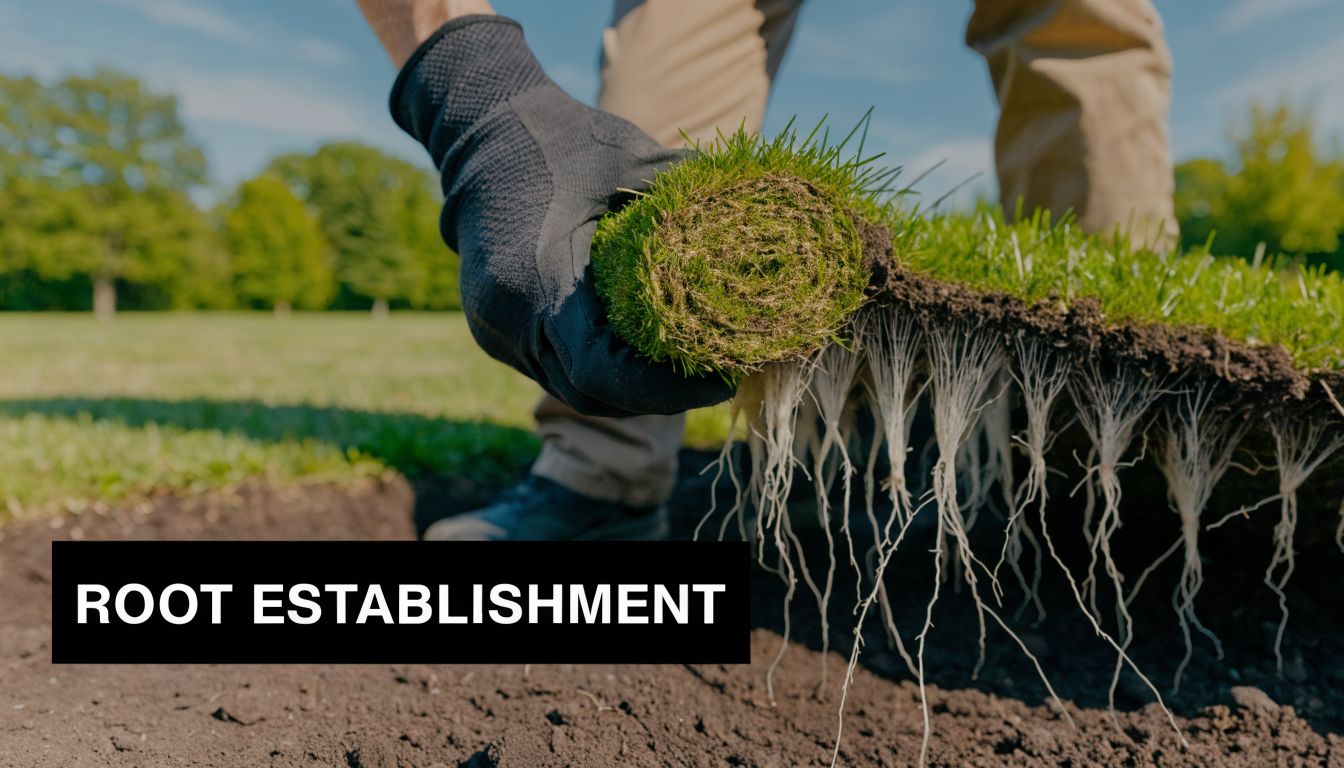
That’s why the best time to lay sod isn’t just a seasonal opinion. It’s a root-growth question.
Soil temperature drives the whole process
For the cool-season grasses commonly used in West Tennessee, the sweet spot starts below summer heat and above winter slowdown. According to this sod timing guide for cool-season grass, the optimal installation window is when soil temperatures range from 50-65°F. The same source notes that root growth halts below 50°F, while temperatures above 65°F can push evapotranspiration past what new roots can absorb, leading to 20-30% higher failure rates. In Jackson, that lines up well with average September soil temperatures around 60°F, which the same guide says can produce over 90% survival rates.
That one detail explains a lot of lawn failures. Homeowners often focus on the afternoon air temperature because that’s what they feel. Grass roots care more about what the soil is doing.
Air temperature and moisture must work together
Warm soil helps roots move. Mild air keeps the top growth from stressing out. Steady moisture bridges the gap while the sod is still trying to connect to the ground below.
If one of those three factors gets out of balance, problems show up fast:
- Soil is too cold: the sod sits there without rooting, which leaves it exposed to drying and edge shrinkage.
- Air is too hot: the leaf blades lose water faster than the root system can replace it.
- Moisture is uneven: one section stays damp while another turns dry, and the lawn establishes inconsistently.
A lot of homeowners are surprised that sod can look green and still be in trouble. Leaf color can hold for a while even when the roots haven’t anchored well.
New sod doesn’t fail because it was laid crooked. It fails because the root zone never got the conditions it needed.
Rooting is won in the details
Good installation helps the science work in your favor. That means a firm soil surface, tight seams, and full soil-to-root contact. Even small air gaps under sod can slow establishment because part of the root pad isn’t touching the ground it needs to grow into.
This is also why prep and timing have to be linked. If you’re trying to understand what proper contact and early establishment should look like, these sod installation tips for proper root growth are a useful companion to the timing side of the project.
A healthy sod installation isn’t really about speed. It’s about giving roots a stretch of favorable days so the lawn can stop surviving and start attaching.
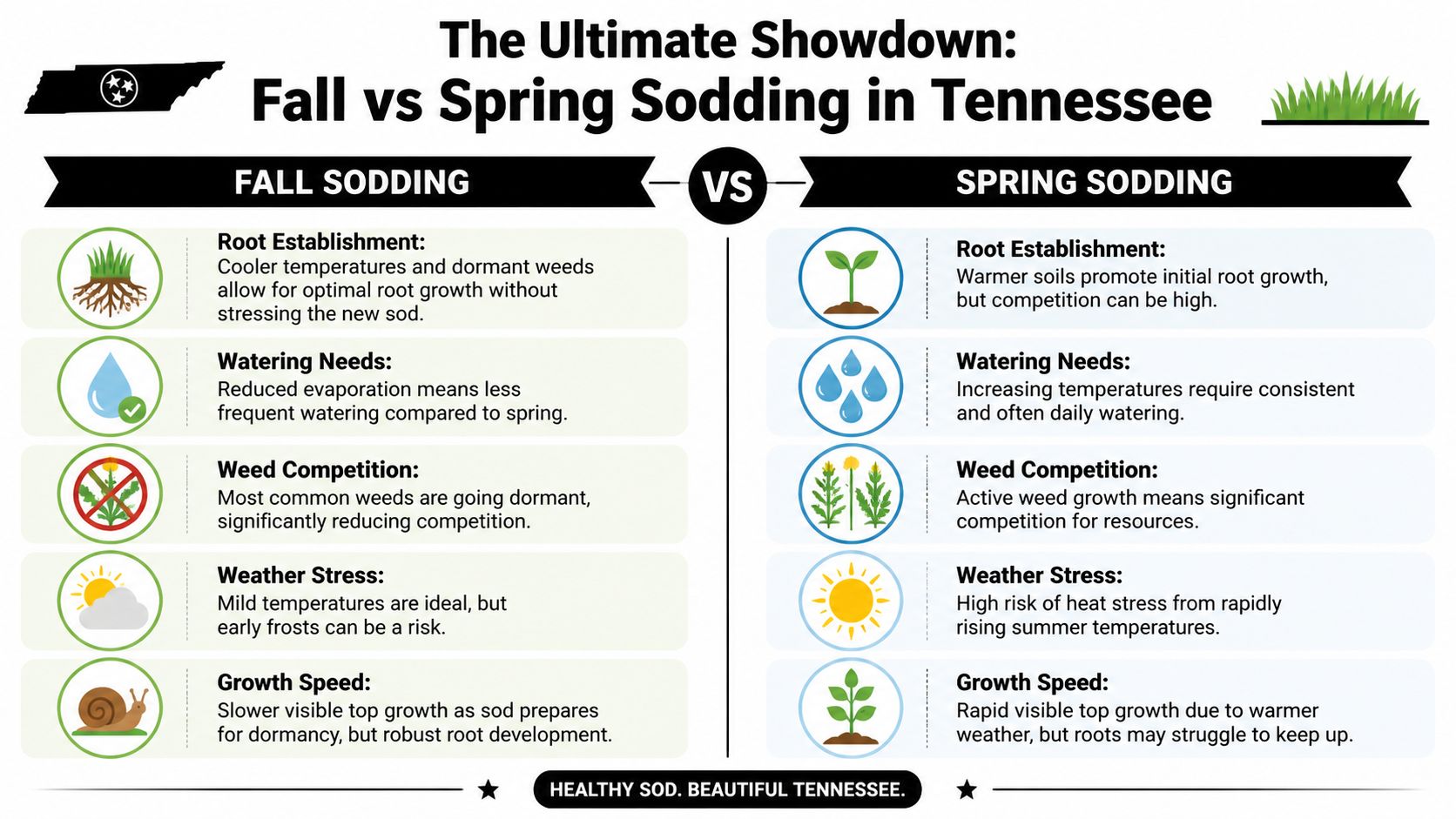
The Ultimate Showdown Fall vs Spring Sodding in Tennessee
If you live in West Tennessee and you’re choosing between fall and spring, both seasons can work. They are not equal.
For cool-season sod in the transition zone, early fall is the better window. Spring is the backup plan. It can still produce a good lawn, but it gives you a narrower margin before summer starts pressing on a young root system.
Why fall wins in West Tennessee
Fall gives new sod something rare around here. Warm enough soil for rooting, cooler air for less stress, and more cooperative moisture conditions. That combination is hard to beat.
According to this guide on planting sod by climate, early fall, September to November, is the optimal time in cool-season climate zones and transition areas like West Tennessee. The same source says sod installed in fall achieves 70-80% root establishment in 4-6 weeks, compared with 40-50% in late spring. It also notes that sod laid in fall enters winter with roots already established, then comes out of dormancy 25-30% stronger in spring, while reducing long-term maintenance costs by up to 25%.
That lines up with what most experienced contractors see in the field. Fall sod usually asks less from the homeowner and gives more back the following year.
Spring can work, but it comes with pressure
Spring is still a reasonable time to lay sod, especially if a project can’t wait. New construction schedules, home sales, drainage corrections, and grading work often push lawn installation into spring whether that’s ideal or not.
The problem is timing. In spring, you’re racing the heat. The lawn may root initially, but then it has to face the toughest part of the year before it has fully matured. That means more attention to watering, faster reaction to dry spots, and less forgiveness if weather turns hot earlier than expected.
Here’s the practical side-by-side view:
| Season | Best use | Main advantage | Main risk |
|---|---|---|---|
| Early fall | First choice for cool-season sod | Strong rooting with lower stress | Frost gets closer if you wait too long |
| Spring | Second-best option when needed | Workable weather and active growth | Summer heat can arrive before roots are ready |
For homeowners considering grass choices during that fall window, this overview of grass you can plant in the fall helps connect timing with the kind of turf that performs well in our area.
What works and what usually doesn’t
Fall works best when the site is ready and the installation happens early enough for rooting before winter. It does not work well when people delay too long, skip grading, or assume cooler weather means watering doesn’t matter.
Spring works best when the yard is prepped early, irrigation is reliable, and the homeowner is ready to watch the lawn closely. It does not work well when people lay sod late, leave compacted subsoil in place, or underestimate how quickly May can start feeling like summer in West Tennessee.
If your schedule is flexible, choose fall. If your schedule isn’t flexible, spring can still succeed, but it demands tighter execution.
Your West Tennessee Sod Installation Calendar
A general “spring or fall” answer isn’t enough for Jackson-area lawns. The better question is when each season helps, when it hurts, and what you need to change if you’re forced outside the ideal window.
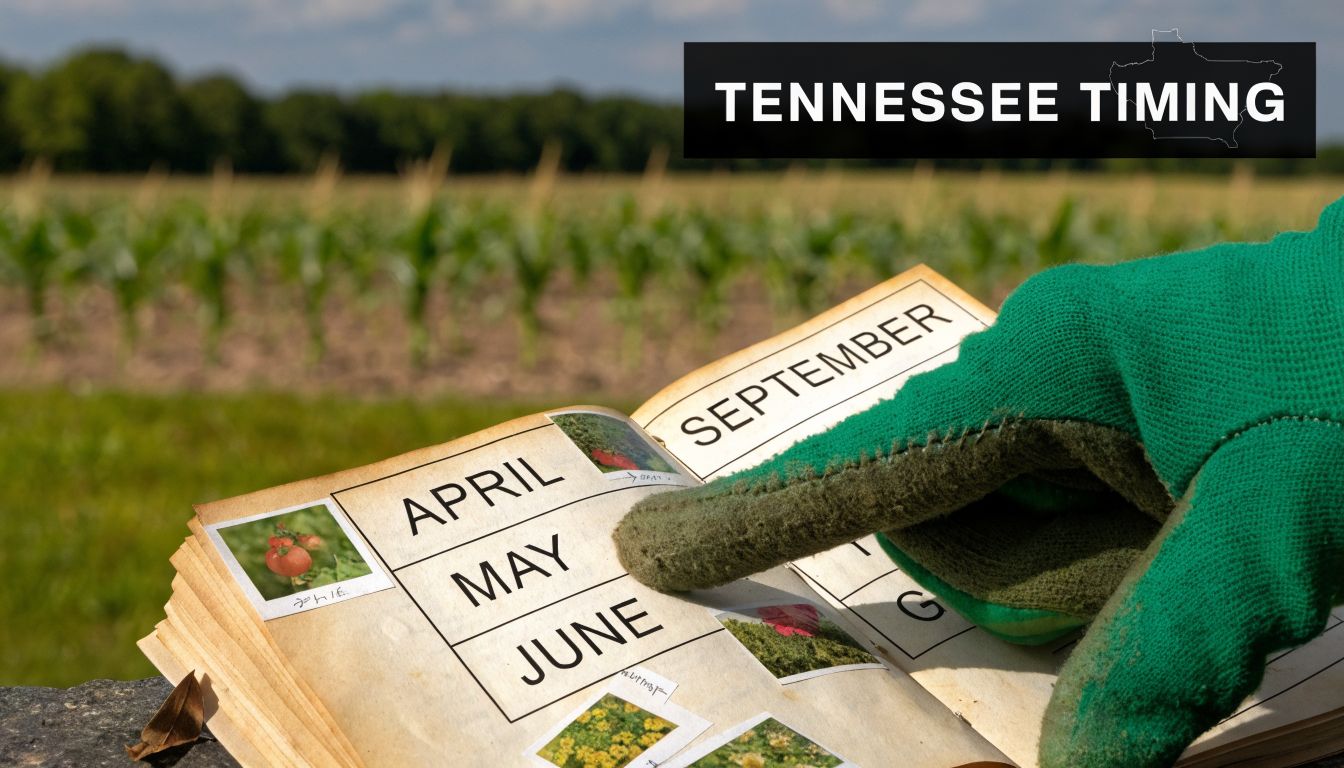
Late August through September is the Goldilocks window
For most cool-season lawns in West Tennessee, this is the best time to lay sod. The soil is still holding warmth from summer, but the air begins easing off. That lets roots establish without the top of the plant cooking in the afternoon sun.
This is the window when the whole project tends to feel smoother. The sod settles in more naturally, watering stays manageable, and homeowners aren’t fighting the same level of heat stress that shows up earlier in the year.
If the yard has drainage issues, low spots, or clay-heavy sections, this is also the most forgiving time to get those corrected before the sod arrives. Seasonal planning matters here, and this year-round lawn maintenance guide for Jackson residents is helpful for seeing how sodding fits into broader lawn care timing.
October into early fall closeout can still work
There’s still opportunity here, but the margin gets thinner. The later you push into fall, the more important it becomes to install on a properly prepared site and avoid waiting until cold weather is right on top of you.
This window is often fine for homeowners who acted early with site prep and can move quickly once sod is available. It’s less ideal for drawn-out projects where grading, soil work, or irrigation repairs still aren’t finished.
Spring is the second-best option
March through May can work for sod in West Tennessee, particularly when winter has kept the lawn project on hold. You can get a nice result in spring, but the calendar starts pushing back quickly.
The challenge isn’t that spring is bad. It’s that spring turns into summer, and new sod feels that transition more than established turf does. If you install in spring, don’t treat the project casually. Keep foot traffic light, stay ahead of dry spots, and be realistic about the watering commitment.
Summer is the danger zone, with one modern exception
Traditional advice says to avoid midsummer sod installation, and for standard cool-season sod, that’s still sound advice in most situations. West Tennessee summer heat can put a brand-new lawn under immediate pressure.
But there is a newer wrinkle. According to this report on laying sod in summer and hybrid varieties, 2025-2026 field trials on hybrid sod varieties, including some tall fescue and zoysia blends, showed 20-30% better heat tolerance. The same source says these cultivars can achieve high establishment rates in July and August in transition zones when soil moisture is properly managed.
That does not mean summer suddenly becomes easy. It means there are selective cases where a summer install may be more viable than older advice suggested, especially for homeowners who need an instant lawn during peak season and are using the right sod type with disciplined watering.
A practical calendar for Jackson-area homeowners
- Late August to September: Best overall window for cool-season sod.
- October: Still possible, but timing and prep matter more.
- March to May: Good fallback option if you can’t wait for fall.
- June to August: High-risk period for standard installations. Consider only with the right grass choice, close moisture management, and realistic expectations.
- Winter: Usually not the preferred choice for active establishment in this area.
The best calendar is the one that matches the grass, the yard conditions, and the homeowner’s ability to care for the lawn during establishment. In West Tennessee, the season always matters. The site conditions matter just as much.
How Seasonal Timing Changes Your Site Prep and Aftercare
The season you choose doesn’t just affect whether sod roots well. It changes how you should prep the site and how you care for the lawn after installation. That’s where a lot of DIY projects go sideways. The homeowner picks a decent date, then uses the wrong game plan for that season.
Fall prep focuses on contact and drainage
By fall, many West Tennessee yards have been compacted by summer traffic, mower passes, and dry weather. That means the prep work has to reopen the soil surface so roots can move into it.
Fall projects usually benefit from:
- Loosening the surface: break up hard, crusted soil so roots can enter rather than sit on top.
- Correcting low areas: stop water from puddling before you cover the grade with new sod.
- Cleaning the site fully: remove dead grass, debris, and loose material that can block root contact.
- Firming the finish grade: the goal isn’t fluffy soil. It’s a stable, even surface with good contact.
If you want a detailed walkthrough before installation day, this guide on how to prepare your yard for new sod installation covers the prep sequence well.
Spring aftercare needs faster reactions
Spring sod often looks great at first because the top growth responds to warming weather. That can fool people into thinking the lawn is already established. It may not be.
What changes in spring is the pace. Drying conditions can build quickly, and weed pressure is more active than it is in fall. You have to watch the lawn more closely, especially on warm afternoons. Edges drying out, seams lifting, and footprints lingering are all signs the root zone needs attention.
For homeowners who want a broader watering perspective that also applies well to transitional climates, this guide on North Georgia lawn care for sod offers useful watering context.
The watering plan that works in October can be completely wrong in late May.
What doesn’t change, regardless of season
Some parts of sod success stay the same no matter when you install:
- Match the sod to the site: sun, shade, slope, drainage, and expected traffic all matter.
- Lay it on prepared soil, not old turf: roots need contact with soil, not a dead layer underneath.
- Keep traffic off early: kids, pets, wheelbarrows, and mower turns can all shift fresh seams.
- Watch for lift: if a corner or edge pulls up easily, rooting is still incomplete.
A lot of lawn trouble comes from treating aftercare like a fixed schedule. It isn’t. It’s an adjustment process. Cool, cloudy weather asks for one approach. Bright, breezy days ask for another. Good installers pay attention to the lawn in real time, not just to the date on the calendar.
When to Call a Pro for Your Sod Project
Some sod jobs are straightforward. Others only look straightforward until the first heavy rain, dry spell, or uneven rooting problem shows up.
A professional earns their keep before the sod arrives. Choosing the right window, selecting a turf type that fits the property, fixing grade problems, and making sure water moves correctly across the yard all matter as much as the installation itself. That’s especially true in West Tennessee, where clay soil, drainage issues, and weather swings can punish shortcuts.
A pro also handles the details that homeowners often miss. Tight seam placement. Proper rolling. Eliminating air pockets. Avoiding a finished grade that leaves water trapped near the house or pooled in low areas. Those aren’t cosmetic details. They affect whether the lawn roots evenly.
If you’re planning a fall project, it’s smart to start talking to a contractor in late summer. If you’re aiming for spring, late winter is a better time to get on the schedule. The best planting windows don’t stay open long, and good crews book up around them.
For a fuller breakdown of where professional help pays off, this article on why to hire a professional sod grass installation service instead of DIY is worth reading.
The most expensive sod job is the one that has to be redone because the first one was mistimed, poorly graded, or badly installed.
Frequently Asked Questions About New Sod
Can I lay new sod over old dead grass
It’s a bad idea. Sod needs direct contact with prepared soil so roots can move down into it. Old grass, thatch, and debris create a barrier. Even if the new sod looks fine at first, rooting can be uneven and weak.
How soon can kids and pets use the lawn
Wait until the sod feels anchored and resists lifting. Light walking may happen sooner than rough play, but the key is root attachment, not appearance. If the seams still shift or corners lift easily, it’s too early.
Is winter sod installation a good idea in Jackson
Usually, winter isn’t the preferred choice for active rooting here. It can make sense in limited situations when the site is ready and conditions cooperate, but homeowners shouldn’t expect the same establishment pace they get in a better seasonal window.
What’s the biggest mistake homeowners make with new sod
Improper watering. Some people underwater and let the root zone dry out. Others keep the lawn constantly soggy without paying attention to weather, shade, or soil conditions. New sod needs consistent moisture and active observation, not a guess.
Can summer sod ever work in West Tennessee
Sometimes, but it’s not the easy route. Standard midsummer installs are usually the most demanding. If someone has to sod in summer, grass selection, moisture management, and site prep all have to be much tighter.
If you’re planning a new lawn in Jackson or anywhere in West Tennessee, Lawn & Leaf Solutions can help you time the project correctly, prep the site properly, and install sod that has a real chance to thrive. Whether you’re fixing a muddy yard, finishing a new build, or replacing struggling turf, their team brings hands-on local experience in sod, grading, and drainage so your lawn looks good on day one and performs well after that.