
If you've got a soggy yard here in West Tennessee, you know it's more than just a muddy mess. It's a direct threat to your home's foundation and can seriously hurt your property value. For homeowners around Jackson, the big question is always the same: what's it really going to cost to install a French drain? While every yard is different, you can generally expect an exterior French drain project to land somewhere between $20 and $65 per linear foot.
Understanding the Investment in a Dry Yard
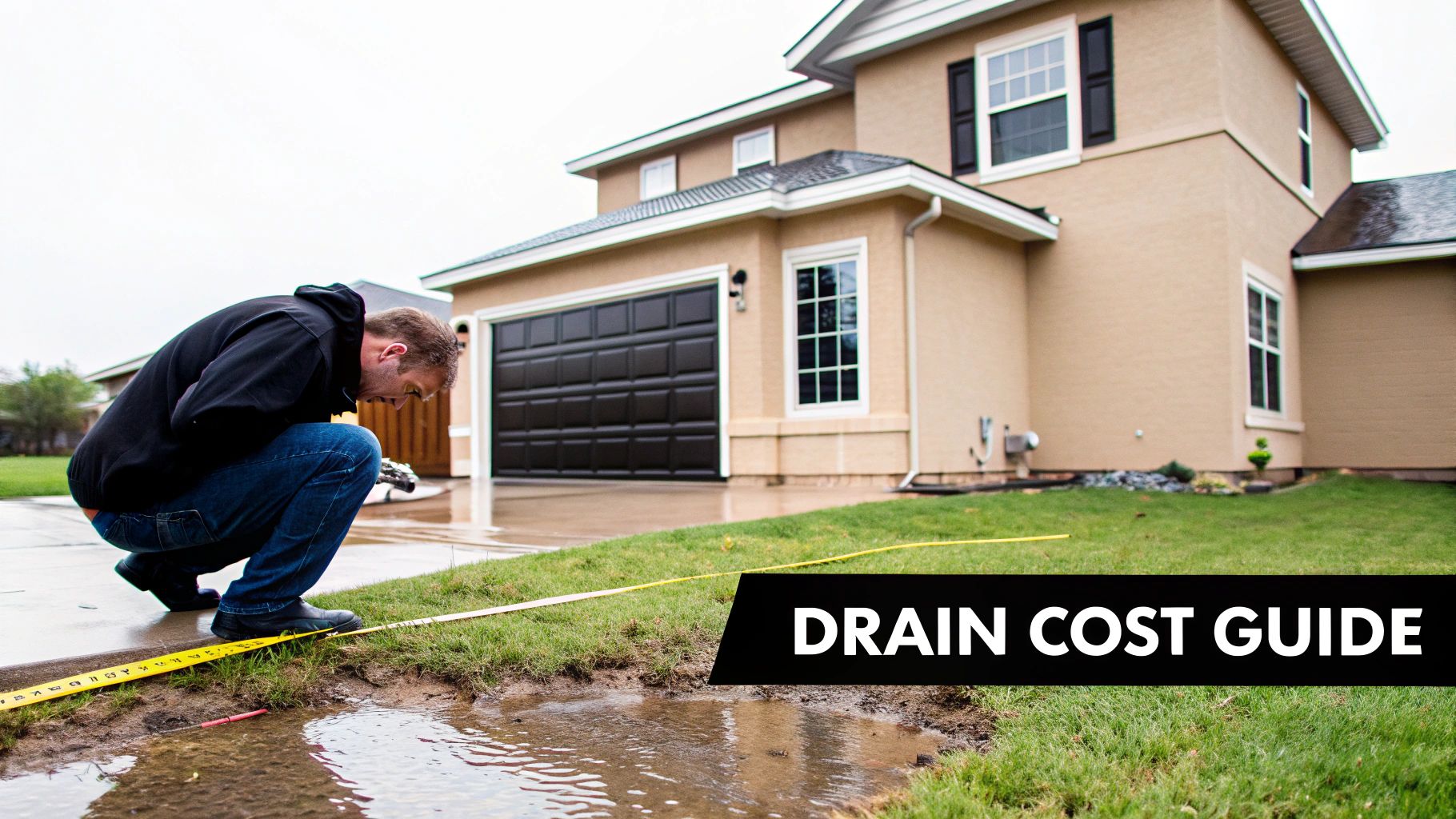
When a contractor gives you a quote for a French drain, you're not just buying some pipe and gravel. You're investing in a permanent fix to stop water damage in its tracks. It's best to think of it as a one-time insurance policy for your home's foundation. A well-built system will protect you from massive structural repair bills, basement flooding, and landscape erosion for years to come.
Sure, the upfront cost might give you pause. But it's a drop in the bucket compared to the tens of thousands you could spend fixing a cracked foundation or dealing with a serious mold problem in a damp crawl space. This guide is here to give you an honest, transparent look at the costs involved so you can plan your budget and make the right call for your home.
French Drain Installation Cost at a Glance for West Tennessee
To give you a clearer idea of what to expect right here in our area, we've put together a quick breakdown. A simple, shallow drain in the yard will be on the lower end, while a deep, complex drain around the entire perimeter of your foundation is a more significant, but crucial, investment.
This table provides a quick summary of estimated costs for common French drain projects, helping homeowners budget effectively.
| Project Type | Average Cost per Linear Foot | Typical Project Total (50-100 ft) |
|---|---|---|
| Shallow Exterior Drain | $20 – $40 | $1,000 – $4,000 |
| Deep Foundation Drain | $45 – $65 | $4,500 – $6,500 |
| Interior Basement Drain | $60 – $100+ | $6,000 – $10,000+ |
These numbers are a solid starting point for planning. For a bit of perspective, the national average for French drain installation can run from $5,000 to $9,250. What's really telling is that labor often makes up a whopping 85.7% of that total cost, with materials only accounting for the other 14.3%. That fact alone shows that you're paying for the skill and experience to get it done right, not just the parts.
A French drain is more than just a trench filled with rock. It's a carefully engineered system that uses gravity to capture groundwater and move it safely away from your home. When it's installed correctly, it becomes an invisible guardian for your foundation.
At the end of the day, the goal is to fix your drainage problem for good. By understanding what goes into the cost, you can see the real value in professional foundation drainage solutions and the peace of mind that comes with a permanently dry property. We'll dig into exactly what makes up these numbers in the sections to come.
Breaking Down Your French Drain Estimate
When you get a professional quote for a French drain, it's more than just a number—it’s the roadmap for solving your water problem for good. Understanding where that money goes helps you see the real value in getting the job done right from the start.
Let’s pull back the curtain on a typical estimate and see what you're actually paying for.
Think of it this way: you could buy a flat-pack bookcase, or you could hire a carpenter to build custom shelving. The materials—the wood and screws—are part of the cost, but the real investment is in the carpenter's skill to make it fit perfectly and last forever. A French drain is exactly the same.
Your estimate really boils down to two things: materials and labor. And while the materials are important, it’s the labor—the know-how and hard work—that truly makes or breaks the entire system.
The Essential Cost of Materials
The parts of a French drain have a tough job. They live underground, constantly dealing with pressure and moisture, so quality is non-negotiable. Your estimate will list out a few critical components.
- Perforated Pipe: This is the heart of the system, the channel that moves all that water. We only use heavy-duty, rigid pipe that won't get crushed under the weight of the soil and everything above it.
- Washed Gravel or River Rock: This isn't the cheap stuff you find in a bag at a big box store. Clean, washed stone creates a porous zone around the pipe that lets water flow in freely while keeping out bigger debris. It's critical for preventing clogs right from day one. We dive deeper into this in our article on why river rock and pea gravel are top choices for French drains.
- Geotextile Fabric: This is the unsung hero of a long-lasting French drain. We line the entire trench with this tough, permeable fabric before anything else goes in. It acts as a filter, stopping the surrounding dirt and silt from slowly working their way into your gravel and choking the pipe—which is the #1 reason these systems fail.
These are the bones of the drain, but they’re only as good as the hands that put them together.
The Value of Professional Labor
Labor is almost always the biggest chunk of a French drain installation cost, and there's a very good reason for that. This is where expertise saves you from a flooded basement down the road. It’s not just about digging a ditch; it's about precision work that's custom-fit to your property.
A common scenario shows just how dominant labor costs are. For a standard 100-foot installation, total costs can range from $4,000 to $10,000. Of that, labor often accounts for 70-85% of the final bill.
So, what does that investment in skilled labor actually get you?
- Site Assessment and Planning: Before a shovel ever hits the ground, an expert is walking your property, checking the slope, soil type, and figuring out exactly where the water is coming from. This is where the perfect drain path is mapped out.
- Precision Trenching: This is where the magic happens. The trench has to be dug to a specific depth, but more importantly, it needs a perfect, consistent slope. We're talking a minimum of a 1% grade—that’s a one-inch drop for every eight feet of pipe. Without that grade, water just sits there, and the drain is useless.
- System Assembly: This is a careful, step-by-step process. First, the fabric liner goes in. Then a bed of gravel. The pipe is set on top (with the holes pointed down!), and then it's all covered with more gravel. Every step is done methodically to ensure water gets in and flows away smoothly.
- Discharge and Cleanup: All that water has to go somewhere safe, like a storm drain or a pop-up emitter away from your foundation. Once it's all connected, a professional crew puts your yard back together, often replacing the sod so carefully you'll hardly even know they were there.
When you see "labor" on an estimate, you're not just paying for digging. You're paying for the experience that guarantees your drain will work for decades, not just until the next big West Tennessee downpour.
How Drain Types Affect Your Project Cost
Not all soggy yards are created equal, and neither are the solutions to fix them. The specific type of French drain your West Tennessee property needs is one of the biggest factors that will shape the final price tag. Think of it like this: you wouldn't use a hand trowel when the job calls for a heavy-duty shovel.
Getting familiar with the different systems helps you have a more meaningful conversation with your contractor. It ensures you're investing in the right solution from day one, not just a temporary fix. Each type of drain is engineered to solve a specific water problem, from annoying puddles in the lawn to serious threats against your foundation, and the price reflects the complexity and labor involved.
So, where does the money go? The breakdown is often surprising to homeowners.
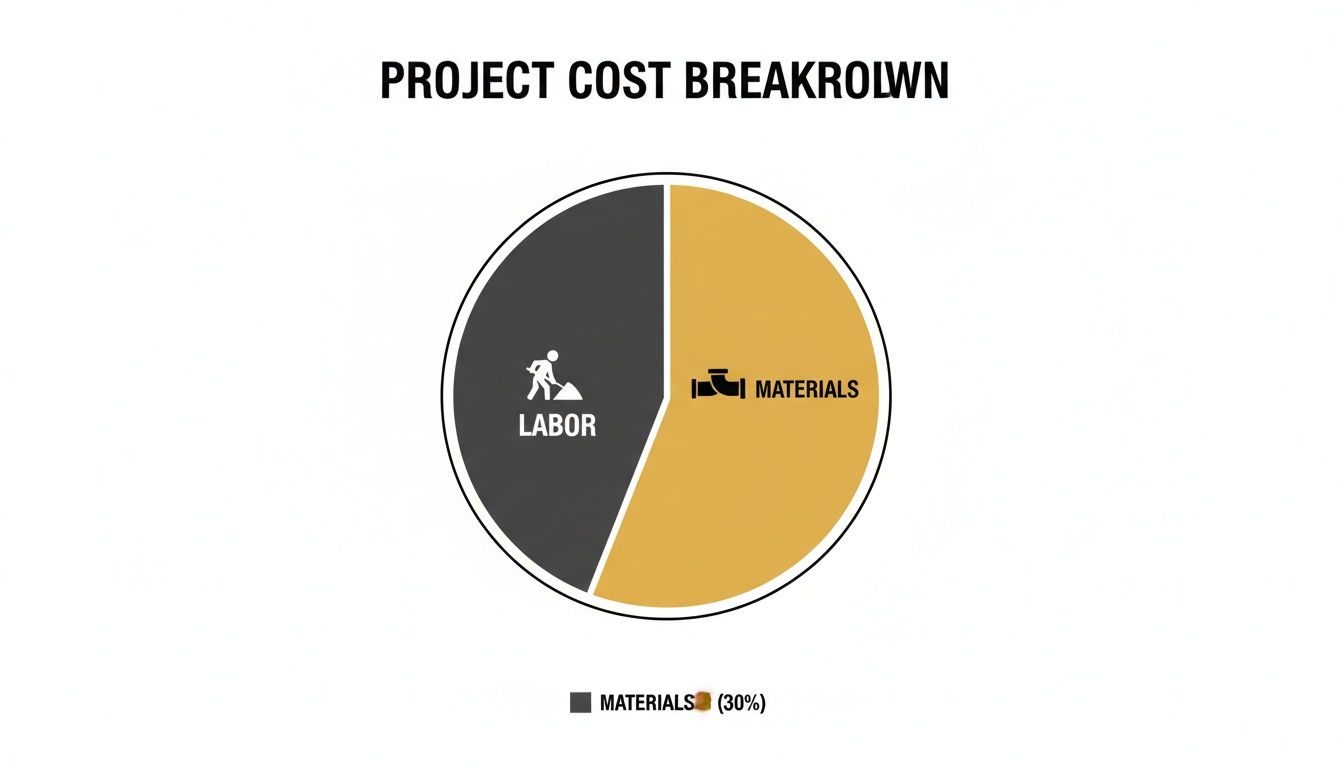
As you can see, labor is the lion's share of the investment. This underscores why professional installation is so critical—the skill and experience behind the work are what make the system last.
The Simple Fix: Shallow Exterior Drains
A shallow exterior drain, sometimes called a "curtain drain," is your first line of defense. Installed just a foot or two deep, its primary job is to catch surface water as it flows across your lawn. It stops rainwater from pooling in low spots or turning your yard into a swamp.
This is usually the most budget-friendly option simply because the digging isn't as intense. It's a fantastic fix for common issues like:
- Persistent soggy patches in the middle of the yard.
- Runoff from a neighbor’s higher-elevation property.
- Water collecting at the bottom of a gentle slope.
Less digging means fewer labor hours and fewer materials, keeping it at the lower end of the cost spectrum.
The Foundation Saver: Deep Exterior Drains
Now, when water starts threatening your home’s foundation or crawl space, you need to bring in the heavy hitter. A deep exterior drain, also known as a footing drain, is a much more robust system. We install this drain right alongside your foundation walls, often several feet deep, to capture water before it can press against your home and cause damage.
This is a true investment in protecting your home's structural integrity. The extra depth requires a lot more excavation, more gravel for backfill, and very careful work around the most critical part of your house. That complexity is exactly why its cost per foot is higher than a simple curtain drain.
The Ultimate Protector: Interior Basement Drains
For homes with basements or crawl spaces that are already letting water in, an interior French drain is the most powerful solution—though it is also the most involved. This system requires cutting a channel into the concrete slab around the inside perimeter of your basement, installing the drain pipe, and connecting it to a sump pump that actively ejects the water.
This approach tackles water directly where it seeps through foundation walls or pushes up from beneath the floor. It's the most reliable way to guarantee a dry basement, but the labor is intensive. It involves concrete cutting, debris removal, and pouring new concrete to finish the job.
The cost differences between these systems are significant. To give you a better idea, here’s a quick comparison of the common French drain types you’ll encounter.
Comparing French Drain Types and Typical Costs
This table breaks down each system to help you see which solution might be the right fit for your property and budget.
| Drain Type | Best For | Average Cost Per Foot | Key Considerations |
|---|---|---|---|
| Shallow Exterior Drain | General yard sogginess, surface water runoff, and mildly sloped lawns. | $10 – $25 | Least disruptive and most affordable. Not designed to protect a foundation from deep groundwater. |
| Deep Exterior Drain | Protecting foundations and crawl spaces from hydrostatic pressure. | $30 – $90 | Requires significant excavation next to the house. A true preventative measure for structural integrity. |
| Interior Basement Drain | Basements or crawl spaces with active water leaks or high water tables. | $40 – $100 | Most effective for keeping a basement dry but involves concrete work and installation of a sump pump system. |
As you can see, a curtain drain for a sloped yard might cost $10-$25 per foot, while a standard exterior drain to protect the foundation climbs to $30-$90 per foot. Because of the intense concrete work, interior systems can run $40-$100 per foot, often demanding two to three times the labor. You can dig deeper into these price ranges on a resource like HomeGuide.com.
Understanding how drain tile installation prevents foundation water damage really highlights the long-term value these more robust systems provide.
What Really Drives the Final Cost of a French Drain?
Ever wonder why your neighbor’s French drain project cost thousands less than the quote you just got for what seems like the same job? The secret isn’t in the price of the pipe or the gravel. It's all about the unique challenges your specific property throws at us. The final number on your estimate is a direct reflection of the ground we have to break to solve your water problem.
Think of it like this: painting a small, empty room is a pretty straightforward job. But if that room has vaulted ceilings, intricate crown molding, and is full of heavy furniture, the time, skill, and cost go way up. Drainage work is exactly the same. The specific conditions of your yard are the single biggest factor determining your total investment.
Once you understand these variables, you can look at a professional estimate and know exactly what you’re paying for. You’ll see that a good quote isn't just a random number—it’s a custom-built solution for your home.
Trench Length and Depth
This is the most obvious one. The bigger the project, the more it's going to cost. A longer drain means more materials, more digging, and more labor. A simple 50-foot drain to dry out a single soggy patch in the yard will always be more affordable than a 200-foot system designed to protect your entire foundation.
But depth is just as crucial. A shallow "curtain drain," maybe 12 to 24 inches deep, is great for catching surface water and is relatively easy to dig. On the other hand, a deep "footing drain" running alongside your foundation might have to go down four, six, or even eight feet. That's a whole different ballgame. It requires heavy equipment, a lot more man-hours, and careful planning to make sure we don’t compromise your home's structure.
Soil Conditions in West Tennessee
Around here, we're blessed with some rich, but very dense, clay soil. It’s fantastic for growing crops, but it's a real beast when it comes to installing a drainage system. Slicing a trench through loose, loamy soil is one thing; battling West Tennessee clay is another.
- More Work, More Time: Clay is heavy, sticky, and tough to excavate. It dramatically slows down the digging process, whether we're using shovels or a machine.
- Heavier Equipment: Your standard trencher often just can't handle our soil. We frequently have to bring in a mini-excavator to get the job done right, which adds to the project’s overhead.
- Smarter Design: Clay holds water instead of letting it pass through. This means the drain has to be built to compensate, often with a wider trench and a lot more gravel to create a clear path for the water to follow.
You could say a French drain in sandy soil is a simple procedure, but a French drain in West Tennessee clay is a surgical operation. The soil's stubbornness means more time, tougher tools, and a more robust design—all of which factor into the final cost of the French drain installation.
Property Accessibility and Obstacles
How easy is it for us to get to the work area with our crew and equipment? A wide-open, flat backyard makes for an efficient job. But when access is tight, things get complicated and labor costs start to climb.
Just think about these common scenarios we see all the time:
- Tight Squeezes: If the drain needs to go in that narrow strip of yard between your house and the property line fence, there’s no way to fit a mini-excavator. That means the entire trench has to be dug by hand, which is slow, back-breaking work.
- Established Landscaping: We have to be incredibly careful working around mature trees, prize-winning rose bushes, concrete patios, and irrigation systems. Moving slowly and methodically to avoid damaging your property is key, but it definitely adds time to the job.
- Buried Surprises: You’d be amazed what’s hiding underground. We always call 811 to have public utilities marked, but that doesn't account for private lines you might have for sprinklers, landscape lighting, or an old septic field. Finding and carefully navigating these obstacles adds a layer of complexity.
Massive tree roots are another classic problem. They can be as hard as concrete, forcing us to bring in special cutting tools or even re-route the drain to save the tree. Each of these hurdles adds labor hours and specialized work to the project, and that’s directly reflected in your final price.
DIY vs. Professional Installation: A Realistic Look at the Costs
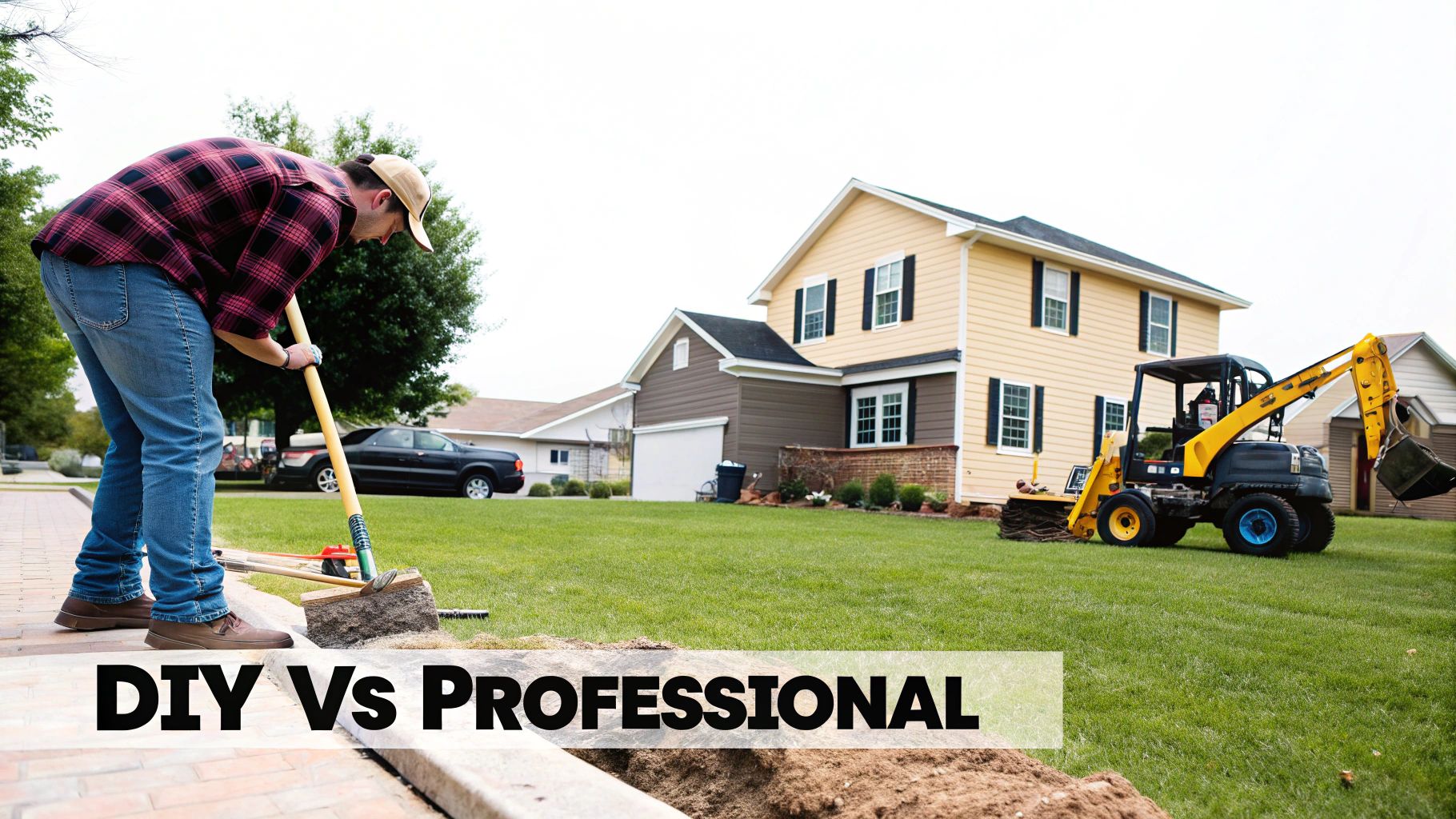
The thought of installing a French drain yourself is certainly tempting. At first glance, it looks like a great way to sidestep labor costs and save a good chunk of money. But a drainage system isn't like painting a room; small mistakes can lead to massive, costly failures down the road.
Before you start pricing out trenchers, it's smart to weigh the immediate savings against the very real long-term risks. A true cost comparison isn't just about the price of pipe and gravel. It has to include the value of your time, the brutal physical effort involved, and the high price of getting it wrong.
Hiring a pro is an investment in getting the job done right the first time. It buys you peace of mind that a DIY project rarely can, ensuring your home is protected for years to come.
The True Cost of a DIY French Drain
When you decide to go it alone, the initial shopping list seems pretty straightforward. You'll budget for pipe, filter fabric, and a whole lot of washed gravel. The real trouble comes from the hidden costs that tend to blindside homeowners.
For starters, there’s the equipment. Digging a trench that’s several feet deep and potentially hundreds of feet long by hand is a back-breaking job, especially in the dense clay we have here in West Tennessee. You'll almost certainly need to rent a trencher or even a mini-excavator, which can run you over $85 per day.
And that's just the beginning. You also have to consider:
- Your Time: A project that a professional crew can knock out in a day or two can easily eat up several weekends for a DIYer. Your time is valuable, and it's a huge part of the real "cost."
- The Physical Toll: Excavating, hauling tons of gravel, and moving mountains of soil is incredibly hard work. It's a tough, physically demanding job that can lead to injury if you're not used to it.
- Finding the Right Materials: Pros have access to commercial-grade materials built to last. For a homeowner, just sourcing the right quality and quantity of everything can be a logistical headache.
By far, the biggest risk with a DIY job is getting the slope wrong. A French drain works entirely on gravity. If that trench doesn't have a consistent, minimum 1% grade (that's about one inch of fall for every eight feet of run), water will just sit there instead of flowing away. The whole system will be useless.
The Value of Professional Expertise
Hiring a professional team might feel like a bigger expense upfront, but what you’re really paying for is the expertise that prevents those catastrophic failures. A professional quote covers so much more than digging; it’s an investment in precision, guarantees, and efficiency.
A pro brings a few critical advantages to the table:
- Guaranteed Performance: An experienced installer understands how water moves through our local soil. They’ll calculate the perfect slope, use the right materials, and ensure the system actually works.
- The Right Tools and Speed: Professionals show up with the right equipment to get the job done quickly and with the least possible disruption to your yard.
- Warranty and Accountability: Reputable companies stand behind their work. If something goes wrong with your drain, you have a warranty to fall back on—a safety net you simply don't have when you do it yourself.
In the end, it really boils down to risk versus reward. A failed DIY drain doesn't just mean you've wasted your time and money; it means your property is still at risk from water damage. Ironically, hiring a pro to fix a poorly installed drain often costs more than it would have to just get it done right from the start.
For a deeper dive into this comparison, our guide on French drain installation vs DIY can help you weigh all the factors.
Getting a Transparent French Drain Estimate
By now, you've seen all the moving parts that go into pricing a French drain, from the type of drain you need to the unique quirks of your own West Tennessee property. That final number on an estimate isn't random; it's a direct reflection of the materials, manpower, and know-how needed to fix your water problem for good.
Walking into a consultation with this knowledge is your best tool. You'll know the right questions to ask and feel confident you're making a smart investment.
Remember, this is more than just digging a ditch. A professionally engineered drain actively protects your home's foundation from the relentless force of hydrostatic pressure and stops erosion from washing away your yard. It’s a long-term defense for your property value. While a DIY attempt might seem cheaper upfront, it often leads to bigger, more expensive problems down the road. Getting it done right the first time is the only way to go.
Your Next Step Toward a Dry Yard
So, what now? The best place to start is with a clear, honest assessment from a seasoned expert. You're looking for a contractor who gives you a detailed, transparent quote that shows you exactly what you're paying for. Vague, one-line estimates can be a red flag for inexperience, so find a partner who takes the time to walk you through their plan.
A great estimate should feel like a consultation, not a sales pitch. It should clearly outline the proposed solution, the specific materials being used, and a full breakdown of the labor involved. This transparency is the hallmark of a company you can trust.
If you’re a homeowner here in Jackson or anywhere in West Tennessee fighting a soggy yard or a damp crawlspace, we can help. At Lawn & Leaf Solutions, we build our estimates to be clear, comprehensive, and completely free of obligation. We'll get to the bottom of your drainage issues, lay out all your options, and give you a detailed plan to protect your home.
When you're ready for a solution that lasts, you can count on our team for quality craftsmanship and straightforward pricing. To help you feel even more prepared, we encourage you to read our guide on how to choose the right French drainage company for your property.
Schedule your free estimate with Lawn & Leaf Solutions today and take the first step toward a permanently dry, healthy landscape.
Got Questions About French Drains? We've Got Answers.
Even after breaking down the costs, you probably still have a few questions floating around. That's completely normal. Homeowners around Jackson and West Tennessee often ask us about the real-world impact and long-term value of installing a French drain. Let's get right to the most common questions we hear.
How Long Will a Professionally Installed French Drain Actually Last?
Think of a professionally installed French drain less as a quick fix and more as a permanent upgrade to your property's infrastructure. When it’s done right with quality materials, you're not just buying a few years of relief—you're investing in a solution that will last for decades.
A well-built system, with the proper slope, the right kind of washed gravel, and a durable filter fabric, should easily last 30 years or more. The whole point of a professional installation is to prevent the common pitfalls—like silt clogs and root invasions—that cause DIY or poorly built drains to fail prematurely.
Is Installing a French Drain Going to Wreck My Yard?
This is a big concern for many homeowners, and it's a valid one. While we do have to dig a trench, a professional crew knows the goal is to leave your yard looking like we were never there. We treat your property with care, not just as a job site.
Whenever possible, we carefully slice and roll up the sod before we even start digging. Once the drain is in and the trench is backfilled, we put that same sod right back where it was and clean up thoroughly. You’ll see a temporary seam where the work was done, but with a bit of water, the grass bounces back quickly. In fact, many people find the grass along the trench line ends up healthier than ever because the drainage is so much better.
The mark of a true professional isn't just building a drain that works, but leaving your property looking as good as, or better than, they found it. Minimal disruption is a key part of the service.
Is a French Drain My Only Option for Drainage Problems?
Not always, but it's often the most effective and versatile tool in the toolbox for handling widespread soggy yards or subsurface water that threatens your foundation. The best solution is always the one that directly targets the source of your specific problem.
Depending on what's happening on your property, other options might be a better fit, or could even work alongside a French drain:
- Channel Drains: These are perfect for hard surfaces like driveways and patios. They catch water flowing across concrete before it ever has a chance to pool against your house.
- Dry Wells: Got a downspout that dumps a ton of water in one spot? A dry well is a great solution. It's an underground basin that collects all that roof runoff and lets it slowly and safely soak back into the ground.
- Landscape Regrading: Sometimes the simplest fix is the best one. Re-shaping the ground to create a gentle slope that directs water away from your home can solve a surprising number of issues.
When a drainage expert comes out for an estimate, they'll look at the whole picture to recommend the most efficient and cost-effective approach for your home.
Are There Ongoing Maintenance Costs I Need to Worry About?
One of the best things about a properly installed French drain is that it's almost completely maintenance-free. The system is designed to be self-sufficient, using gravity and the protective fabric to keep itself clear and flowing.
Your only real job is to make sure the entry and exit points are clear of leaves and debris. We recommend taking a quick look at the discharge end a few times a year, especially after a big storm, just to be sure water is flowing out freely. If your system has surface-level catch basins, you'll want to scoop leaves and gunk out of them once a year or so to keep things moving smoothly.
At Lawn & Leaf Solutions, we believe every West Tennessee homeowner deserves a dry, usable yard and a secure foundation. If you're ready to put your water problems behind you for good, our team is here to help with a transparent, no-obligation estimate. Schedule your free consultation today!