French Drains Built for West Tennessee Yards, Clay Soil, and Real Drainage Problems
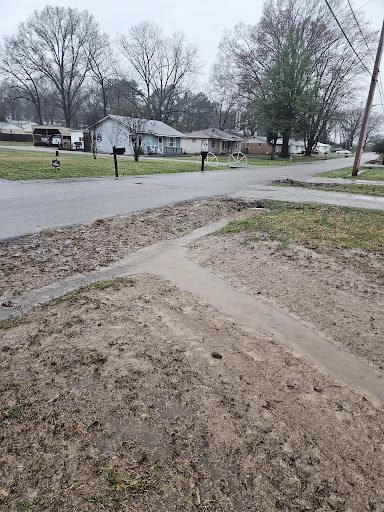
When your yard stays wet after every rain, water collects near your foundation, or certain areas of the lawn stay muddy and unusable, the problem isn’t going to fix itself. In Jackson, TN and the surrounding West Tennessee area, drainage problems are extremely common because of the heavy gray clay soil found throughout this region. Some areas have more of it than others, and I have come to find that there are pockets everywhere that contain up to 80 to 90 percent gray clay. Yes, I’m talking about the same gray clay you made pottery out of in school when you were a kid. This soil does not drain water—it holds it like a bathtub for weeks.
With the addition of flat yards, poor grading, roof runoff, or water coming from neighboring properties, any one of these—or a combination of them—can create serious concerns for the foundation of your home or at the very least the usability of your yard.
But luckily, a properly installed French drain can help collect that standing water no matter why it’s standing there or how long it stands there, and can also collect subsurface water and move it away from problem areas.
But as you can probably guess, not every yard will need the same solution.
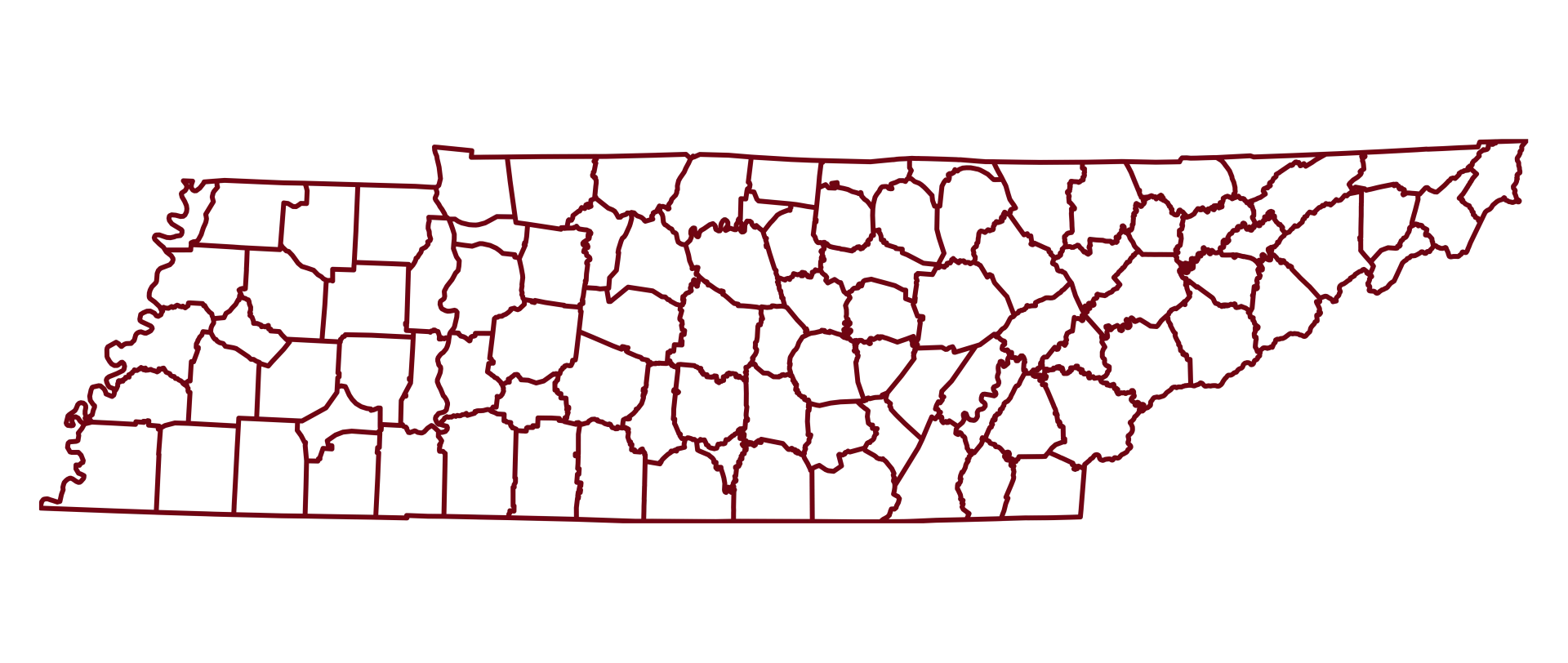
At Lawn & Leaf Solutions, we install French drain systems as part of a complete drainage plan. That means we take into consideration where the water is coming from, how it moves across the property, where it is collecting, and where it can be discharged. The goal is not just to bury pipe with holes in the ground. The goal is to build a drainage system that actually moves water and lasts. We serve homeowners in Jackson, TN and surrounding areas like Three Way, Medina, Milan, Humboldt, Henderson, Beech Bluff, Lexington, and many more who are dealing with soggy yards, standing water, wet foundation areas, muddy side yards, drainage problems around patios, pools, and walkways, and low areas that stay wet long after the rain is gone.
Not All French Drains Are Built the Same
A French drain is only as good as the way it is designed and constructed. Lawn & Leaf Solutions — French Drain Installation Publishing Package Many drainage systems fail because they are installed like a quick patch instead of a real water management system. A lot of contractors use the wrong rock, the wrong fabric, the wrong pipe, and they tie roof water into the system where it creates more problems later. Some will install a pipe without enough planning for slope, discharge, surface water, or long-term performance. Most French drains are installed as a cash grab.
That is not how we approach drainage.
At Lawn & Leaf Solutions, we build French drains with the long game in mind. We use quality drainage materials, super clean washed rock, the right filter fabric, and we lay everything out in the low spots or collection areas.
A French drain should not be a cash-grab drain that works for a little while and then slowly stops performing. It should be installed with a clear purpose, a clear discharge point, and materials that are made for outdoor drainage. When the right materials are installed correctly, a French drain will actually perform better the older it gets.
What a French Drain Does
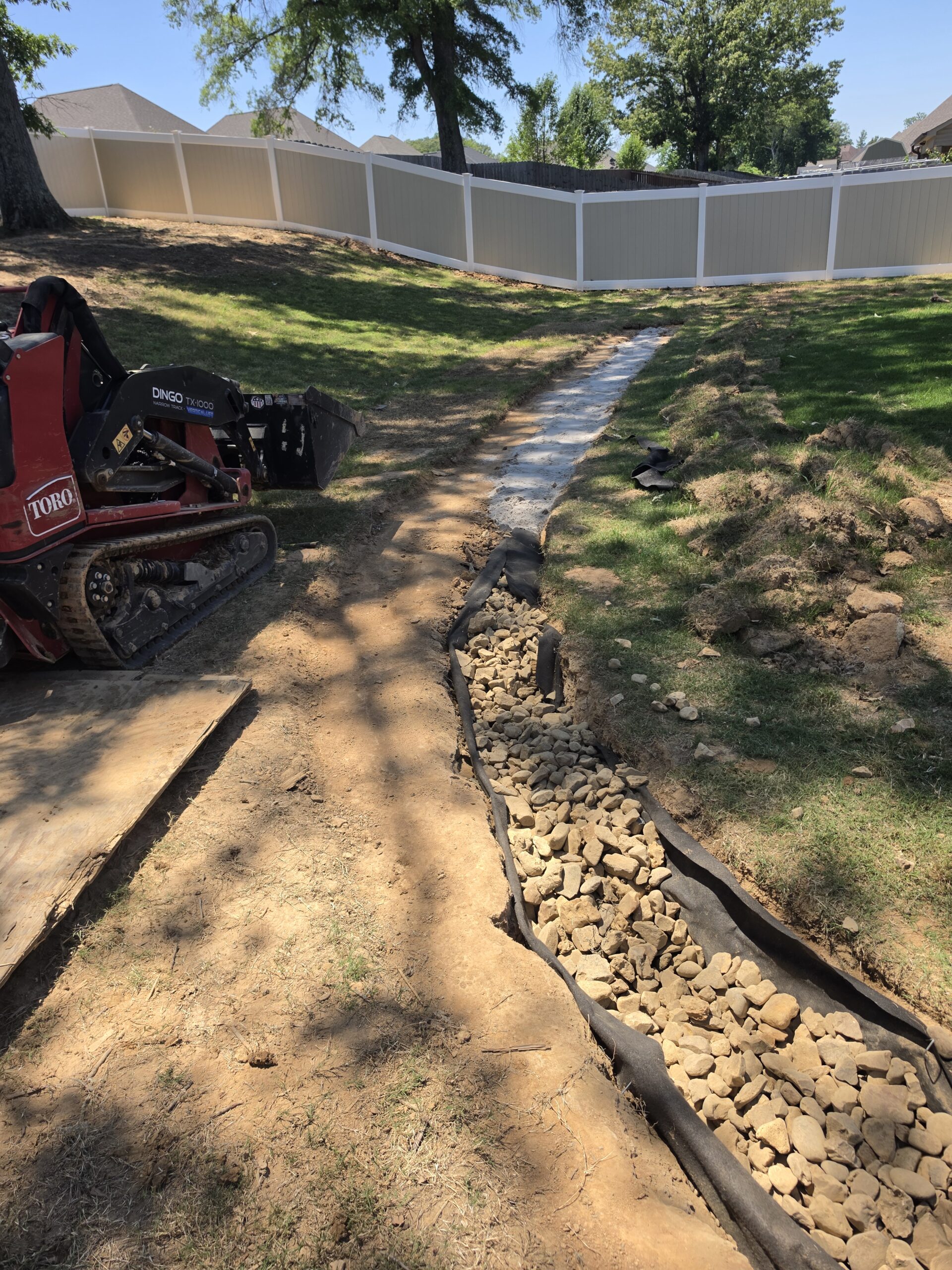
A French drain is designed to collect and move water through a trench filled with clean drainage rock and perforated drainage pipe. That second part is very important, and a lot of others may not see it as being important. But having the cleanest aggregate possible without any dirt or “fines” is just one of the many things that separates us from the competitors. Water enters the system through the stone and pipe, then travels away from the problem area to daylight.
A French drain can help with:
- Wet, soft, or muddy areas in the yard
- Water sitting near the foundation
- Low spots that stay saturated
- Water collecting around patios, walkways, or pool decks
- Side yards that stay wet between homes
- Sheet water moving across the lawn when the system is designed to intercept it
A French drain is not always the only part of the solution. Sometimes the better plan includes downspout drainage, catch basins, channel drains, grading adjustments, or an outdoor sump pump system. That is why we look at the whole property before recommending a drainage plan.
When a French Drain May Not Be Enough by Itself
One of the biggest mistakes in drainage work is assuming every water problem needs a French drain.
If a lot of the water is coming from the roof, underground downspout drainage may need to be handled separately. If water is running across concrete, patios, driveways, or pool decks, a catch basin or channel drain may be needed. If the property does not have enough fall to drain by gravity, an outdoor sump pump system may be necessary.
A French drain works best when it is used for the right reasons
That is why we don’t walk onto a property and automatically recommend the same system for every yard. We look at the source of the water first. Then we build the plan according to where and how the water can be discharged.
Our French Drain Installation Process
1. We Identify Where the Water Is Coming From
Before installing anything, we look at the way water moves across the property. We check roof runoff, downspouts, low spots, slope, neighboring yards, patios, walkways, driveways, and discharge options.
A yard drainage problem may be caused by several things happening at once. In West Tennessee, it is common to see roof water, clay soil, poor grading, and runoff from nearby properties all contributing to the same wet area.
2. We Design the System Around the Discharge Needs
A French drain has to be designed around not just the actual site, but the drain location, slope, and discharge point.
We do not install French drains just because that is what the customer asked for. If another drainage solution makes more sense, we will explain that. If a French drain is the right fit, we design it to collect water where the problem starts and move it where it’s no longer a problem.
3. We Use Clean Washed Rock
The aggregate around the pipe is one of the most important parts of a French drain. We use ultra clean washed rock. Pea gravel, river rock, and septic rock are not clean enough when performance is the top priority.
We do not rely on dirty fill, soil-packed rock, or materials that are not meant for this type of drainage. The rock bed needs open space so water can move freely through the system.
4. We Use the Right Drainage Fabric
We use non-woven geotextile filter fabric that has been double needle-punched to increase flow rate and separate the soil from the clean rock.
The fabric also needs to be installed correctly with the pipe on the very bottom of the trench. Skipping fabric, using the wrong fabric, or overlapping it incorrectly can drastically affect system performance.
5. We Use Drainage Pipe Made for Yard Drainage
A French drain needs pipe that can collect water and move it efficiently. We always use high-performance drainage pipe instead of relying on basic low-performance black pipe from box stores.
The pipe, rock, and fabric all work together. If one part is wrong, the system’s performance will suffer.
6. We Keep Roof Water Separate When Needed
Downspout water can overwhelm a French drain if it is routed into the same system. In most situations, roof runoff should be routed in its own solid pipe and discharged separately instead of being tied into the French drain.
This is especially important when gutters are carrying leaves, shingle grit, and roof debris. Keeping roof water separate helps keep the French drain clean and performing long-term.
7. We Plan the Discharge Point
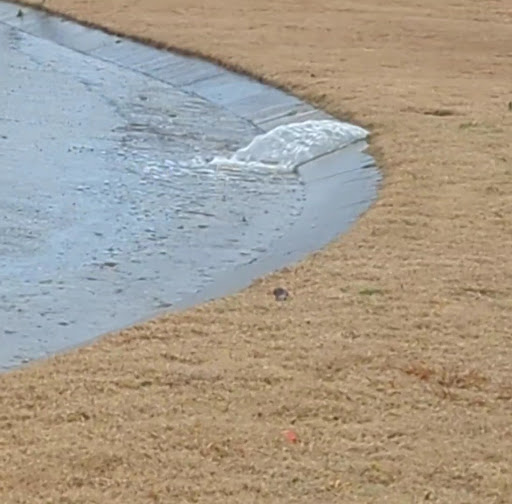
The water the system collects has to be discharged somewhere. A French drain without a discharge to daylight is not really a French drain.
Depending on the property, discharge may be routed to a lower area, a storm drain (if available), or on-site storage like a dry well. If gravity drainage is not possible, an outdoor sump pump is another way to ensure water is discharged properly.
8. We Restore the Work Area
This is where most other contractors completely fail. Many will come in with a trencher, and even if they haul away some soil, they’ll put dirt back on top, seed it, and cover it with straw—and it looks terrible.
To us, the finish matters. When possible, we cut and save sod, protect access areas, and operate equipment on plywood so your yard does not get destroyed during the work.
What Makes Our French Drains Different
Lawn & Leaf Solutions takes a performance-first approach to drainage.
We are not interested in installing a cheap drain that looks fine on day one but has an expiration date built into it. Our goal is to build the system correctly the first time using the right materials and installation methods.
What makes our French drain work different:
- We look at the full water problem, not just the wet spot
- We always separate roof water from groundwater •
- We use clean washed drainage rock
- We use double needle-punched non-woven geotextile filter fabric
- We use performance pipe designed for fast yard drainage
- We prevent unnecessary damage to your lawn
Not all drainage systems are created equal. Many contractors rely on outdated techniques and materials designed for indoor or agricultural applications. We take a performance-first approach by using the best modern materials available, resulting in a high-performance drainage system that improves over time and can last for decades. Simply put, no one in the area builds them better than Lawn & Leaf Solutions.
Common French Drain Problems We See Often
Many homeowners call us after a system installed just a few years prior has already failed. Sometimes there was no filter fabric installed, sometimes pea gravel was used, sometimes the pipe is full of roots because it was not placed correctly in the trench. We’ve even seen simple black pipe with a sock buried directly in dirt. The old ways of installing French drains just don’t work for long.
French Drain Cost in Jackson, TN
The cost of our French drains varies by length, depth, and equipment access. If the trench has to be dug by hand, the price can increase significantly, and the longer the system, the more it will cost
Smaller drainage projects may start in the lower thousands. More involved systems with long runs, multiple water sources, downspout routing, catch basins, storm drain discharge, or sump pump systems can cost more.
Most quality French drain and yard drainage projects are not cheap quick fixes. That’s why an average 50 ft French drain we install can cost $6,000 or more. The cost comes from field experience, the newest products, the best materials for longevity, and modern installation techniques that outperform outdated or incomplete systems.
Do You Need a French Drain, Downspout Drainage, or Something Else?
French drains are excellent for certain drainage problems, but they are not the answer to every water issue.
You may need a French drain if water is coming from the ground, sitting in low areas, or keeping soil saturated.
You may need downspout drainage if roof water is dumping beside the house or flooding the same areas after every rain.
You may need catch basins or channel drains if surface water is moving across patios, walkways, driveways, or pool decks.
You may need an outdoor sump pump system if the property does not have enough fall for gravity drainage.
Our job is to help you figure out which solution makes sense before you spend money on a system that won’t solve the real problem.
Schedule a French Drain Estimate
If your yard stays wet, water collects near your home, or you are tired of dealing with muddy areas after every rain, Lawn & Leaf Solutions has a solution.
Contact us today to schedule a French drain or yard drainage estimate in Jackson, TN or surrounding areas.
We will explain your options and recommend a drainage solution designed to tighten up your wet yard.
FAQ
You may need a French drain if your yard stays soft, muddy, or saturated after a rain event, especially in low areas or places where groundwater collects.
A French drain can help with standing water when the problem is caused by saturated soil or subsurface water. If the standing water is mostly surface runoff, roof/ runoff, or water from concrete areas, the solution may also need catch basins, downspout drainage, grading work, or another drainage system.
Never. Downspouts should be routed through a separate solid pipe. Keeping roof water separate ensures the French drain doesn’t become conta?minated with leaves, shingle gravel or other roof debris.
A French drain should use the cleanest drainage rock possible for the most void possible. Its expensive, but we use the cleanest washed rock available,with no dirt or fines.
Yes. A French drain should use non-woven geotextile filter fabric (ideally double needle-punched) to separate surrounding soil from the drainage rock. Not landscape fabric—landscape fabric is designed for weed control, not drainage systems.
The lifespan heavily depends on the design, materials, and installation quality. A properly built system with clean rock, high performance pipe, the right fabric, and one that is discharged correctly will last for many decades.
Cost depends on length, depth, access, soil conditions, discharge location, and whether additional drainage solutions are needed. Smaller projects may start in the lower thousands, while larger systems can cost more than $10,000.
In many cases, yes. Drainage work does require digging, but we cut and preserve sod when possible, use plywood to protect access areas, and restore the yard as cleanly as possible after installation. The goal is to leave it better than how we found it.
If the yard does not have enough slope for a gravity drain, a French drain alone is not going to be enough. An outdoor sump pump system will be needed to collect water and pump it out to the street.
Not usually. We install drainage systems near foundations only when absolutely necessary, as a last-resort solution when other options are not possible.