
A soggy, waterlogged yard is more than just a nuisance; it's a clear signal that something is wrong with how your property handles water. When your yard turns into a swamp after every rain, it's time to look at effective drainage solutions for yards. The right fix could be as simple as re-shaping the ground with surface grading or might require a more robust system like a French drain or a dry well to actively channel water away. Taking action is about more than just getting your grass back—it’s about protecting your home's foundation and your entire landscape from expensive, long-term damage.
Understanding Your Yard's Water Woes
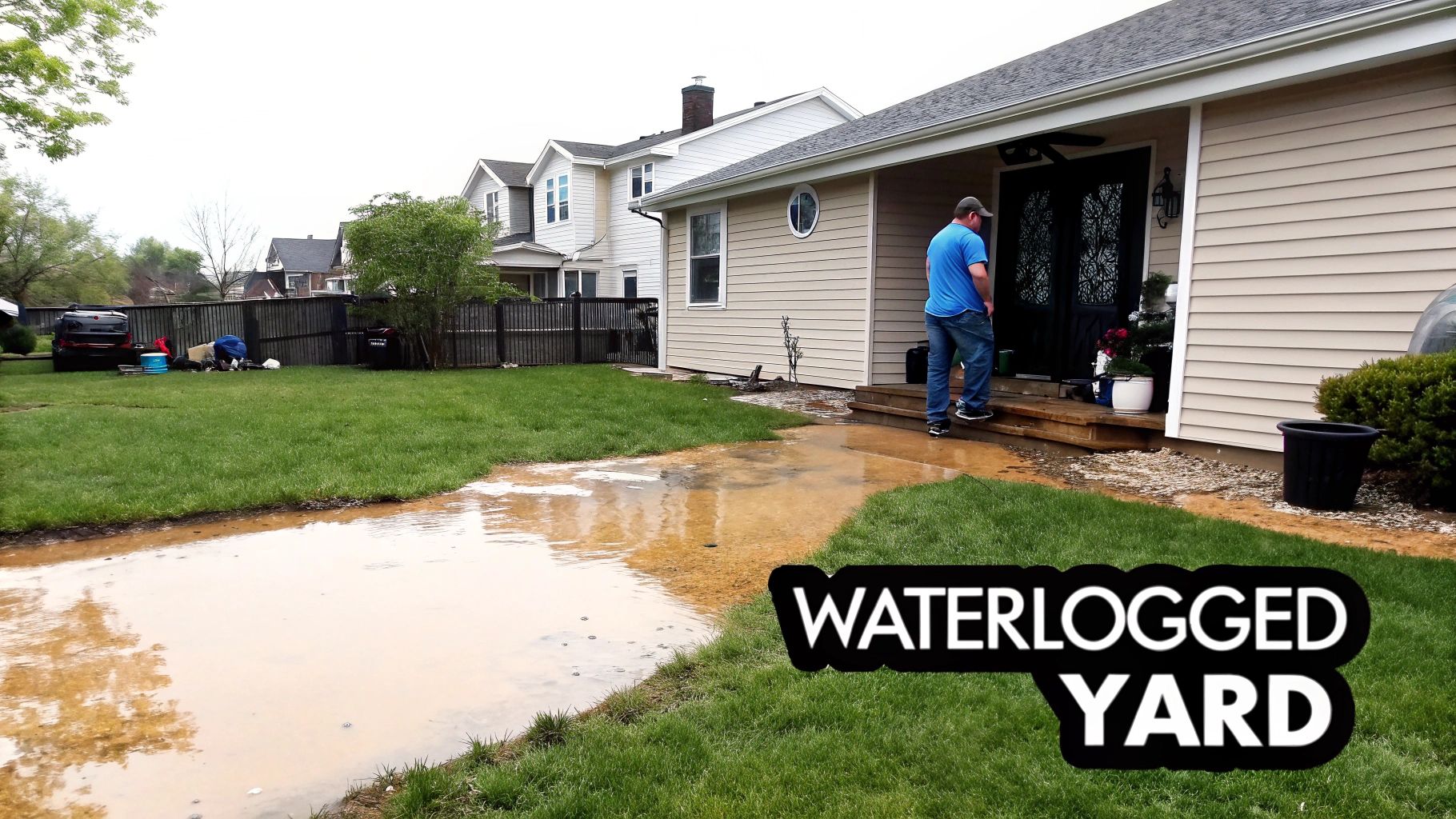
Think of your yard's slope and soil as a natural plumbing system. When it’s working right, rainwater moves harmlessly away from your house, waters your plants, and disappears. But when that system gets blocked or overwhelmed, you get a muddy, destructive mess. A waterlogged lawn is the most obvious sign that this natural system has broken down.
For anyone living in Jackson and West Tennessee, the signs are probably all too familiar. You might have those swampy spots that never seem to dry out, making it impossible to mow. Maybe you see standing water on your patio or walkways days after a storm. Worse yet, you could be dealing with moisture creeping into your crawlspace or basement. These aren't just ugly problems; they're warning signs of bigger issues brewing just below the surface.
Why Ignoring the Problem Is Risky
Letting a drainage issue go is like ignoring a small leak under the kitchen sink. It might seem like a minor annoyance at first, but it will eventually lead to rot, structural damage, and a huge repair bill. In your yard, that standing water creates a domino effect of problems that compromise your property and your sanity.
- Foundation Damage: Water that constantly pools against your foundation will eventually find a way in, causing cracks and threatening the structural integrity of your home.
- Lawn and Plant Health: Most grass and landscape plants can't survive in soggy, oxygen-starved soil. This leads directly to root rot, dead patches, and a failing landscape.
- Pest Infestations: Puddles and standing water are the perfect breeding ground for mosquitoes, gnats, and all sorts of other pests you don't want around.
- Soil Erosion: Uncontrolled water runoff carries away precious topsoil and mulch, which can destabilize slopes and destroy your landscaping efforts.
Simply put, a yard that can't drain properly is a yard that can't thrive. That water needs somewhere to go, and if you don't give it a path, it will carve its own—often right through your foundation or over your flowerbeds.
Empowering You with Solutions
This guide is here to give you the knowledge you need to take back your yard. We'll walk through how to figure out the real cause of your water problems, whether it's the compacted clay soil common to our area or just an improper slope. Most importantly, we'll break down the most practical and effective drainage solutions for yards in plain, simple terms. By the time you're done reading, you’ll have a solid game plan for reclaiming your outdoor space and protecting your biggest investment from water damage.
How to Diagnose Your Yard's Drainage Problems
Before you can even think about a solution, you have to play detective. The first and most critical step is figuring out exactly where the water is coming from, where it’s supposed to go, and why it’s getting stuck along the way. Think of it like a doctor trying to diagnose an illness—you wouldn't want a prescription without a proper diagnosis, right?
Jumping the gun on a solution is an easy way to waste time and money. For instance, putting in an expensive French drain when all you needed was to redirect a downspout is a classic, costly mistake. A little bit of observation now will help you pinpoint the real problem and choose one of the targeted drainage solutions for yards that will actually solve it for good.
Conduct a Rainy Day Audit
There's no better time to see what's happening than during a storm. The next time you get a good, steady rain, grab your boots and an umbrella and take a walk around your property. This is single-handedly the most powerful diagnostic tool you have.
As you walk, make a few mental notes or even sketch a quick map of your yard. Pay close attention to these key details:
- Where is water flowing? Look for the little "rivers" that form across your lawn or through mulch beds. Where are they heading, and where do they dead-end?
- Where does water pool? Pinpoint the exact spots where puddles are forming. Are they right up against your foundation? In a low spot in the middle of the lawn? Along a patio edge?
- How are your gutters and downspouts holding up? Check for overflowing gutters—that’s a dead giveaway for a clog. See where your downspouts are dumping water. Is it creating a swamp right next to your house?
- What's the slope like? Eyeball the general grade of your yard. Does it slope away from your foundation like it should, or does it dip into low spots where water has no choice but to collect?
A rainy day audit is like watching a game replay. It shows you exactly where your yard's defenses are breaking down and letting water win, revealing the patterns you need to fix.
Test Your Soil's Absorption Rate
Sometimes, the problem isn't just the slope; it's the ground itself. Here in West Tennessee, we have a lot of heavy clay soil that gets packed down like concrete over time. When soil is compacted, water can't soak in—it just hits the surface and runs off.
You can get a good idea of your soil's health with a simple "percolation test."
- Dig a Hole: Pick a problem spot and dig a hole about one foot wide and one foot deep.
- Fill with Water: Fill the hole with water and let it drain completely. This first round just saturates the surrounding soil, prepping it for the real test.
- Refill and Time: Fill the hole again, but this time, stick a ruler in to measure the water level. Check back every hour to see how fast it's dropping.
Good, healthy soil should drain at a rate of at least one inch per hour. If you come back after a few hours and the water level has barely budged, you've found a major contributor to your drainage woes: poor soil absorption.
Understanding these early warnings is the first step to getting your yard back. To learn more about specific red flags, check out our guide on the signs you need French drain installation in your yard.
Comparing The Most Effective Drainage Solutions
Once you’ve figured out why your yard is holding water, it's time to explore the toolkit of modern drainage solutions. Choosing the right one is like picking the right tool for a job—you wouldn't use a hammer to turn a screw. Each solution is built to tackle a specific kind of water problem, from widespread sogginess to concentrated flooding around your foundation.
Thinking through these options requires a clear picture of your yard's symptoms, the source of the water, and your soil's limitations. The flowchart below maps out this diagnostic process, helping you connect what you see happening in your yard to the actual root cause.
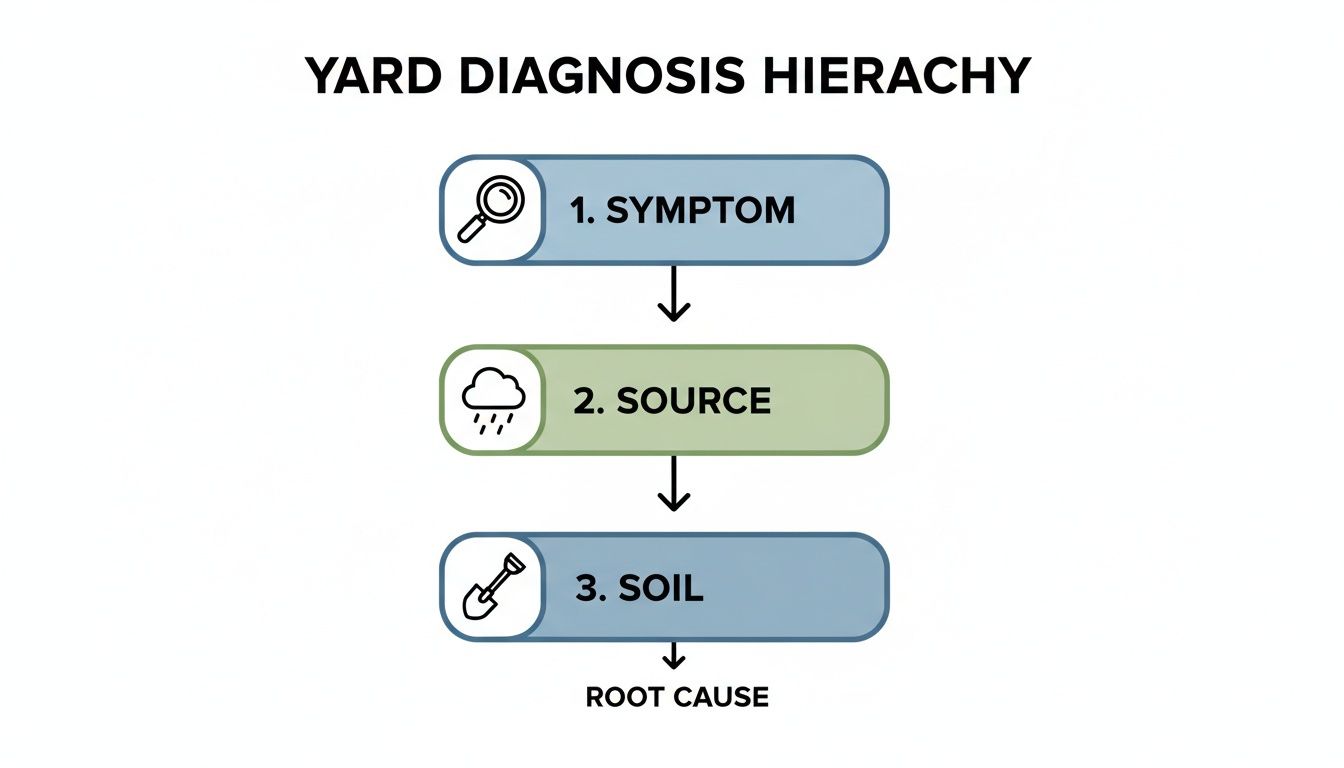
This flow shows how seeing a symptom, like standing water, should lead you to investigate the source, like your downspouts, before finally looking at underlying factors like compacted clay soil. Following this logical path is the key to picking a solution that solves the real problem instead of just putting a band-aid on a symptom.
Let's break down the most effective options out there.
Surface Grading: Reshaping Your Landscape
Often, the simplest and most fundamental fix is surface grading. Think of it as gently re-sculpting your yard to create subtle slopes that naturally guide water away from your home and other low spots. If your yard is as flat as a tabletop, water has nowhere to go. Grading creates the slight tilt needed for gravity to take over.
This is the go-to method for fixing minor to moderate pooling caused by flat or improperly sloped ground. It’s your first and best line of defense against water creeping toward your foundation.
- Pros: Incredibly effective for protecting foundations, completely non-invasive once the work is done, and it’s a permanent fix for slope-related issues.
- Cons: You need a pro to get the grade exactly right—even a 1% slope difference is huge. The work itself can be disruptive, and it might not be enough for heavy water volumes or severe soil compaction.
French Drains: The Underground Highway For Water
A French drain is basically a hidden, underground highway for excess groundwater. It's a simple but brilliant system: a perforated pipe is laid in a sloped trench filled with gravel. This setup intercepts water that’s soaking through the soil, collects it, and channels it away to a safe spot, like the street or a dry well.
This is the perfect solution for yards with chronic sogginess, areas where groundwater keeps seeping to the surface, or for protecting retaining walls from damaging water pressure. It deals with water that's already in the ground, not just what's running across the surface.
A French drain is the unsung hero of many dry yards. It works silently beneath the surface, capturing and redirecting the subsurface water that causes those impossible-to-fix swampy patches.
Channel Drains: The Surface Water Interceptor
While a French drain works underground, a channel drain gets the job done right on the surface. You've definitely seen these—the long, narrow grates running across driveways or patios. A channel drain is a linear system designed to quickly capture large sheets of surface runoff before they can flood an area.
This makes it the perfect choice for hardscapes like pool decks, patios, and driveways where water tends to flow across the whole surface. The global Channel Drains market, expected to be valued at USD 1.13 billion in 2025, is growing fast as more people see how effective they are at managing runoff with a clean, built-in look.
Dry Wells: The Underground Reservoir
So what happens when you have nowhere to send all that collected water? That's where a dry well comes in. It’s a large, underground structure—usually a buried, perforated basin surrounded by gravel—that collects water from your drains and allows it to slowly soak back into the surrounding soil.
Think of it as an underground holding tank that gives excess runoff time to absorb naturally. This is an excellent solution for properties without a convenient place to discharge water or in areas where you want to help recharge the local groundwater table instead of just sending it all to the storm sewer.
- Ideal Use: Perfect for capturing concentrated water flow from downspouts or other drainage systems on flat properties.
- Key Consideration: They aren't a good fit for properties with heavy clay soil that drains poorly or where the water table is already high.
Rain Gardens: The Natural Sponge
A rain garden is a beautiful, eco-friendly drainage solution that actually adds to your landscape. It's a shallow, depressed garden planted with water-loving native plants. Designed to collect runoff from roofs and driveways, it acts like a natural sponge, holding the water and letting it get absorbed by the soil and used by the plants.
Believe it or not, a well-designed rain garden can absorb 30% more water than the same-sized patch of lawn. It not only solves your drainage problem but also creates a habitat for pollinators and adds some serious curb appeal. These are especially great for managing stormwater runoff and preventing soil erosion. To learn more, check out our guide on how to control soil erosion with top yard drainage solutions.
Comparing Your Options At A Glance
Choosing between these solutions really comes down to your specific problem, your property's layout, and your budget. To make it a little easier, we've put together this quick-reference table comparing the most common options.
Comparing Common Yard Drainage Solutions
This table breaks down the key differences to help you see which solution might be the best fit for your yard's needs.
| Solution | Best For | Average Cost | DIY Friendliness | Maintenance Level |
|---|---|---|---|---|
| Surface Grading | Widespread, shallow pooling & foundation protection. | Moderate to High | Low | Very Low |
| French Drain | Persistently soggy lawns & subsurface water. | Moderate to High | Low | Low |
| Channel Drain | Hardscapes like patios, driveways, & pool decks. | Moderate | Medium | Low |
| Dry Well | Capturing runoff with no easy discharge point. | Moderate | Medium | Low |
| Rain Garden | Managing runoff from roofs & driveways naturally. | Low to Moderate | High | Medium |
This comparison really highlights the trade-offs. While a rain garden is a fantastic DIY project, installing a French drain or getting your yard professionally graded requires specialized skills to make sure it works correctly for years to come. By matching your diagnosed problem to the right solution, you can invest confidently in a dry, healthy, and usable yard.
Why Professional Installation is a Smart Investment
The urge to tackle a weekend DIY project is understandable, but when it comes to drainage solutions for yards, calling in a pro isn't just a good idea—it's often essential. A drainage system isn't just a trench with a pipe in it; it's an engineered solution where every detail matters. One tiny miscalculation can turn a well-meaning project into an expensive, muddy failure.
Think of it like building a house. You can buy the best lumber and shingles, but if that foundation isn't perfectly level, the whole structure is in trouble. Drainage works the same way. The success of the entire system hinges on a flawless installation, and the line between a dry yard and a perpetual swamp is incredibly thin.
The Critical Role of Precision and Expertise
At its heart, every effective drainage system runs on one simple force: gravity. To get water to move where you want it to go, you need a consistent, carefully measured slope. For a French drain, the standard is a grade of at least 1%—that’s a one-inch drop for every eight feet of pipe. It doesn't sound like much, but it's the bare minimum to keep water flowing instead of sitting stagnant.
Getting that slope just right is tougher than it looks. Professionals rely on tools like laser levels to guarantee the grade is precise and unwavering from one end to the other. That’s a level of accuracy that’s almost impossible to achieve with a simple string line, especially when you're working across an uneven lawn.
We've seen this story play out too many times: a homeowner spends their whole weekend digging and installing a French drain, only to find it doesn't just fail to fix the problem—it makes it worse. By trapping water underground with the wrong pitch, their new "drain" actually creates a bigger, more concentrated swamp.
Selecting Materials for West Tennessee Soil
Hiring a professional also means you get the right materials for our specific local conditions. The heavy clay soil we have here in Jackson and West Tennessee is notoriously tricky. It's dense, holds water, and can easily crush flimsy pipes or clog the wrong kind of filter fabric with fine silt.
An experienced contractor knows exactly what our soil can do and chooses components built to handle it:
- Durable, Rigid Pipes: They’ll use commercial-grade rigid pipes, not the flexible, corrugated tubing from a big-box store that can sag and crush under the weight of clay.
- High-Quality Filter Fabric: They’ll wrap the drain in a specific non-woven geotextile fabric that lets water in but keeps those tiny clay particles out, preventing the system from clogging up.
- Proper Gravel Aggregate: Using clean, washed gravel of the right size is key to ensuring water can flow freely into the pipe.
It’s not just about picking parts. It's about designing a system that will stand up to our region's unique challenges for years to come.
A Long-Term Investment in Your Property
At the end of the day, hiring a professional isn't an expense; it's an investment in your home's long-term health and value. A properly installed system protects your foundation from water damage, puts a stop to soil erosion, and gives you back your outdoor space.
This focus on long-term value is why professional maintenance is also becoming more common. The market for Drainage Maintenance Services was valued at USD 23.79 billion in 2026 and is expected to hit USD 31.87 billion by 2030. You can learn more about the growing drainage maintenance market to see just how much property owners are prioritizing expert care.
By starting with a professional installation, you're not just fixing a puddle for today—you're protecting your property for the long haul.
Finding the Right Drainage Contractor in West Tennessee

Let's be honest, picking a professional to install the right drainage solutions for your yard can feel like the toughest part of the whole process. Even the most perfectly designed system is worthless if it's put in the ground the wrong way. You’re trusting someone with your home, and that requires real confidence.
A great contractor is more than just an installer—they're a partner in solving your water problem. They should be able to walk you through their plan, explain why they chose certain materials for our heavy West Tennessee clay, and give you a clear, detailed estimate. This is all about finding a real expert who is committed to fixing your drainage issues for good, the first time.
Your Contractor Vetting Checklist
Don't ever hesitate to interview potential contractors. A true pro will welcome your questions because it shows you're both serious about getting the job done right. Before you sign on the dotted line, make sure you cover these essentials:
- Licensing and Insurance: This is the absolute first thing you should ask for. A valid Tennessee contractor's license and proof of liability insurance are non-negotiable. They protect you from any liability if something goes wrong on your property.
- Local Portfolio and References: Ask to see photos of their work on drainage projects right here in the Jackson area. Even better, ask if you can speak to a few recent customers. Hearing from a neighbor is often the best seal of approval.
- Detailed, Itemized Estimates: A vague quote on the back of a business card is a huge red flag. A professional estimate breaks down every cost: materials, labor, equipment rentals, and permits.
This kind of transparency is a clear sign you’re dealing with a reputable company. It’s crucial for understanding exactly what you’re paying for. You can learn more about what to look for by reading about the top features of a drainage company you can trust.
Red Flags to Watch Out For
Knowing what to avoid is just as important as knowing what to look for. Any contractor who tries to rush your decision or gets cagey when you ask direct questions should immediately make you pause.
A detailed contract isn't just a formality; it's your main tool for keeping everyone accountable. It needs to spell out the project scope, the timeline, the payment schedule, and the specific materials being used. This prevents any nasty surprises down the road.
Be wary of vague promises or high-pressure sales tactics. If a contractor can't give you a clear plan or seems reluctant to put everything in writing, they probably don't have the expertise your project deserves.
The Importance of a Professional Partner
Choosing the right contractor is part of a bigger picture: homeowners are getting serious about managing water on their properties. The global market for drainage systems, currently valued around USD 29.6 billion, is expected to grow to about USD 52.8 billion by 2033. That huge jump shows just how critical effective drainage is for protecting property value everywhere.
By taking the time to select a qualified, transparent, and experienced contractor here in West Tennessee, you’re not just fixing a soggy lawn—you're making a sound investment that will protect your home for years to come.
Common Questions About Yard Drainage
Even after exploring the options, it's normal to have a few lingering questions before you commit to a specific fix. Getting answers to these common concerns is often the last step needed to move forward confidently and protect your property. Let's tackle some of the most frequent questions we hear from homeowners.
These are the practical, real-world things that come up when you start planning. Thinking them through now helps set the right expectations and avoids any surprises down the road.
How Much Will a Yard Drainage System Cost?
The price tag on a yard drainage system can swing pretty wildly. It all depends on the solution you need, the size of your yard, and how tricky the problem is. A simple fix, like adding an extender to a downspout, might just be a small DIY expense. On the other hand, a professionally installed French drain system across a large yard could run into several thousand dollars.
A few key factors will shape the final price:
- Trenching Work: The longer and deeper the trenches, the more time and labor are involved.
- Material Quality: Commercial-grade pipes and filter fabrics cost more upfront but pay for themselves in durability.
- Professional Labor: You're paying for expertise, specialized equipment, and the precision needed to get it right the first time.
Any reputable contractor will come out, take a look at your property, and give you a detailed, itemized estimate. That transparency means you know exactly what you’re paying for before any dirt gets moved. No guesswork, no hidden fees.
Will Installing a Drainage System Destroy My Lawn?
This is a big one for homeowners, and we get it. While digging is necessary for systems like French drains or dry wells, a professional crew makes minimizing the mess a top priority. Think of it as a surgical operation for your yard.
We carefully cut and set aside the sod, plan the work to protect your flowerbeds and trees, and work efficiently to keep the project timeline tight. After the system is in, we backfill the trenches, regrade the soil for a perfect slope, and lay the original sod back down or put down fresh seed.
The goal is to make the system disappear. After we're done, the only thing you should notice is that your yard is finally dry and usable again.
Is It a Good Idea to Install a Drainage System Myself?
For the small stuff, going the DIY route can work out great. Cleaning your gutters, adding splash blocks, or even digging a small rain garden are fantastic weekend projects for a handy homeowner. They’re low-risk and can often solve minor water issues.
However, tackling the big drainage solutions for yards—like French drains, catch basins, or significant regrading—requires a ton of technical know-how. The success of these systems comes down to getting every single detail right.
You have to calculate the precise slope, understand how water behaves in West Tennessee's dense clay soil, and make sure your fix doesn't accidentally create a new problem for your neighbor. A botched DIY job can end up costing a lot more to fix than it would have to hire an expert from the start.
How Long Do Professional Drainage Solutions Last?
A professionally installed drainage system isn't a temporary patch—it’s a permanent upgrade to your property. When built with quality materials by a skilled team, a system like a French drain can easily last for 30 years or more. Its long lifespan comes from proper installation and a little bit of simple upkeep.
Usually, all that's needed is to make sure the system's outlets are clear of leaves, grass clippings, or anything else that could block the flow. It’s an investment that protects your foundation, stops erosion, and keeps your landscape healthy for decades.
Are you ready to solve your yard's water problems for good? The expert team at Lawn & Leaf Solutions has over 18 years of experience designing and installing custom drainage solutions that protect West Tennessee homes. Schedule your free, no-obligation estimate today by visiting us at https://lawnandleafsolutions.com.
Built with Outrank app